
What is fragrance layering and why should you do it?
You've found a cologne you love. Maybe it's a smoky oud you picked up on a whim, or a crisp citrus thing that makes you feel like you've just stepped off a yacht on the Amalfi Coast (even if you're actually commuting into Birmingham on a Tuesday). It smells great. But after about two hours — gone. Vanished. As if it never happened.
Or perhaps the opposite problem: you're wearing something so loud it precedes you into every room by about twelve seconds. Your colleagues have started opening windows when they see you coming.
Both situations have the same solution. Fragrance layering.
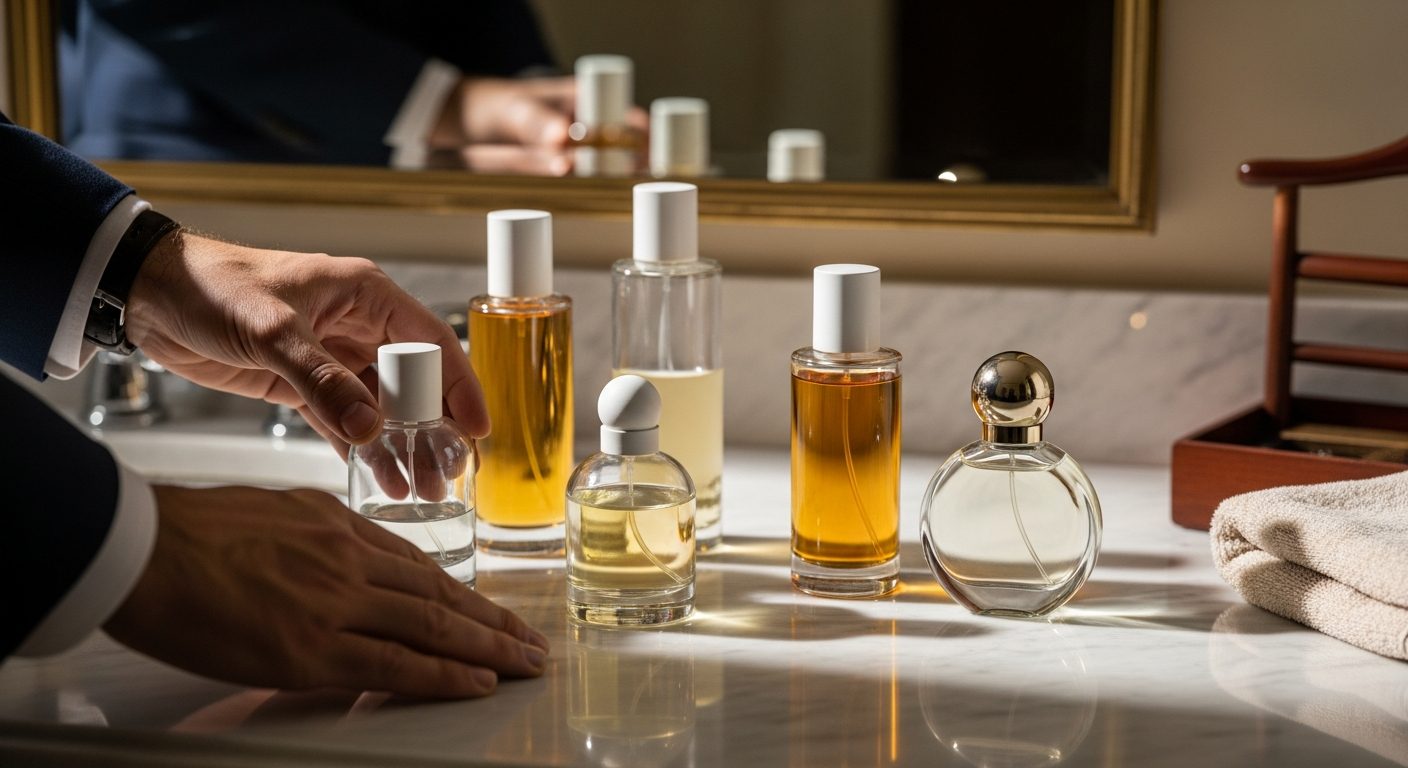
Fragrance layering — the deliberate combining of multiple scents to create something entirely your own — has been practised by perfumers and fragrance obsessives for decades. It's only recently crept into everyday men's grooming conversations, and honestly, that's a shame. Done right, layering gives you a signature scent nobody else on earth is wearing. One that lasts all day. One that evolves — different in the morning, richer by evening.
Done wrong, it gives you a headache and a concerned look from your partner.
This guide will make sure you land firmly in the first camp. We'll cover the science behind why layering works, walk you through the exact technique, give you proven combinations to try, flag the mistakes that trip most men up — and show you how your grooming routine (including your beard oil and moisturiser) is already part of your scent profile, whether you realise it or not.
Understanding fragrance families and notes for perfect pairing
Before you start reaching for multiple bottles and spraying yourself into oblivion, you need to understand two things: fragrance families and fragrance notes. Most guides skip over this, or mention it in passing. We're not going to do that. Understanding the why is what separates a man who layers with intention from a man who just smells confused.
Fragrance families
Every cologne belongs to a broad family — a category based on its dominant character. Know these and pairing becomes instinctive rather than guesswork.
- Citrus / Fresh: Bergamot, lemon, grapefruit, neroli. Bright and energetic. Summer-friendly. Fades quickly.
- Woody / Earthy: Cedarwood, sandalwood, vetiver, patchouli. Grounded, masculine, long-lasting. The backbone of most successful layered combinations.
- Spicy / Oriental: Cardamom, black pepper, oud, amber, vanilla. Deep and often heavy — handle carefully in professional settings.
- Aquatic / Marine: Sea salt, ambergris, ozonic notes. Fresh with surprising staying power. Works brilliantly as a middle layer.
- Aromatic / Fougère: Lavender, rosemary, coumarin. Herbal and wearable. The most versatile family for everyday use.
- Floral: Rose, jasmine, geranium. Worth knowing: florals aren't exclusively a women's category. Some of the most interesting men's fragrances use them as quiet accents rather than the main event.
Fragrance notes: the chemistry (simpler than it sounds)
Every fragrance is built across three phases — top, heart, and base — and these aren't just marketing language. They're a direct consequence of chemistry.
Lighter molecules evaporate faster; heavier molecules evaporate slower. That's it. The sequence of notes in a perfume comes down entirely to the volatility rate of the ingredients. Your top notes — the first thing you smell when you spray — disappear within twenty minutes. Your heart notes carry the fragrance through the day. And the base notes are what's left on your skin by evening, long after everything else has gone.
Why does this matter for layering? Because when you combine two fragrances, they don't just sit side by side — they interact. Your opening notes from both will blend first, your heart notes will merge in the middle hours, and the bases will combine into what ultimately defines your scent trail. Understanding this lets you build combinations with intention, rather than just hoping for the best.
A pairing reference table
| Fragrance family | Pairs well with | Avoid pairing with | Best occasion |
|---|---|---|---|
| Citrus / Fresh | Woody, Aquatic, Aromatic | Heavy Oriental / Oud | Office, Daytime, Summer |
| Woody / Earthy | Spicy, Citrus, Aromatic | Very heavy florals | Evenings, Autumn/Winter |
| Spicy / Oriental | Woody, Vanilla, Amber | Another heavy Oriental | Date night, Winter evenings |
| Aquatic / Marine | Citrus, Light Woody, Aromatic | Dense Oud or Patchouli | Spring, Summer, Casual |
| Aromatic / Fougère | Woody, Citrus, Light Spice | Very sweet Orientals | All-round, versatile |
These aren't hard rules so much as helpful guardrails for beginners. Once you understand the logic — that you're trying to build a structure with complementary layers rather than two competing voices — you can start experimenting freely. But when you're starting out, the table above will steer you away from the combinations that simply don't work.
For a broader look at how natural ingredients interact with your skin and senses, our breakdown of natural ingredient science is worth reading alongside this.
The art of application: a step-by-step guide to layering cologne
Right. You've got two (or more) fragrances in hand and a vague sense of optimism. Here's exactly what to do.
Step 1: start with clean, moisturised skin
Fragrance clings to moisture. Dry skin — especially in winter — actively repels it. The oils in your skin help fragrance molecules bind and slow their evaporation, which is why applying cologne immediately after a shower, when your skin is clean and slightly warm, gives dramatically better longevity than spraying onto dry skin mid-afternoon.
Using an unscented or lightly scented moisturiser? Even better. A hydrated base holds fragrance longer — which is why layering with skincare products (something we'll cover shortly) is one of the most underrated tricks in a man's grooming arsenal.
Step 2: apply your base (heavier) fragrance first
This is where most beginner guides hedge or contradict each other. Some say apply the lighter scent first; others say go heavy. The science makes this straightforward.
Apply the stronger, heavier fragrance first — then layer the lighter one on top. Heavier molecules (your base-heavy, woody, spicy or oriental scents) sit lower and evaporate more slowly. They form the foundation. Your lighter, more volatile citrus or aquatic fragrance then sits above it, acting as the opening impression before gradually revealing the deeper scent beneath.
Reverse this — light first, heavy second — and the heavy scent drowns the light one almost immediately. You lose the complexity entirely.
Step 3: apply both to the same pulse points
Pulse points — wrists, neck, behind the ears, inner elbows — are where your skin is warmest. Heat activates fragrance and helps it project. Apply both fragrances to the same spots so they actually blend on your skin, rather than sitting in separate zones and competing with each other. The goal is a new, unified scent. Not a left-wrist-vs-right-wrist standoff.
Step 4: don't rub. Ever.
Rubbing your wrists together after applying cologne is one of those habits that got passed down somehow, and it needs to stop. Friction generates heat and breaks down the fragrance molecules, accelerating evaporation and crushing the top notes before they've had a chance to do their thing. Spray, dab if needed — then leave it alone.
Step 5: give it a moment
Spray your first fragrance. Wait sixty seconds. Then apply the second. This gives the first scent a moment to settle and begin its evaporation process before the second layer arrives. The result is a more layered effect — the two scents interacting as they evolve, rather than landing on top of each other simultaneously.
Step 6: consider distance and amount
Hold the bottle about 15–20cm from your skin. One to two sprays per fragrance is plenty — you're layering two scents, so the combined effect will be more present than either alone. Start lighter than you think you need to. You can always add; you cannot subtract (without a shower, anyway).
Proven cologne combinations for every occasion
Theory is all well and good. But what should you actually spray? Here are some combinations that work — worn without causing any colleagues to reach for the window latch.
For the office: woody + citrus
A cedarwood-forward EDT as your base, topped with a grapefruit or bergamot cologne. Professional, clean, and present without being aggressive — the classic "I smell like a competent adult" combination. The woody notes anchor it so it doesn't fade by 11am; the citrus keeps it office-appropriate throughout the day.
Layering is particularly useful here because it lets you tone down a bold scent for a professional environment — something a single heavy fragrance can't always achieve on its own.
For a date night: spicy + woody
A black pepper or cardamom-based cologne layered over a warm sandalwood or vetiver base. This one earns its keep. It evolves beautifully over an evening — the spice comes forward initially, then gradually the woody depth takes over. The kind of scent someone notices without being entirely sure why, which is exactly where you want to be.
For summer / casual wear: aquatic + citrus
A marine or sea salt fragrance as your base, with a light citrus — lemon, neroli, yuzu — on top. This is the combination for warmer months, when heat amplifies projection and heavier fragrances become oppressive. Keep both layers light and complementary and you can wear this confidently when the temperature rises, without accidentally clearing a beach.
We covered the challenge of summer scent longevity in our complete grooming checklist, and the same principle applies: heat amplifies everything, so lighter layers applied to moisturised skin will always outperform a single heavy cologne in the warmth.
For autumn / winter evenings: oriental + woody
Oud or amber as your base, with a cedarwood or patchouli cologne layered on top. Deep, warming, and built for cold evenings when you want your scent to have genuine presence and staying power. Not for the faint-hearted, and absolutely not for the office (unless your office has very relaxed vibes).
For versatile everyday wear: aromatic + light woody
A lavender or rosemary-forward fougère as your base, with a soft sandalwood or mild cedar on top. Wearable anywhere. Inoffensive in the best possible way — not bland, just effortlessly appropriate. This is the combination for when you want to smell good without wanting to think about it too hard.
Common mistakes to avoid when layering scents
What to do when it goes wrong — and how to make sure it doesn't in the first place.

- Layering two loud, complex fragrances. Two statement scents — heavy orientals, dense ouds, anything the bottle describes as "bold" or "intense" — will not blend into something interesting. They'll compete. They'll clash. You'll end up smelling like a department store counter after a small explosion. One foundation, one accent. Full stop.
- Applying to dry, unprepped skin. We keep coming back to this because it genuinely matters. Dry skin kills fragrance longevity. Five minutes with a moisturiser before you apply cologne is not overthinking it — it's just correct preparation.
- Using too much of both. Each fragrance is formulated at full concentration. Two fragrances at full application is already more than you need. One spray of each, maximum two, is the ceiling. Less is almost always more when layering.
- Not testing on your skin first. Fragrances smell different on your skin than in the bottle, and they interact with your body chemistry in ways that are entirely personal. Always try a new combination on your wrist first, wait twenty minutes, and assess. Don't just spray both and walk out the door.
- Ignoring the season. A combination that's sublime in January can be suffocating in July. Heavy, base-dominated layering is winter territory. Keep summer layers light, aquatic, and citrus-forward.
- Forgetting that your grooming products are part of the equation. More on this in a moment — but if your beard oil smells of oud and your cologne smells of citrus, your layering has already begun before you've touched a bottle. Sometimes beautifully. Sometimes not.
- Giving up after one bad combination. Even experienced perfumers create combinations that don't work. That's not failure; that's experimentation. Keep notes on what you try. When you land on a combination that gets you a second glance and a "what are you wearing?", you'll be glad you persisted.
What products should I use? Beyond cologne: extending your scent with grooming products
This is where fragrance layering gets interesting for men — and where most fragrance articles completely miss the point.
Your cologne isn't the only scented product you're wearing. Your beard oil. Your moisturiser. Your balm. Every product you apply in the morning contributes to your overall scent profile, whether you've thought about it deliberately or not. The smart move is to treat your entire grooming routine as part of the composition.
This approach — sometimes called scent layering through grooming — can dramatically extend how long your fragrance lasts and how complex it smells. Hydrated, conditioned skin holds fragrance molecules longer. A complementary beard oil means your scent trail has depth and texture — not just a top note from a spray.
Here's how our products fit into that picture.
Seven Potions Beard Oil
Our Woodland Harmony Beard Oil is built around cedarwood and sandalwood — two of the most foundational base-note ingredients in men's fragrance. These woody, slightly musky notes sit beautifully beneath most cologne choices, acting as a natural enhancer rather than a competing voice. The oil is carried in jojoba — which mimics your skin's natural sebum and absorbs without greasiness — alongside argan oil, high in oleic acid, which conditions the beard hair and the skin beneath.
By the time you reach for your cologne, your beard is already wearing a subtle woody base. That matters more than most men realise. For a lighter, fresher option, our Citrus Tonic Beard Oil pairs well with aquatic or aromatic colognes. And if you want complete control over layering without any interference, our Pure Equilibrium Beard Oil is unscented entirely. You can read more about choosing between beard oil, balm and wax if you want to go deeper on the differences.
A few drops — three or four is enough — worked through a dry or towel-dried beard after washing. Don't soak it. Just coat.
Seven Potions Beard Balm
Our Beard Balm is a hybrid between a beard oil and a styling product. It contains coconut oil (antimicrobial, deeply conditioning), peach kernel oil (lightweight, high in vitamin E), and cocoa butter — which not only conditions but adds a very subtle warm, almost sweet undertone to the scent profile. Cocoa butter is worth knowing about if you wear warmer, spicier fragrances: that slight sweetness from the balm rounds out an oriental or spicy cologne rather beautifully.
Apply a pea-sized amount, warm it between your palms, and work it through your beard after the oil. It adds hold, controls flyaways, and — for our purposes — adds another layer of scent depth that sits in your beard hair throughout the day.
Seven Potions Anti-Ageing Moisturiser
We mentioned that dry skin kills fragrance longevity. This is the solution. Our moisturiser is formulated for men's skin — which is thicker and oilier than women's, ages differently, and often takes a battering from shaving and environmental exposure. It contains hyaluronic acid, which draws moisture into the skin and holds it there, creating exactly the kind of hydrated surface that fragrance clings to.
Apply it after washing your face and before your cologne. Let it absorb for a minute. Then spray your fragrance over the top. Men who do this consistently report their fragrance lasting several hours longer than it did on unprepped skin — which tracks with how fragrance chemistry actually works. If you want to understand how moisturising fits into a wider skincare approach, our night skincare routine guide covers the full picture.
For those looking at the full package, you can also explore the moisturiser and face wash bundle — clean skin absorbs product better, and that applies to fragrance as much as anything else.
Fragrance layering tips and tricks: a quick-reference routine
A practical daily order of operations for layering like a man who knows what he's doing.
- Shower first. Clean, warm, slightly open pores are your best canvas. Pat dry — don't rub, same principle as with cologne application.
- Moisturise while your skin is still slightly warm. Give it sixty seconds to absorb before you move on.
- Work beard oil through from roots to tips — a few drops is all you need. If you're wearing a woody cologne, Woodland Harmony; if you're going aquatic or fresh, Citrus Tonic.
- Follow with beard balm if you want shaping and extra conditioning. Pea-sized amount, warmed between the palms. This is your additional scent layer from the cocoa butter base.
- Apply your heavier cologne first. Pulse points — wrists, neck, inner elbow. One to two sprays. No rubbing.
- Wait sixty seconds. Let the first fragrance settle and begin to evolve.
- Apply your lighter cologne second. Same pulse points. One spray is usually sufficient when layering.
- Adjust by season — summer calls for lighter everything; winter gives you more latitude with heavier orientals and spicy bases, though always consider where you're actually going before you load up.
- Keep notes. When you find a combination that earns a "what are you wearing?" moment, write down which fragrances, how many sprays, what order. You'll want to repeat it.
- Don't top up by spraying over an existing application. If your fragrance has faded after several hours, wash the area, reapply moisturiser, and start fresh. Cologne over old cologne rarely ends well.
- Explore your natural skincare ingredients — understanding what's in your grooming products helps you predict how they'll interact with your fragrance.
Frequently asked questions
How do you properly layer cologne?
Apply your heavier, base-dominant fragrance first to clean, moisturised skin at your pulse points, wait sixty seconds, then apply your lighter fragrance on top of the same points. Never rub — just allow both scents to sit and evolve together naturally. The heavier molecules anchor the combination while the lighter top notes provide the initial impression.
What scents should you not layer?
Avoid pairing two very loud or dominant fragrances — such as two heavy orientals or two dense ouds — as they'll compete rather than complement each other. One scent should act as a foundation and the other as an accent. Citrus over heavy oriental is also a notoriously difficult combination, as the molecular weights are so different that the citrus disappears almost immediately.
Can you wear two different colognes at the same time?
Yes — and that's precisely what fragrance layering is. Wearing two colognes simultaneously, applied in the right order to the same pulse points, creates a new blended scent distinct from either fragrance worn alone. The key is choosing complementary fragrance families and applying the heavier scent first so it forms a stable base for the lighter one.
Fragrance layering isn't a complex art reserved for people who subscribe to niche perfume forums and own thirty bottles. It's a practical skill — and once you've got the fundamentals, it becomes second nature. Moisturised skin, a complementary beard oil already doing quiet work in the background, and two fragrances applied in the right order. That's the whole system.
And if you're building your grooming routine from the ground up — skincare, beard care, the whole lot — our gym-to-office grooming guide is a solid place to start. A prepped base makes everything sitting on top of it perform better — that's as true for fragrance as it is for anything else in your routine.