
Let's be honest about what's happening up there
You've noticed it. Maybe it was a particular angle in the bathroom mirror you'd never paid attention to before. Maybe it was a photo from a mate's wedding where the light caught your crown in a way that felt like a personal betrayal. Or perhaps it was your barber — bless him — giving you that very specific pause before reaching for the scissors.
Hair thinning. It happens to a lot of men, and gradually enough that by the time you've properly clocked it, you're already Googling at midnight wondering what on earth to do.
What I want you to know before we go any further: you're not the only one dealing with this, and depending on where you're at, there's quite a lot you can actually do about it. Whether your hair is just starting to feel a little less lush than it used to, or you've been watching your hairline make a slow retreat northward for a few years, this guide will walk you through what's actually happening, what you can do about it, and — importantly — what genuinely works versus what's just clever marketing dressed up in scientific-sounding words.
We'll cover everything: the real causes, the right daily habits, diet, styling tricks, proper products (including how our own Daily Energising Hair Shampoo fits into this), advanced treatments, and exactly when to pick up the phone and book an appointment with a professional.
Understanding the root causes of hair thinning in men
So many men rush straight to solutions — buying serums, swapping shampoos, panic-Googling "hair transplant cost" — without ever properly understanding what's causing the problem. You end up spending money on things that might not even be relevant to your situation.
Hair thinning in men is rarely down to just one thing. It's usually a combination of factors working together — some you can control, and some you inherited along with your dad's nose.
1. Genetics and DHT — the big one
The most common cause of hair thinning in men is androgenetic alopecia, better known as male pattern baldness. It's driven by a genetic sensitivity to dihydrotestosterone (DHT) — a byproduct of testosterone — which causes hair follicles to shrink over time. Smaller follicles produce thinner, weaker hairs, and eventually stop producing hair altogether.
If your dad or grandfather had a thinning crown by their forties, there's a reasonable chance you're working with similar genetic material. That doesn't mean it's inevitable — it means it's a factor worth taking seriously early.
2. Stress
Here's one a lot of men genuinely underestimate. Significant physical or emotional stress can trigger a condition called telogen effluvium, where a larger-than-usual number of follicles enter the resting phase at the same time, leading to shedding that can look quite dramatic. Unlike pattern baldness, this type of thinning can be temporary — but it needs addressing at the lifestyle level, not just the scalp level.
3. Poor nutrition and deficiencies
Your hair reflects what's happening inside your body. A diet short on iron, zinc, and vitamins D and B7 (biotin) will compromise hair strength and growth. Crash diets are particularly notorious for triggering hair loss, because they cut off the raw materials the body needs to keep follicles healthy. More on this in the diet section.
4. Poor hair care habits
This one is more controllable than most men realise. Harsh shampoos that strip the scalp of its natural oils, aggressive towel-drying, tight hairstyles that pull on follicles, heat damage from styling tools — all of it causes cumulative damage that weakens hair over time. The thinning you're experiencing might not be genetic at all. It might simply be years of, let's say, suboptimal grooming choices.
5. Sleep and lifestyle
Chronic poor sleep disrupts the body's repair cycles, including those that govern follicle regeneration. Poor sleep, high stress, and nutritional gaps often travel together — and together, they can absolutely accelerate hair thinning, according to Norton Healthcare's guidance on hair loss triggers.
Lifestyle won't override genetics. But it can meaningfully slow things down, and that's worth something.
The emotional side — which nobody talks about enough
Let's be real for a second. Hair thinning can genuinely mess with your head — and not in a trivial way. Studies on the psychological effects of hair loss in men consistently find links to lower self-esteem and increased social anxiety; a 2019 review published in the Journal of the American Academy of Dermatology found that over 70% of men with significant hair loss reported it affecting their quality of life. It affects how you feel in social situations, how you present yourself at work, and yes, how you feel about yourself when you're getting ready in the morning.
Acknowledging that isn't vanity. It's honesty. And the good news is that taking action — any meaningful action — tends to improve how men feel about this situation, regardless of the specific outcome.
Your daily hair care routine to combat thinning
The daily habits you build around your hair care will be one of the most impactful things you do — not because they'll magically reverse genetics, but because they create the best possible environment for your existing hair to thrive and your scalp to function properly.
Step 1: Wash with the right shampoo — and do it properly
Here's something that surprises a lot of men: washing your hair every day does not cause hair loss. Regular washing keeps your scalp clean, removes product buildup, and can make hair appear fuller. What does cause problems is washing with harsh, sulphate-heavy shampoos that strip the scalp of its natural oils — leaving it dry, irritated, and overproducing sebum to compensate, which in turn blocks follicles.
The solution is simple: use a gentle, nourishing shampoo that cleans without stripping. That's exactly what our Hair Shampoo Daily Energizing is built to do. No harsh sulphates, no parabens — just natural ingredients that clean the scalp effectively while maintaining its natural moisture balance. Think of it as the difference between pressure-washing a vintage leather jacket and giving it a proper hand clean. Same result, very different consequences.
Step 2: Condition every time
A good conditioner seals the hair cuticle after shampooing, reducing breakage — which is a huge contributor to the appearance of thinning. When hair breaks at the shaft rather than shedding from the root, the effect looks similar, but the cause is completely different and far more manageable. Our Hair Conditioner Daily Energizing works alongside the shampoo to replenish moisture and smooth the cuticle, leaving hair more resilient and easier to style without stress or breakage.
Step 3: Dry gently
Stop rubbing your hair dry like you're trying to start a fire. Hair is most vulnerable when wet — the shaft is swollen and the cuticle is open, making it extremely susceptible to mechanical damage. Pat dry instead, or better yet, use a microfibre towel. This one change can meaningfully reduce breakage over time.
Step 4: Limit heat styling
If you're using a hair dryer daily on high heat, you're essentially cooking your hair. Use a lower setting and keep the dryer moving. Better yet, let it air dry when you have the time.
Step 5: Massage your scalp
Two minutes a day — either in the shower or while applying product — stimulates blood circulation to the follicles. It costs nothing, takes no time, and quietly does a lot of good in the background. Use your fingertips, not your nails.
The role of diet and lifestyle in hair health
You are, to a significant degree, what you eat — and your hair is one of the first places that shows when your diet is missing something important.
A diet rich in specific vitamins and minerals genuinely supports healthy hair growth from the inside out. Here's what to focus on:
- Biotin (Vitamin B7) — found in eggs, almonds, and sweet potatoes. Biotin plays a key role in producing keratin, the protein hair is actually made of. Low levels are linked to weakened hair and increased shedding.
- Vitamin D — found in fatty fish, egg yolks, and fortified foods, or produced by sun exposure (tricky in the UK, admittedly). Vitamin D receptors are present in hair follicles, and deficiency has been linked to thinning.
- Iron — found in red meat, lentils, and spinach. Iron deficiency is one of the most common nutritional causes of hair shedding, particularly in men who train intensively.
- Zinc — found in oysters, pumpkin seeds, and beef. Zinc supports tissue growth and repair, and helps maintain healthy oil glands around the follicle.
- Vitamin E — found in sunflower seeds, avocados, and olive oil. An antioxidant that protects follicles from oxidative stress.
If you're not consistently getting these through food — and realistically, a lot of men aren't — a quality multivitamin or targeted hair supplement is worth considering. Have a word with your GP before going supplement-happy, though, particularly with iron, where getting levels right actually matters.
Lifestyle changes that actually move the needle
Aim for seven to eight hours of sleep. That's when your body does its repair work, including follicle regeneration — and it's not optional. Regular moderate exercise improves circulation to the scalp and helps keep cortisol (the stress hormone most directly linked to hair shedding) in check. Both alcohol and smoking are associated with poorer hair health. Worth knowing if you needed another reason to cut back. And stay hydrated — hair shaft integrity depends partly on it, and two litres a day is a reasonable target for most men.
Advanced techniques and treatments for hair thinning
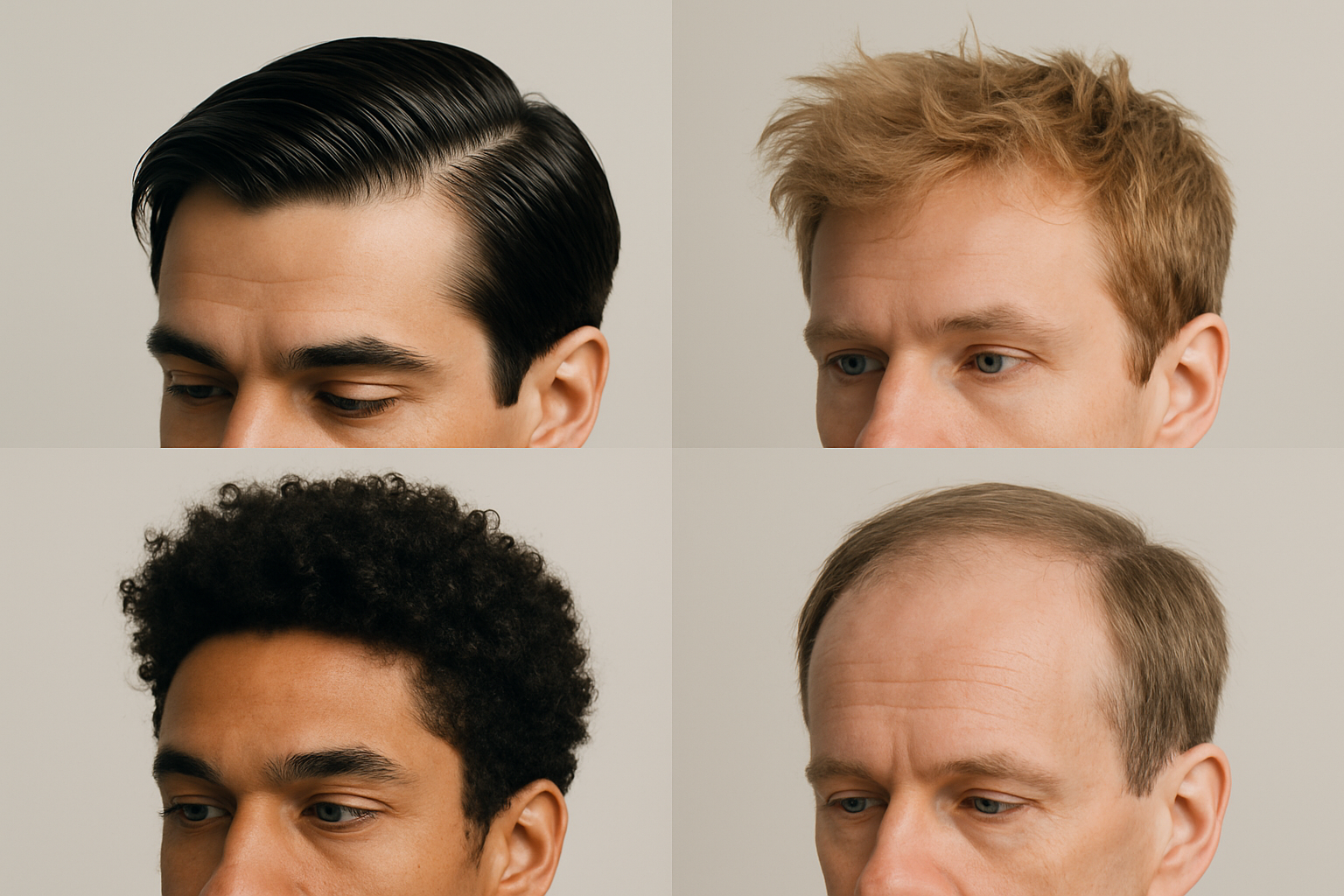
The right treatment depends very much on where you are on the journey. Hair loss professionals often use the Norwood Scale to classify the progression of male pattern baldness — from Stage 1 (minimal recession, barely noticeable) all the way to Stage 7 (significant crown and hairline loss). Knowing your stage helps you pick the most appropriate intervention rather than guessing.
Stage 1–3: early intervention
Act now. The earlier you move on this, the more options you have and the better the outcomes tend to be — later stages genuinely narrow what's available to you.
- Minoxidil (Rogaine) — an over-the-counter topical treatment applied directly to the scalp, and one of the most well-researched options available, now also in oral form. It works by widening blood vessels and prolonging the hair follicle's growth phase. Results take several months, and you need to keep using it — stop, and any gains are gradually lost.
- Natural topicals — rosemary oil and pumpkin seed oil have both shown some early promise in studies, though the evidence isn't yet as robust as clinical treatments. They're low-risk and worth adding to a routine — a few drops massaged into the scalp a few times a week.
- Scalp care — as we covered in our guide to thorough grooming routines, taking care of the skin beneath your hair matters just as much as what you do above the surface.
Stage 3–5: medical options
- Finasteride — a prescription oral medication that blocks the conversion of testosterone to DHT. FDA-approved for male hair loss with a solid track record, but not without potential side effects, which is why a GP or dermatologist conversation is non-negotiable before starting.
- Combining minoxidil and finasteride — as of 2026, the regimen combining daily oral finasteride with 5% minoxidil has the most documented research behind it and arguably the strongest results for men in the mid stages of hair loss.
- PRP (Platelet-Rich Plasma) therapy — a clinic-based treatment where a small amount of your blood is processed to concentrate growth factors and injected into the scalp. Expensive, requires multiple sessions, but for some men the results are meaningful.
Stage 5–7: surgical options
- Hair transplant surgery — FUE (Follicular Unit Extraction) and FUT (Follicular Unit Transplantation) are the two main techniques, both involving moving follicles from areas where hair still grows to areas where it doesn't. Results vary significantly depending on the surgeon's skill, the patient's donor hair quality, and post-operative care. Costs are substantial — typically starting at several thousand pounds in the UK.
Cost comparison at a glance
| Treatment | Approximate cost | Time to see results | Requires ongoing use? | Best for |
|---|---|---|---|---|
| Quality shampoo & conditioner | £10–£30/month | Weeks (for condition/texture) | Yes | All stages; prevention & maintenance |
| Minoxidil (topical) | £15–£40/month | 3–6 months | Yes | Early to mid-stage loss |
| Finasteride (prescription) | £20–£50/month | 3–6 months | Yes | Early to mid-stage; DHT-driven loss |
| Natural topicals (rosemary oil etc.) | £5–£20/month | 3–6 months | Yes | Early stage; low-risk supplementary use |
| PRP therapy | £500–£2,000+/course | 3–6 months | Maintenance sessions needed | Mid-stage; clinic-based treatment |
| Hair transplant surgery | £3,000–£15,000+ | 3–12 months | No (but medical treatment often continues) | Advanced loss with good donor area |
Styling tips to make thinning hair appear fuller
While you're working on the longer-game stuff — diet, routine, treatments — there's no reason your hair can't look considerably better right now. Styling is an underrated tool when you're dealing with thinning, and most men aren't using it to their advantage.
Haircut choices that work in your favour
Length is your enemy when you're dealing with thinning. Long hair draws the eye downward and makes sparse patches at the crown and temples more obvious. Shorter cuts — a textured crop, a tight fade, or a buzz cut — reduce the visual contrast between thinning and thicker areas, and tend to look considerably more contemporary. I realise "just cut it shorter" isn't the romantic solution anyone's hoping for, but honestly, it works more reliably than most products. Shorter works.
The right products for thinning hair
This is where most men go wrong. Heavy, greasy products — thick pomades, oil-based waxes — flatten hair against the scalp and make thinning dramatically more visible. They weigh each strand down and kill any natural volume. That's the last thing you want.
Instead, reach for lightweight styling products that add texture and volume without weighing hair down:
- Salt spray — our Salt Texturizing Hair Styling Spray adds texture and separation between strands, creating the appearance of more volume and density. Spritz onto damp hair, scrunch, and let it work.
- Hair styling powder — the lightest styling option available, and genuinely underused by men with thinning hair. Our Hair Styling Powder adds instant volume and a matte finish with virtually no weight on the hair itself.
- Hair clay (used sparingly) — a matte-finish clay like our Hair Styling Clay works well on shorter styles, adding texture and definition without the glassy, wet look that makes thinning more obvious. If you're unsure which styling option suits you best, we covered the differences in detail in our Hair Clay vs. Pomade vs. Wax: Your 2026 Styling Guide.
Styling technique matters
Blow-dry upward and away from the scalp before applying any product — this lifts the roots and builds natural volume that product can then hold in place. Apply to dry or nearly-dry hair for maximum lift; applying to wet hair makes it heavier and flatter.
What products should I use?
Given everything we've covered, what does a sensible, practical product routine actually look like for a man dealing with hair thinning? Here's how we'd approach it.
Foundation: the right shampoo and conditioner
Start with the Hair Shampoo and Conditioner duo from Seven Potions. The shampoo is free from harsh sulphates and parabens — the kinds of chemicals that, with regular use, strip the scalp and weaken the hair shaft. Natural cleansing agents remove buildup and excess sebum without leaving the scalp tight and irritated.
The conditioner follows up by replenishing moisture and smoothing the hair cuticle. A smooth, hydrated cuticle means less breakage — and less of that diffuse thinning that comes not from follicle damage but from mechanical stress. Neither product is dramatic on its own. Used consistently over weeks, the difference becomes hard to ignore.
Use the shampoo three to four times a week if your scalp tends to be drier, or daily if you're oily or active. The conditioner can go on every time you wash — focus it on the mid-lengths and ends rather than the scalp itself.
Scalp treatment: rosemary or pumpkin seed oil
These can be bought separately and massaged into the scalp a few times a week as a pre-wash treatment. Leave for 20–30 minutes, then shampoo out. It's supplementary rather than transformative, but it's low-cost, low-risk, and adds to the overall environment you're creating for healthy follicle function.
Styling: keep it light
As covered above — salt spray, styling powder, or a small amount of matte clay on shorter styles. Steer away from anything greasy or high-shine until your hair has the density to carry it.
Your daily anti-thinning routine
Wash smart, not aggressively. Gentle shampoo, lukewarm water (not scalding hot), and massage with your fingertips — not your nails. Condition every wash day, focused on the lengths and ends, rinsed out thoroughly. Pat dry afterwards. Seriously. Wet hair is fragile and rubbing it damages the shaft in ways that accumulate over months.
Do a two-minute scalp massage daily — in the shower is fine. It improves blood flow to the follicles and takes about a week to become automatic.
Eat protein at every meal. Hair is keratin, which is a protein. If you're consistently under-eating protein, your body will prioritise it for vital functions over hair production. Get a blood test if you suspect a nutritional deficiency — particularly iron or vitamin D. A simple GP test will confirm it, and treating a genuine deficiency can make a significant difference.
Photograph your hair every month. Same lighting, same angle. Memory is unreliable; photos aren't. This is how you'll actually know whether what you're doing is working.
Cut the heat where you can, air dry when time allows, and when you do use heat, use a heat protectant at the lowest effective setting. Find a barber who understands thinning hair — book a consultation and be honest about what you're experiencing. And manage stress actively through exercise, sleep, and reducing alcohol. Telogen effluvium is real, and chronic stress is a real trigger for it.
When to see a professional for hair thinning
There's a lot you can do at home. But some situations call for a dermatologist or trichologist rather than another Amazon order.
Book an appointment if you notice sudden or patchy hair loss — this can indicate alopecia areata, an autoimmune condition that responds well to treatment but needs a proper diagnosis. See someone if your hairline is receding rapidly or your crown is thinning significantly in your twenties or early thirties, because early intervention gives you far more options. Scalp symptoms alongside hair loss — itching, redness, scaling, or pain — can indicate conditions like seborrhoeic dermatitis or scalp psoriasis that need medical treatment, not a new shampoo.
Hair loss following illness, major surgery, or extreme stress often triggers diffuse shedding; a professional can confirm the cause and give you a realistic timeline. And if home remedies and over-the-counter options haven't shifted anything after six months, you need a clinical conversation.
A dermatologist can run blood tests, examine your scalp with a dermatoscope, and give you an actual diagnosis — not a guess. That's worth far more than six months of trial and error with products you're not sure are working.
Don't let embarrassment put this off. Dermatologists talk about hair loss every single day. You won't be the first man through the door, and you certainly won't be the last.
Frequently asked questions
How can I stop my hair from thinning naturally?
The most effective natural approach combines a gentle, sulphate-free shampoo and conditioner routine with a diet rich in biotin, iron, zinc, and vitamins D and E. Add regular scalp massage and some form of stress management — exercise and sleep, mostly. Natural topicals like rosemary oil and pumpkin seed oil may offer some additional benefit; the evidence is still building, but they're low-risk additions. What actually makes the difference is consistency across months. Quick fixes don't exist here.
What are the first signs of balding?
Typically a receding hairline at the temples, gradually forming an 'M' shape, and thinning at the crown. You might also notice more hair than usual in the shower drain, on your pillow, or in your comb — though losing up to around 100 hairs a day is within the normal range. Some men notice their parting looking wider than it used to. If you're unsure whether what you're seeing is normal shedding or something more significant, a dermatologist can tell you definitively.
Does washing your hair every day make it thin?
No. Washing your hair every day does not cause hair thinning or hair loss. Regular washing keeps the scalp clean, removes follicle-blocking buildup, and can actually make hair appear fuller and healthier. The problem isn't frequency — it's what you wash with. Harsh shampoos containing aggressive sulphates can dry out and weaken the hair shaft with frequent use, leading to breakage that looks like thinning. Stick to a gentle, natural formula like our Hair Shampoo Daily Energizing and wash as often as suits your scalp.
The bottom line
Hair thinning is not the end of the world for how you look or how you feel about yourself — even if it genuinely feels that way at two in the morning when the mirror is being particularly unkind. I've spoken to enough men about this to know the midnight spiral is almost universal, and also that most of them look back six months later wondering why they spent so long catastrophising.
The men who come out of this looking and feeling best aren't necessarily the ones with the best genetics. They're the ones who moved early, built decent daily habits, and weren't too proud to get proper advice when they needed it.
A good shampoo and conditioner, a better diet, a bit more care with how you treat your hair day to day — that's where it starts. Find a barber who actually listens. If things aren't improving after a few months, book an appointment with someone who can give you a real diagnosis rather than a YouTube rabbit hole.
If you want to know where to start product-wise, have a look at our full Hair Shampoo and Conditioner duo — it's as good a foundation as any.