
Why the right haircut matters when your hair is thinning
Let me be straight with you. If you've noticed more scalp than usual when you look in the mirror — or worse, caught a glimpse of the back of your head in a shop window and done a quiet double-take — you're not alone. A lot of men deal with thinning hair in near-total silence, usually by pretending it isn't happening or committing to some elaborate architectural feat involving the remaining strands. Neither approach, I can confirm from personal experience, is particularly dignified.
But here's the thing. The right haircut can genuinely transform how you look and, more importantly, how you feel walking out the door in the morning. We're talking about going from "trying to hide something" to "yes, this is exactly the look I intended." That shift — from reactive to deliberate — changes everything.
Most guides on this topic throw a list of haircut names at you and call it a day. This one covers which cuts work and why, how to choose based on your specific thinning pattern and face shape, what to say to your barber so you don't walk out looking like you lost a bet, and how to style everything properly once you're home. We've also had a look at what the grooming trends of 2026 are telling us, and shorter, textured styles are very much the direction smart men are moving.
Understanding your thinning pattern first
Before you book a barber appointment, you need to know where you're thinning. Because the best haircut for a receding hairline is not the same as the best cut for a thinning crown — and choosing the wrong one can actually draw more attention to the problem, not less.
Here are the three most common patterns and what tends to work for each:
- Receding hairline (temples): The hair at your temples is pulling back, creating that distinctive "M" shape. Styles that keep the top shorter and add texture work brilliantly here — the French Crop and Textured Crop are your best friends. Avoid styles that push hair forward onto a receding line, as it tends to look unconvincing.
- Crown thinning: The bald spot at the back. This one's tricky because it's the area you can see least clearly in the mirror, but everyone walking behind you can see very clearly. Textured crops, crew cuts, and buzz cuts all reduce contrast across the whole head, making the thin patch far less obvious.
- Diffuse thinning (all over): The hair is fine and sparse across the entire scalp. This calls for the most aggressive approach — shorter length overall, maximum texture, and styling products that add grip and body rather than weight.
Knowing your pattern means you walk into the barber with actual information, not just a vague sense of dread. Speaking of which — we'll talk about exactly what to say to your barber later in this article. It matters more than most people think.
Why shorter hair genuinely works
Shorter hair is lighter, and lighter hair lifts more easily — which means more natural volume at the roots without any effort. Long, thin hair lies flat under its own weight, and that's when scalp starts showing through in ways that do you no favours. Shorter cuts also reduce the contrast between thicker and thinner areas. A buzz cut brings everything down to the same level — suddenly there's no patchy mid-length hair making the thin spots obvious.
If you want to go deeper on the hair loss side of things, our piece on preventing hair loss covers what's actually going on beneath the surface — worth a read alongside this one.
The best short hairstyles to disguise thinning
Short is smart. But "short" covers a lot of ground, so let's break down the cuts that consistently deliver results for men with thinning hair — and be specific about who each one suits best.
1. The textured crop
The strongest all-round option right now. The textured crop keeps the sides short (usually a mid or low fade) with slightly longer hair on top that's styled with texture rather than lying flat. That texture is the key — it creates the optical illusion of thickness, making the hair look denser than it actually is. Works well for receding hairlines and crown thinning alike.
What to tell your barber: "I'd like a textured crop — short sides with a low to mid fade, and I want the top left with enough length to add texture. Keep it choppy on top rather than blended smooth."
Best for: Receding hairline, crown thinning, diffuse thinning. Most face shapes.
2. The buzz cut
Removes the contrast entirely. If everything's the same length, there's no patchy area to stand out. It's clean, masculine, and frankly has never been more socially acceptable than it is right now. Men like Jason Statham have spent years demonstrating that short, deliberate hair reads as confident rather than defeated. (Statham, notably, does not appear to be losing any sleep over his hairline.) Clean. No apologies.
What to tell your barber: "A number 2 or 3 all over" for a standard buzz, or "a skin fade into a number 2 on top" if you want something with a bit more shape.
Best for: Advanced diffuse thinning, receding hairline, men who want minimum maintenance.
3. The crew cut
The crew cut is the textured crop's slightly more conservative older brother. Short back and sides, a little more length on top, styled flat rather than textured. It's a classic for a reason — it works on almost every face shape and thinning pattern, it looks professional, and it suits men who don't want to look like they're trying too hard. Which is a very respectable position.
What to tell your barber: "A crew cut with a low fade on the sides — keep about an inch on top and taper it naturally."
Best for: All thinning patterns. Particularly good for oval and square face shapes.
4. The French crop (or Caesar cut)
The French crop uses a short fringe — cut straight across or slightly textured — to bring the hairline forward visually. If you've got a receding hairline, this is genuinely clever: it creates a defined edge where your natural hairline is pulling back, effectively redrawing the boundary on your terms. It's been having a major moment, and for good reason.
What to tell your barber: "A French crop — short fringe cut straight across, skin fade or low fade on the sides, and some texture through the top."
Best for: Receding hairline, temples. Oval, round, and square faces.
5. The high and tight
A military-inspired cut that keeps the sides very close (sometimes skin level) with more length concentrated on top. The contrast between the close sides and the top draws the eye upward — which is exactly what you want when you're dealing with crown thinning. It redirects attention away from the problem area entirely. Bold, structured, deliberate.
Best for: Crown thinning, diffuse thinning. Square and oval face shapes.
Stylish medium-length cuts for a fuller appearance
Some of you aren't ready to go short. Maybe you've had longer hair your whole life, maybe your partner likes it, maybe you're just not there yet. There are medium-length approaches that can work — they just require more effort with styling and you need to choose wisely.
The textured side part
A side part with texture throughout — not a slicked, shiny side part, but one styled with a matte clay that has visible movement and grip in it. The texture creates the appearance of density, and the side part adds structure without looking flat. This works best for men with mild, diffuse thinning rather than significant crown or temple recession.
What to tell your barber: "A classic side part but keep it textured — I don't want it too smooth or shiny. A soft fade on the sides, and leave enough length on top for texture and movement."
The quiff (for round faces)
A quiff — hair swept back and upward from the forehead — adds height, which is particularly useful for men with round faces. The height elongates your face visually and draws the eye up and away from thinning areas at the temples. It does require a bit of volume to pull off convincingly, so this one's more suited to men with mild thinning rather than significant hair loss.
For face shape guidance more broadly: round faces benefit from height-adding styles, square faces suit softer and less structured looks, oval faces can handle most styles, and longer faces benefit from styles that add width rather than height. Keep that in mind when choosing.
What to avoid at medium length
The combover. Please. It's not helping anyone, and — we say this with genuine warmth — everyone can tell. Long, flat styles draped across the scalp to cover a thin spot actually draw more attention to the problem, because any movement, wind, or humidity will shift the hair and reveal exactly what you were trying to hide. The combover belongs in a different era.
Similarly, slicked-back styles with high-shine products are problematic. Shine makes fine hair look flatter and wetter, which in turn makes the scalp show through more. We'll come back to this in the styling section, but matte is your friend from here on.
How to style thinning hair for maximum volume
The right cut gets you halfway there. Styling gets you the rest. And this is where a lot of men leave serious value on the table — they get a decent haircut and then style it with completely the wrong product, undoing all the good work.
The product rule for thinning hair
Matte finish products. Every time. Shiny products — gel, wet-look wax, high-shine pomade — flatten the hair and make the scalp visible through wet-looking strands. A matte product adds texture and grip instead, making each strand appear thicker and more substantial. The hair looks denser with a matte finish, and that's exactly what you're after.
Our Hair Styling Clay gives a strong-to-medium hold with a matte finish that adds texture and body without any of the flat, slicked-down look that works against thinning hair. If you want something even lighter for finer hair, the Hair Styling Powder is worth trying — dust it through the roots and it lifts the hair from the base, adding volume that lasts all day.
The blow dryer technique
Don't skip this step. A blow dryer — used correctly — is the single biggest difference-maker for thinning hair. Here's the method:
- Towel dry your hair until it's damp, not soaking.
- Apply a small amount of styling product (a pea-sized amount of clay, or a light dusting of powder at the roots).
- Point the dryer at the roots and use your fingers or a brush to lift the hair upward and away from the scalp as you dry.
- Dry against the natural direction of hair growth — this lifts the roots and creates volume that stays put once the hair cools.
- Finish with a cool shot if your dryer has one — it sets the style in place.
Once it's dry, apply a tiny additional amount of product to shape and define. Two-stage styling — a bit in before drying, a bit in after — gives you far more control than applying everything at once.
What products to use for which style
| Hairstyle | Recommended Product | Finish | Amount | Why it works |
|---|---|---|---|---|
| Textured Crop | Hair Styling Clay | Matte | Pea-sized | Adds grip and texture without weighing hair down |
| Buzz Cut | None needed / Hair Styling Powder | Matte | Light dusting | Powder adds definition to very short hair |
| Crew Cut | Hair Styling Clay or Hair Styling Paste | Matte | Pea-sized | Keeps structure without shine that exposes scalp |
| French Crop | Hair Styling Clay | Matte | Pea-sized | Defines the fringe and adds texture through the top |
| Textured Side Part | Hair Styling Paste | Low-matte | Penny-sized | Holds the part while keeping movement in the hair |
| Quiff | Salt Texturizing Spray + Clay | Matte | Spray + pea-sized | Salt spray adds volume and grip before clay sets the shape |
A note on salt spray
The Salt Texturizing Hair Styling Spray deserves a mention of its own. It's a pre-styler rather than a finishing product — spray it into damp hair before blow drying and it adds grip and texture that makes your styling product work harder. For fine or thinning hair, this extra layer of texture can make a genuine difference. It's also excellent in summer when you want something lighter that won't make the scalp look shiny in the heat.
Pairing your hairstyle with a beard for a balanced look
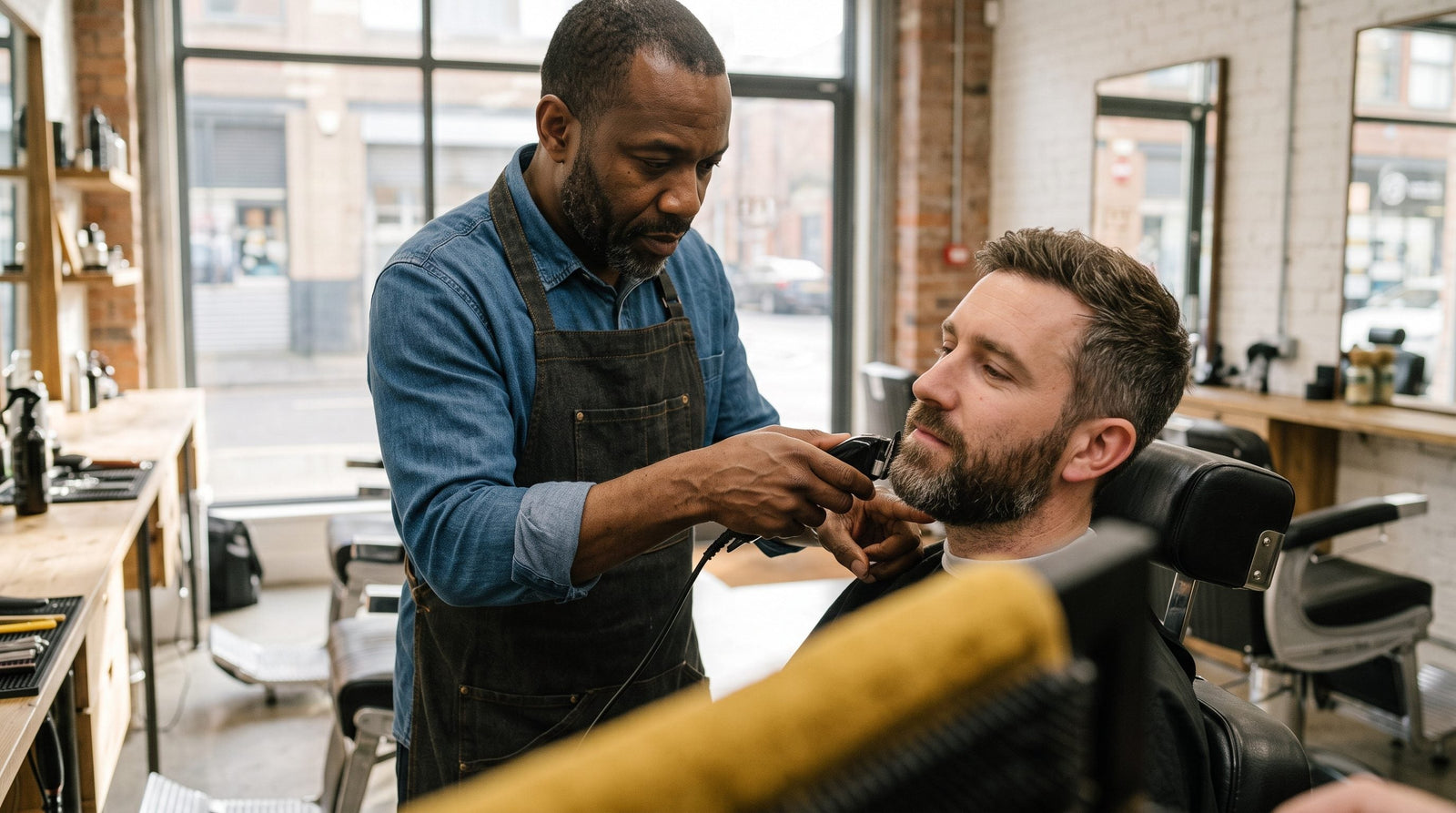
Here's something the other haircut guides won't often tell you: if you're dealing with thinning hair, a beard might be one of your most powerful grooming tools. A well-maintained beard draws the eye downward and creates a sense of symmetry and fullness that shifts attention away from the hairline or crown. Balanced, intentional grooming — not a trick, just how it works.
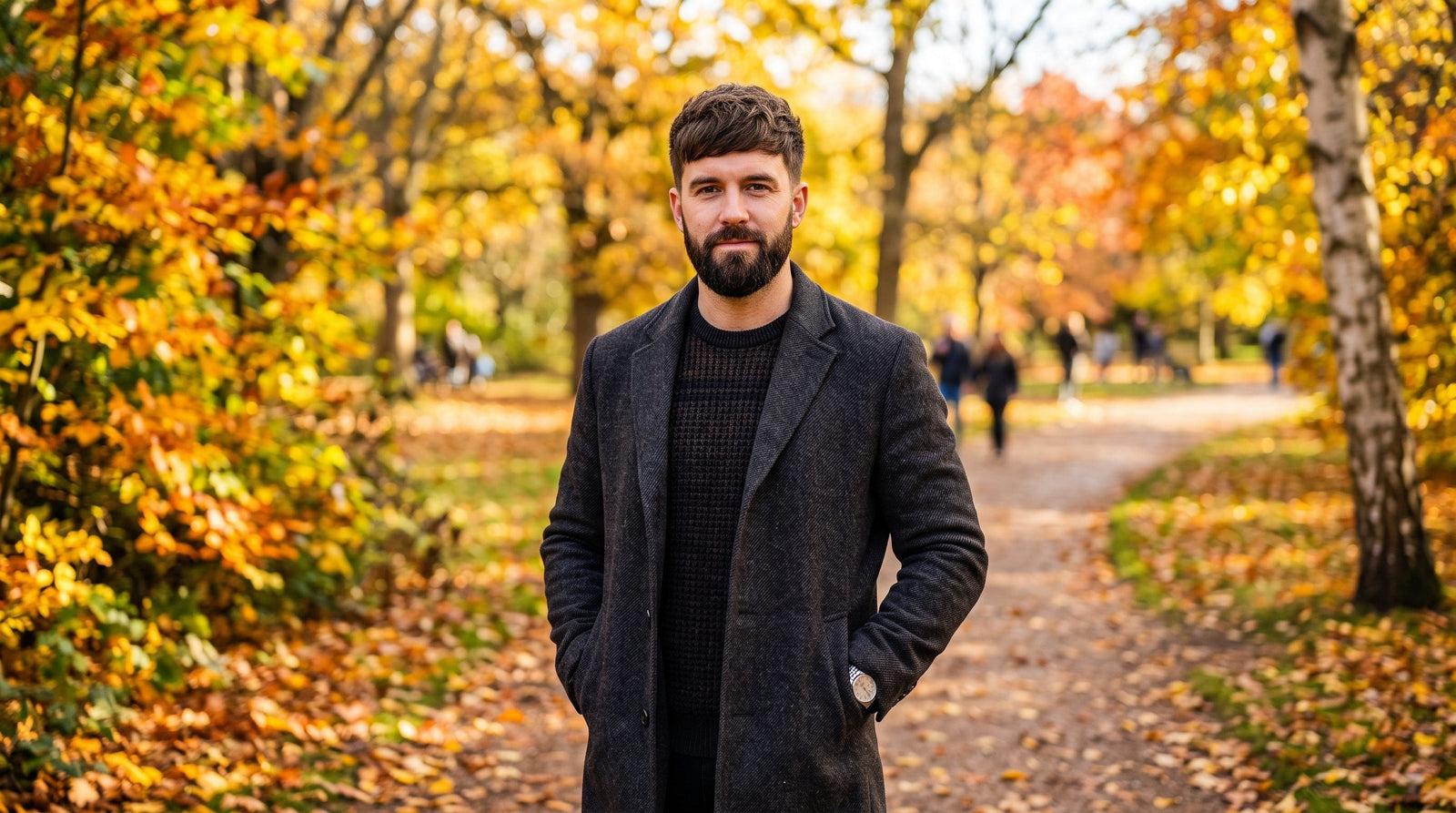
This pairing works particularly well with shorter hairstyles. A buzz cut or textured crop with a full, well-groomed beard creates a look that's strong, deliberate, and very much on trend right now. Less "hiding something," more "this is my style, and I've thought about it."
Keeping the beard in good shape
The caveat, of course, is that the beard has to actually be well-groomed. A scraggly, dry, or patchy beard doesn't help anyone — it just creates a different problem. Proper beard care means cleaning it regularly with a dedicated beard shampoo that cleans without stripping the natural oils that keep your facial hair and the skin beneath it healthy. Regular hair shampoo is too harsh for beard use — the skin underneath is more sensitive than your scalp and needs gentler treatment.
Our Woodland Harmony Beard Shampoo uses cedarwood and sandalwood alongside gentle cleansing agents that remove build-up without leaving the beard brittle or the skin dry. After washing, a beard conditioner softens the hair and keeps it manageable — particularly important if you're growing your beard out longer to complement a shorter scalp style.
Between washes, a few drops of beard oil moisturise the skin beneath the beard (preventing that dreaded itchiness and flaking, which we've covered in our piece on beard dandruff) and condition the hair itself so it looks full and healthy rather than wiry and neglected. A few drops rubbed between the palms and worked through the beard — morning routine, two minutes, done.
For shape and hold throughout the day, a small amount of beard balm tames flyaways and gives the beard a clean, shaped appearance. Our Woodland Harmony Beard Balm combines coconut oil, peach kernel oil, and cocoa butter — it holds while conditioning, so the beard looks groomed without feeling stiff or coated. The size of a fingernail is enough for most beard lengths. If you want the full setup, the Beard Care Bundle covers everything you need in one go.
Beard length and your hairstyle
A very close buzz cut pairs best with a short to medium beard — a full, long beard with a buzz cut can look slightly bottom-heavy. Scale them to each other. A textured crop or crew cut gives you more flexibility and works with everything from heavy stubble to a full beard. The French crop tends to look sharpest with a neatly trimmed short beard or defined stubble — it's a cleaner, more structured combination.
If you're in the early stages of growing a beard to pair with your new shorter haircut, our guide on beard growth stages will walk you through exactly what to expect and how to manage it.
Tips and tricks: daily habits for thinning hair
Most of these take less than five minutes. The ones that don't are worth the time anyway.
Bin the gel. Every styling product you use should have a matte or low-shine finish — it makes individual hairs look thicker and avoids the scalp-showing, wet-hair effect. With thinning hair, less product is genuinely more: a pea-sized amount of clay or paste is enough for most short styles, and too much weighs fine hair down and kills the volume you're trying to create.
Lift the hair upward and away from the scalp as you blow dry — this is how you build root volume that lasts. It takes an extra two minutes and makes a noticeable difference.
Get a trim every three to four weeks. Shorter styles need more frequent maintenance than longer ones. Let a textured crop or crew cut grow out for eight weeks and it starts to look shapeless — the opposite of the intentional look you're going for.
Heavy, moisturising shampoos designed for thick hair can weigh fine hair down. Look for volumising or energising formulas. The Hair Shampoo Daily Energizing cleans without weighing hair down — which is the whole point. And don't wash every day: washing daily strips the natural oils that give hair body and movement. Every other day, or every two days, is generally the sweet spot for fine or thinning hair.
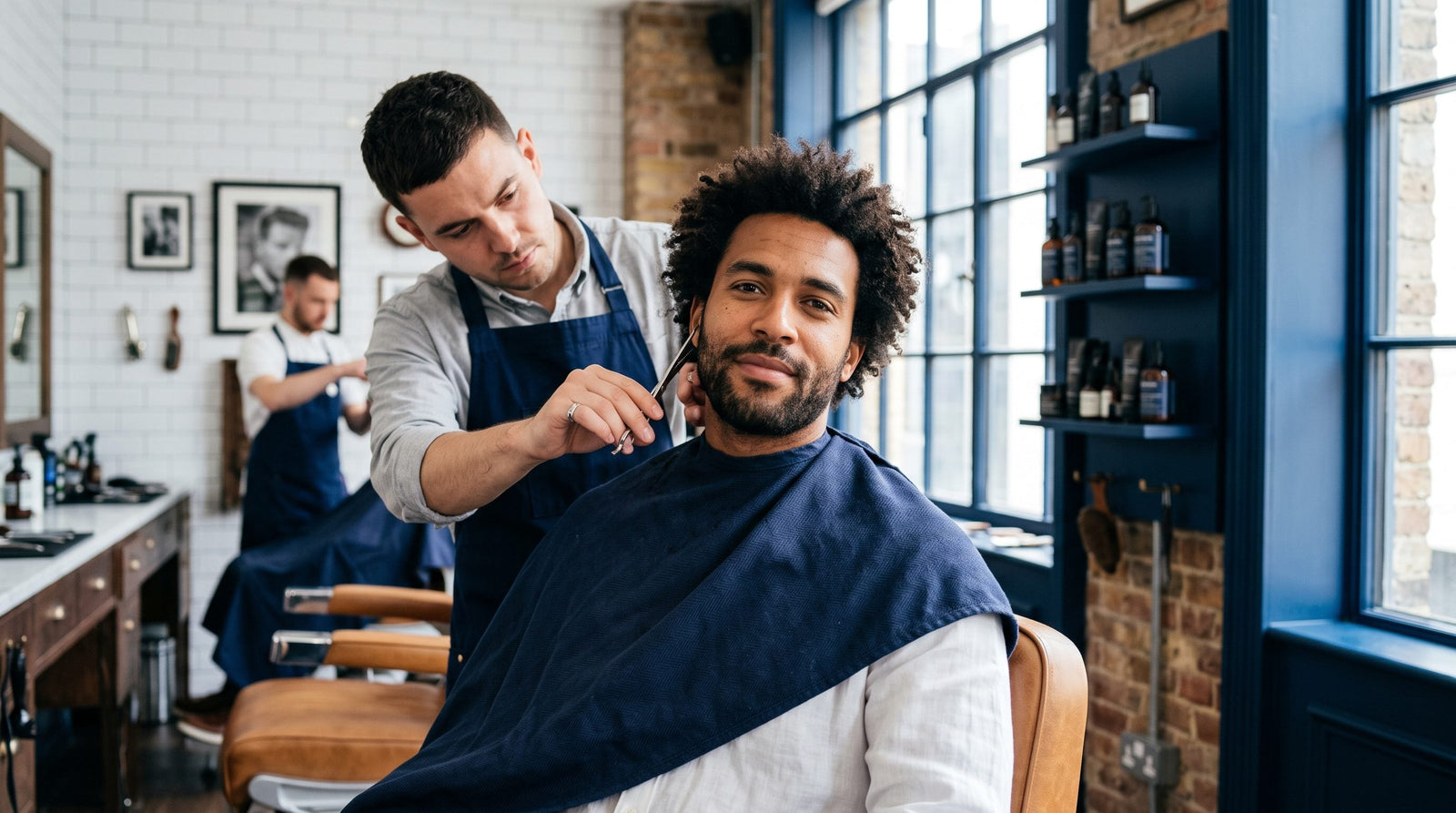
At the barber, use specific terminology — "textured crop," "low fade," "French crop with a defined fringe," "skin fade into a number 2 on top." Vague requests like "just tidy it up" will not get you what you want. Tell your barber you have thinning hair and ask what they'd recommend for your specific pattern — a good barber will appreciate the directness.
If you're growing a beard to complement your shorter haircut, consistency matters. Wash it, condition it, oil it. A well-maintained beard makes the whole look intentional. A neglected one does the opposite. Check our guide to the best men's hairstyles for more styling inspiration and approaches.
Frequently asked questions
What is the best haircut for a man with thinning hair?
Depends on where you're thinning. The textured crop works across most patterns — receding hairline, crown, diffuse thinning — because texture creates the illusion of density without relying on length. If you've got a receding hairline specifically, the French crop is worth serious consideration: it redraws the boundary on your terms. For significant diffuse thinning? Buzz cut. Full stop. It eliminates the contrast between thick and thin areas, which is what draws the eye in the first place. Talk to your barber about your specific pattern. They've seen it before.
Does short hair make thinning less noticeable?
Yes. Short hair is lighter, which means it lifts more easily and creates natural volume at the roots. It also reduces contrast between thicker and thinner areas — that contrast is what makes thinning visible. Long, fine hair lies flat under its own weight. It shows scalp far more obviously than a well-chosen short style ever would. This isn't complicated, it's just physics.
What haircuts should men with thin hair avoid?
The combover, obviously — everyone can tell, and any wind at all will shift the hair and reveal exactly what you were trying to hide. Beyond that: long flat styles that lie close to the scalp, slicked-back looks with high-shine products, and heavy fades when the hair hasn't got enough density to fill the contrast. Flat and shiny are the two things to avoid above all else.
The bottom line
Thinning hair isn't a grooming defeat. It's a reason to be more intentional — and the men who embrace that tend to look significantly better than those who spend years half-heartedly disguising what's happening. A shorter, textured cut that suits your specific thinning pattern and face shape, styled with a matte product and a bit of blow-dryer technique, is a genuinely strong look. Pair it with a well-maintained beard and you've got a complete, considered appearance that works in your favour.
Book the barber. Tell them exactly what's going on. You'll be fine.