
The Great Grooming Debate: Does a Higher Price Tag Mean Better Quality?
You're standing in the grooming aisle — or, more likely, scrolling through a browser tab at midnight — and you've just spotted a face moisturiser for £8 sitting next to one for £85. Same size. Roughly similar promises on the packaging. And you're thinking: what on earth is going on here?
We've all been there. Men's grooming has exploded over the last decade, which is brilliant for our skin, hair, and general sense of self — but it's also created a marketplace absolutely stuffed with products at every price point, many of which blur together into one confusing, expensive mess. The real question isn't "should I spend money on grooming?" It's: where should I spend it, and where can I save?
Because here's the truth the grooming industry would rather you didn't know: some products genuinely justify a higher price. Others are just paying for the bottle, the celebrity endorsement, or the glossy full-page advert in a magazine you flicked through at the dentist. Knowing the difference is the skill.
We're going to walk you through the full picture: where cheap is absolutely fine, where it costs you more in the long run, and how to build a routine that works without quietly bankrupting you. Whether you're building your first proper grooming kit or tightening up an existing one, read on.
Where to save: your guide to smart, affordable grooming staples
Good news first. There are entire categories of grooming where going cheap is perfectly sensible — not a compromise at all. These are products where the core function is simple, the ingredients required are minimal, and the price difference between mid-range and premium rarely translates to any meaningful difference on your skin or hair.
Cleansers and body wash: why simple and effective wins
Your body wash is on your skin for roughly forty-five seconds before you rinse it straight down the plug hole. It does not need to contain rare Himalayan mineral extracts. It doesn't need bespoke packaging. It needs to clean you without stripping your skin dry — and that's achievable at a very modest price.
What to look for in a budget body wash:
- A low-sulphate or sulphate-free formula. Sodium lauryl sulphate creates that satisfying lather but can be aggressive on sensitive skin. Plenty of affordable options have already switched to gentler surfactants.
- A short, readable ingredients list. The fewer unpronounceable mystery chemicals, the better. Simple formulas are cheaper to produce and often kinder to skin.
- No artificial fragrance overload. Fragrance is frequently the biggest cost driver in cheap body wash — and paradoxically, it can irritate skin. Unscented or lightly scented often means a better product for less money.
Supermarket own-brand options, plain glycerin-based soaps, and simple drugstore washes do the job perfectly well here. Save your money for the things that actually stay on your skin.
Shampoos and conditioners: focus on hair type, not hype
The shampoo aisle is perhaps the most brilliantly marketed stretch of any supermarket. "Volumising." "Strengthening." "Fortified with amino acids." Look — some of this is real, but a lot of it is noise. For regular hair washing, the formula requirements are basic: lift dirt and oil, rinse cleanly, and don't leave your scalp feeling like parchment.
The smarter move isn't to spend more money. It's to spend more attention matching the product to your actual hair type. Oily scalp? Look for something clarifying. Dry or colour-treated? A gentler, moisturising formula. Fine hair? Avoid anything heavy that'll weigh it down. Most of these needs are met perfectly well by budget and mid-range options. (If hair health over the years is on your mind, we've put together a thorough guide to preventing hair loss worth a read.)
One exception: if you have a beard, your facial hair needs its own dedicated shampoo. Regular head shampoo is too stripping for the coarser, more brittle hair on your face. More on that shortly.
Shaving creams and gels: the secret to a smooth shave without overspending
If you're using a cartridge razor and a can of pressurised gel — fine. But the real budget move here isn't in the cheapest products. It's in the cheapest system.
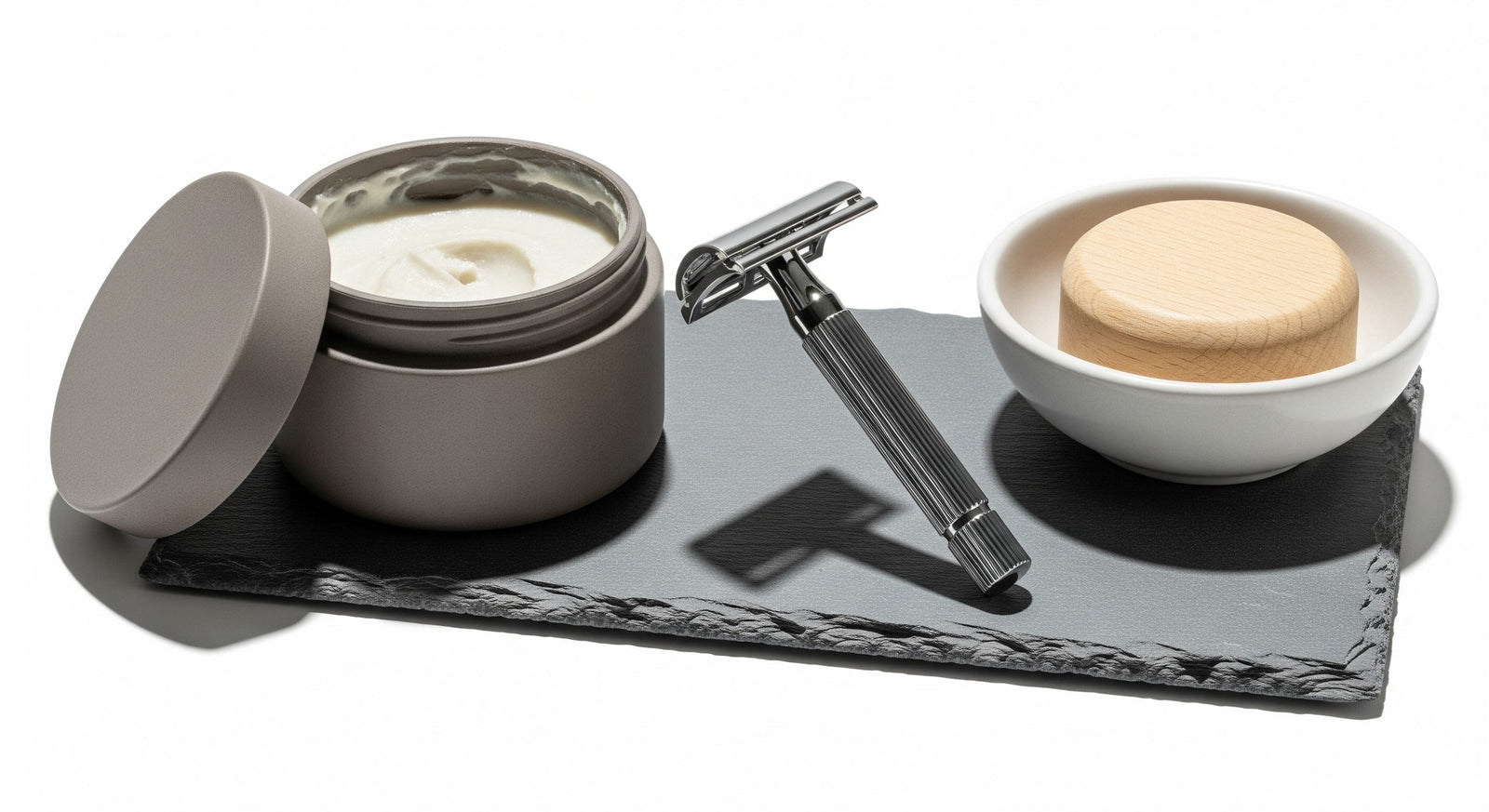
A double edge safety razor costs more upfront than a disposable. But replacement blades are a fraction of the price of modern cartridges (which have, let's be honest, reached frankly absurd price points for what is essentially a small piece of sharpened metal). Over a year, a safety razor with good blades saves most men a meaningful amount of money — while delivering a genuinely superior shave. That's a long term investment that pays for itself quickly.
For shaving cream specifically, a basic glycerin-rich formula — whether from a tube, a tub, or a proper shaving soap applied with a brush — will outperform most aerosol gels at any price. The function is simple: lubricate and protect. You don't need much else.
Where to splurge: the high-return investments for your grooming kit
Now for the other side. Because while we'd love to tell you everything is interchangeable regardless of price, that would be a comfortable lie — and we're not in that business. There are specific categories where a modest investment in quality pays off, and where going cheap costs you more: worse results, compromised skin health, and the inevitable second purchase when the first one fails to deliver.
Targeted skincare: serums and anti-ageing moisturisers
This is where the chemistry actually matters. Unlike a body wash that rinses off in seconds, a moisturiser or serum sits on your skin — it absorbs, it works, it interacts with your cells over hours. The active ingredients that make the real difference — retinol, hyaluronic acid, niacinamide, peptides — cost money to source and formulate correctly. Cheap versions often contain them at concentrations so low they're essentially decorative.
A well-formulated anti-ageing moisturiser is not a vanity purchase. It's maintenance. Think of it like servicing your car — you can skip it for a while, but your future self will have opinions about that decision. Men's skin, typically thicker and oilier than women's, still loses collagen progressively from your mid-twenties onwards. A good moisturiser with proven actives slows that process in a way a £4 petroleum jelly simply cannot. For a deeper look at which ingredients are actually worth seeking out, our guide to anti-ageing skincare ingredients explains each one in plain English.
Worth spending on? Absolutely.
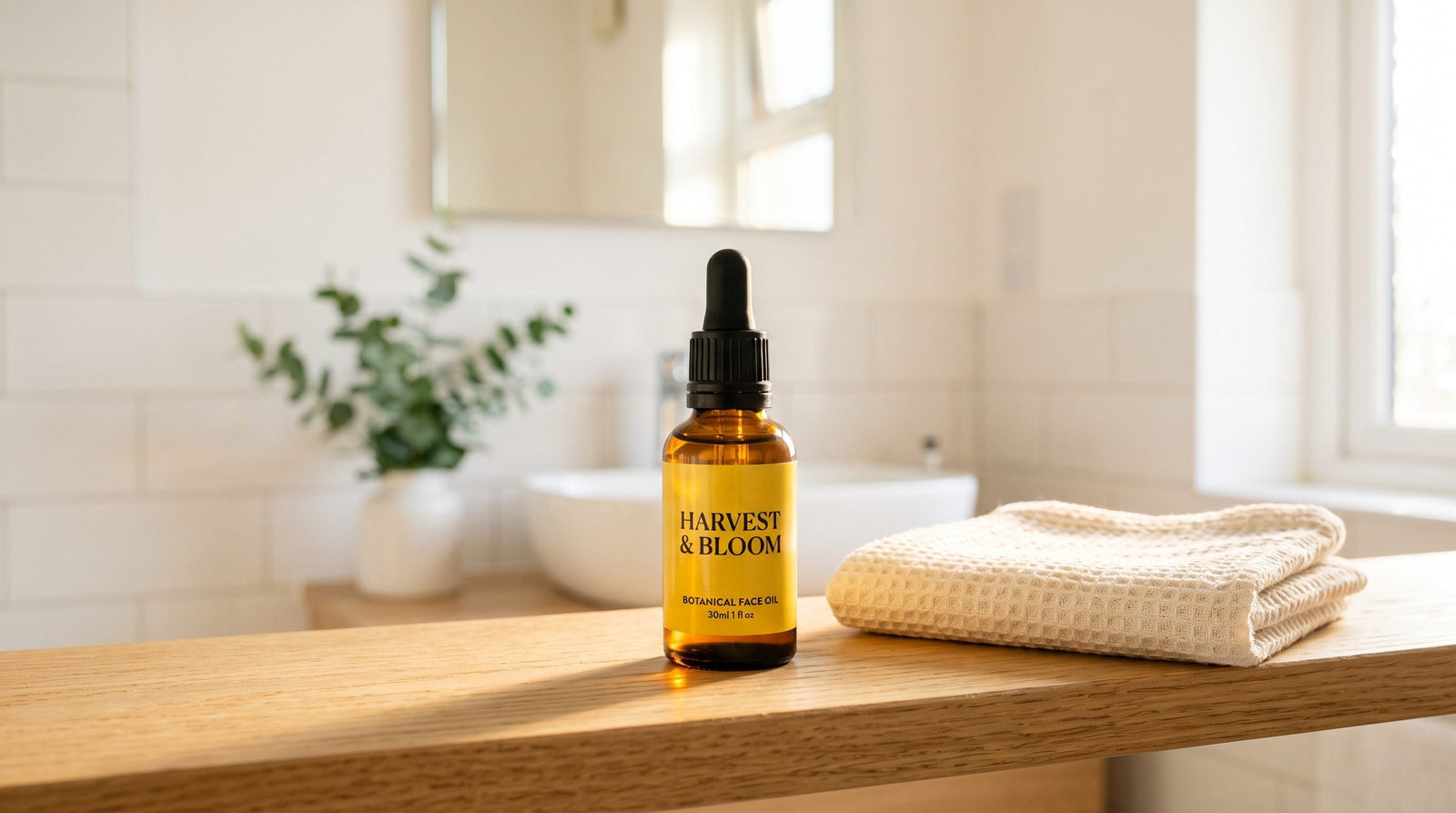
Beard care: why quality oils and balms matter
If you have a beard — and given that you're reading this, there's a decent chance you do — beard care is where quality makes one of the most visible differences of anything in your kit. Let me tell you why.
Beard hair is structurally different from scalp hair. It's coarser, more porous, and grows through skin that produces sebum (your natural skin oil) — but almost never enough to moisturise both the skin underneath and the beard itself simultaneously. This is where beardruff, itching, brittleness, and that wiry, unkempt texture come from.
A cheap beard oil fixes this temporarily. A good beard oil — one formulated with cold pressed botanical oils at meaningful concentrations — actually addresses the problem. Here's what the right ingredients do:
- Jojoba oil — technically a liquid wax, jojoba mimics your skin's natural sebum almost perfectly. It absorbs without greasiness and regulates moisture balance. Cheap products often use mineral oil instead, which sits on the surface and does very little.
- Argan oil — exceptionally high in oleic and linoleic acids, argan penetrates the hair shaft and reduces brittleness. It's why beards treated with quality argan-based oils feel soft rather than scratchy. A rough beard means an ugly beard.
- Sweet almond and peach kernel oils — lighter carrier oils that condition the skin beneath without clogging pores. Essential for avoiding beardruff.
The concentration and processing of these oils matters enormously. Oils extracted using heat lose much of their efficacy. It's not about the label — it's about how the ingredients were sourced and processed. That's a cost budget products almost always cut first.
And it's not just about oil. A quality beard balm gives you the best of both worlds: the deep conditioning of botanical oils and light hold for shaping. A product that conditions and styles in a single step earns its place in any kit — you're not buying two things when one does the job properly.
Hair styling products: the difference between hold and hope
Budget hair wax will hold your style until you step outside into a mild breeze, at which point your efforts will gently dissolve into chaos. We've all been there. (Well — I certainly have.)
Quality styling products use better polymers, waxes, and conditioning agents that actually perform under real conditions — humidity, movement, a full day at work. More importantly, good natural-formula styling products condition your hair while they hold it. Many cheap alternatives contain alcohols that dry out the hair shaft over time with repeated use.
If you want to understand the nuances of different styling product types — clays, pomades, pastes, and what each one actually does — our guide to styling thick and curly hair gets properly into the detail.
The grooming budget cheat sheet: save vs. splurge at a glance
| Product category | Verdict | Why | Key consideration |
|---|---|---|---|
| Body wash / bar soap | Save | Rinses off quickly; core function is simple | Avoid heavy artificial fragrance; choose gentle surfactants |
| Regular shampoo | Save | Match to hair type, not brand name | Sulphate-free if scalp is sensitive or dry |
| Shaving cream / soap | Save | Simple glycerin formula does the job | Invest in the razor system, not the cream |
| Safety razor | Splurge (once) | Upfront cost saves money long-term on blades | Quality steel lasts years; blades cost pence |
| Face moisturiser / serum | Splurge | Active ingredients matter; concentration varies wildly | Check actives are listed near the top of the ingredients |
| Beard oil | Splurge | Cold pressed botanical oils are measurably better | Cheap products often use mineral oil as filler |
| Beard balm | Splurge | Conditions and styles simultaneously | Look for cocoa butter, shea, and natural waxes |
| Beard shampoo | Splurge (mildly) | Facial hair needs a dedicated, gentler formula | Do not use regular head shampoo on your beard |
| Hair styling product | Splurge (mildly) | Better polymers mean actual hold; less drying over time | Natural formulas condition while they hold |
| Nail clippers / tweezers | Save | Function-based tool; quality threshold is low | Buy once, maintain well |
How to get the most from your grooming budget
Knowing where to spend is half the battle. Knowing how to spend smartly is the other half. Here are the principles we've found genuinely useful — not just theoretical advice.

1. Go dual-purpose wherever you can
Every product that does two jobs instead of one is effectively saving you money. Beard balm that conditions and styles. A moisturiser with SPF built in. A 2-in-1 shampoo and conditioner for days when you're in a rush (though not as your only option if you have genuinely dry hair). Products that pull double duty reduce the total number of items you need to keep stocked, which reduces how often you're restocking.
2. Read the ingredients list, not the marketing copy
The front of the package is written by a copywriter. The back is chemistry. Ingredients are listed in descending order of concentration — so if the hero ingredient you're paying for is listed seventh after a string of fillers, you're paying mostly for those fillers. Compare the ingredients lists of a budget product and a premium one. Sometimes they're genuinely close. Often they're not.
3. Buy bundles for frequently used products
If you know you'll use something consistently — beard oil, for instance — buying a bundle rather than individual units almost always works out cheaper per ml. Our Beard Care Bundle covers oil, balm, wax, shampoo, and conditioner together — a complete beard routine at better value than buying each piece individually. That's frankly just maths.
4. Use the right amount — not more
This one is underrated. A quality product used correctly lasts far longer than a cheap product used with the "more must be better" approach. Beard oil: three to five drops is sufficient for a short-to-medium beard. Hair clay: pea-sized, worked through dry or slightly damp hair. Moisturiser: a 5p coin-sized amount covers the full face. Using more doesn't improve results — it just empties the bottle faster.
5. Invest in tools, not just products
A quality boar bristle beard brush is not an extravagance. It distributes oil evenly through the beard, trains the hair in the right direction, and stimulates blood flow to follicles. Bought once, looked after well, it'll outlast dozens of products. Same logic applies to a good safety razor, a decent comb, and a proper shaving brush. The tools are often better value per use than the consumables.
6. Watch for sales — but don't chase them
If you use something regularly, stocking up during a sale makes obvious sense. What doesn't make sense is buying products you don't need because they're discounted. That's not saving money. That's just slower spending. Stick to your routine, know what you actually use, and buy more of those things when the price is right.
What products should I actually use? The Seven Potions recommendations
Enough philosophy. Here's what a practical, well-considered grooming kit actually looks like — products that genuinely earn their place, explained in terms of what they do and why they're in the kit at all.
For beard care: the complete toolkit
If you want to do this properly in one move, the Beard Care Bundle is the most efficient way to build a full beard routine. It includes our beard oil, balm, wax, shampoo, and conditioner — every layer of beard care covered, at better-than-individual pricing.
But let's break down the key players individually, because understanding why each one is in your kit is half the battle in actually using them correctly.
Beard Oil: Our oils are formulated with cold pressed jojoba, argan, and sweet almond oil. As we mentioned earlier — jojoba mimics sebum, argan strengthens and softens the hair shaft, and sweet almond conditions the skin beneath without blocking pores. A few drops (three to six, depending on beard length), warmed between your palms and worked through the beard after washing, is your daily foundation.
Beard Balm: Our balm combines those same conditioning oils with coconut oil, peach kernel oil, and cocoa butter — with a natural wax base for hold. The cocoa butter is rich in fatty acids that coat the hair, reducing frizz and adding a healthy sheen. The wax gives you enough hold to shape and tame without making the beard feel stiff or waxy. Particularly good for medium to long beards where oil alone doesn't quite cut it.
Beard Shampoo: Our Woodland Harmony Beard Shampoo is formulated specifically for facial hair — gentler than scalp shampoo, cleansing without stripping the natural oils that keep beard hair soft. Use it two to three times per week rather than daily. Over-washing is one of the most common causes of a dry, brittle beard, and it's entirely avoidable.
For skincare: where the investment pays off
Our Anti Ageing Moisturiser is formulated with active ingredients at concentrations that actually work — not trace amounts included for label appeal. Used morning and evening after cleansing, a pea-to-5p-coin-sized amount is all you need. If you want the full morning combo, the Anti Ageing Moisturiser and Face Wash bundle pairs cleanser and moisturiser together for a streamlined two-step routine. No ten-step nonsense.
Budget grooming tips and tricks: the quick-reference checklist
- Match products to your actual needs. Buying "volumising" shampoo when you have fine straight hair is not saving money — it's spending on something irrelevant.
- Less product, more often. A penny-sized amount of styling product reworked through the day outperforms a massive application that sets badly in the morning.
- Wash your beard two to three times a week, not daily. Over-washing strips essential oils and forces you to use more conditioning product to compensate. Counterproductive and expensive.
- Invest in a safety razor once and never look back. The blades cost a fraction of cartridges, and the shave is genuinely better. Long term, it's one of the most impactful purchasing decisions in men's grooming.
- Check the expiry dates on your products. Active skincare ingredients degrade over time. An ancient moisturiser you're using to "finish it off" may not be doing much at all.
- Keep your tools clean. A beard brush or comb with built-up product residue distributes that residue back into your beard. Rinse them regularly and they'll work better and last longer.
- Apply beard balm to damp, not wet, hair. Slightly damp beard hair absorbs conditioning ingredients better than bone dry hair. Post-shower, towel dry briefly, then apply.
- Adjust for the seasons — it's cost-effective. You don't need the same moisturiser in June that you need in January. Lighter formulas in summer mean you use less product and spend less. We covered this in our seasonal grooming guide.
- Trim your beard at home between barber visits. A decent pair of clippers pays for itself quickly. Basic maintenance trimming is learnable, and it significantly extends the life of a professional shape.
- Don't buy everything at once. Build your kit incrementally. Start with the highest-impact items — beard oil, moisturiser, a decent cleanser — and add from there as you learn what you actually need.
Frequently asked questions
Are expensive men's grooming products really better?
Sometimes yes, sometimes no — and the difference lies in the ingredients and formulation, not the price tag. For products that absorb and work over time (moisturisers, serums, beard oils), higher-quality formulations with better-sourced ingredients do make a measurable difference. For products that wash straight off — body wash, basic shampoo — the gap between budget and premium is often negligible. Read the ingredients list rather than the marketing copy. That's where the real answer lives.
What is a good basic grooming routine for a man on a budget?
A solid baseline covers four things: a face wash morning and evening, a decent moisturiser with actives, a shampoo matched to your hair type (plus conditioner if your hair runs dry), and dedicated beard care if applicable — that means a proper beard shampoo two to three times a week and quality beard oil daily. Four products covering the fundamentals, and none of them need to be expensive — with the exception of the moisturiser and beard oil, where quality genuinely matters. Build from there as your budget allows.
How can I save money on men's grooming products?
The most effective strategies: buy bundles and dual-purpose products rather than a separate item for every conceivable function; use the correct amount of each product (most men use far more than needed, which empties bottles faster); invest once in quality tools like a safety razor or beard brush that pay for themselves over time; and stock up on frequently used items during sales. The underlying principle is simple — spend more on products that stay on your skin, less on those that rinse off immediately. Follow that and your grooming spend will sort itself out fairly quickly.
Building a smarter grooming routine: the bottom line
Grooming on a budget is not about cutting corners everywhere. It's about making the right call in each category — knowing when "good enough" genuinely is good enough, and when spending a bit more will actually change what you see in the mirror.
Save on the basics that rinse off or require minimal chemistry. Spend on the products that sit on your skin, condition your beard, or hold your hair through a full day's worth of wind, rain, and whatever else a British summer throws at you (all of the above, simultaneously, at unpredictable intervals).
And above all — stop buying things you don't actually use. Half-empty bottles at the back of the bathroom shelf, slightly expired, purchased in a moment of optimism and ignored ever since: that's where grooming money actually disappears. A smaller kit of genuinely effective products beats a crowded shelf of things that almost work.
If you want to see what a complete, considered beard routine looks like — from oil to balm to shampoo to brush — explore the full Beard Care Bundle and see everything working together.