
Embracing your unique texture: why thick, curly and wavy hair works in your favour
You already know the feeling. You wake up, catch yourself in the mirror, and your hair has decided — entirely on its own — to become something that doesn't correspond to anything found in nature. Not quite curly. Not quite wavy. Thick as a hedge and with opinions of its own. You've tried running your fingers through it. You've tried product. You've tried reasoning with it. None of it stuck.
Here's what nobody tells you: thick, curly-wavy hair isn't a problem to be fixed. Among the most versatile hair types a man can have, actually. The reason it keeps defeating you isn't some fundamental flaw in your hair — it's that most advice out there is written for men with either curly hair or wavy hair, as if the two never coexist. They very much do. And men whose hair sits in that gloriously chaotic middle ground — thick, with curl patterns that shift from root to tip, waves living right next to ringlets — need a completely different playbook.
This is that playbook.
We're going to cover everything: understanding what your hair is actually doing and why, building a proper pre-styling routine, choosing the right products, mastering multiple specific looks step by step, and keeping your style going on day two and three without starting from scratch. Think of this as the guide we wish we'd had before spending an embarrassing amount of money on products that just sat on top of our hair doing absolutely nothing useful.
The men pulling off the best textured looks right now — the effortless, lived-in styles you see on actors like Oscar Isaac or musicians like Jon Batiste — they've cracked the fundamentals. And honestly? The fundamentals aren't complicated. They just need explaining properly. So let's do exactly that. If you also want to see how your hair pairs with facial hair, we wrote a cracking piece over here: The Perfect Match: A Guide to Haircut & Beard Styles.
Know your hair before you style it
Not all thick, textured hair behaves the same way, and the reason your mate's styling routine doesn't work for you is often because you're working with a fundamentally different texture. Before anything else, let's break down what you're dealing with.
| Hair Type | What It Looks Like | Main Challenges | Key Needs |
|---|---|---|---|
| Thick Wavy | Loose S-curves, high volume, falls away from the scalp | Frizz, bulk, loses definition in humid weather | Light moisture, anti-frizz, controlled hold |
| Thick Curly | Defined coils or spirals, springs up when dry | Shrinkage, dryness, tangles easily | Deep hydration, curl defining products, gentle detangling |
| Thick Curly-Wavy (the combo) | Mix of waves and curls, varies across the head | Inconsistent texture, hard to style uniformly, volume plus frizz | Moisture balance, flexible hold, working in sections |
| Thick Coily | Tight zigzag patterns, maximum shrinkage | Extreme dryness, breakage, requires most moisture | Heavy conditioning, protective styles, oils |
Most of the men reading this are in that third row. The combo. Both textures, different spots on the head, and a general sense that nothing in the product aisle was designed with you in mind. Once you know specifically what your hair is doing in each zone, you stop fighting it as one uniform problem and start solving it patch by patch. That shift alone changes more than any product swap.
Pre-styling care: what actually matters before you touch a product
Here's the unglamorous truth: how you style your hair matters far less than how you care for it before you even think about styling. Skipping this section is exactly what separates the men who pull off great textured hair from the ones who've given up and gone for a buzz cut. Nothing wrong with a buzz cut — but let's not let it be a surrender.
1. Wash less, but wash right
Thick, curly-wavy hair is naturally drier than straight hair. The reason is simple — the twists and curves in each strand make it harder for your scalp's natural oils to travel down the hair shaft. So when you wash every single day with a harsh, sulphate-heavy shampoo, you're stripping away what little moisture is there. That leads to frizz, brittleness, and hair that looks dull within hours of styling.
Aim to wash two to three times a week at most. On the days in between, your hair — and your texture — will actually thank you for it. Day-two hair on a curly or wavy head often has better definition than freshly washed hair, because a small amount of natural oil works as a built-in styler.
2. Conditioner is non-negotiable
If you're skipping conditioner, stop. Immediately. Conditioner replenishes moisture, smooths the cuticle layer (which is what causes frizz when it's rough and open), and turns detangling from a battle into something that just happens. For thick, textured hair, leave your conditioner in for at least two to three minutes before rinsing. If you can manage a weekly deep conditioning treatment, even better — your hair will hold styles longer and look healthier between washes.
Our Hair Shampoo and Conditioner is a solid starting point here — a gentle, nourishing combination that cleans without stripping. For men who want to sort both at once, it's worth keeping things simple.
3. The drying method changes everything
How you dry your hair might be the single most underrated factor in frizz control. Let's go through the options.
- Rough towel drying: The worst thing you can do. Rubbing a regular towel against textured hair roughs up the cuticle layer and turns definition into a frizz cloud. Don't.
- Microfibre towel or cotton t-shirt: Much gentler. Scrunch upward — don't rub. This encourages your natural curl and wave pattern to form while removing excess water.
- Air drying: Ideal if you have the time. Apply your product to soaking wet or very damp hair, scrunch to encourage pattern, and leave it alone. Resist touching it while it dries. This is important. Touching damp textured hair while it dries creates frizz.
- Diffuser attachment on a hair dryer: The best of both worlds. A diffuser disperses heat evenly and doesn't disturb curl patterns the way direct airflow does. Dry on a medium heat setting, scrunching hair upward into the diffuser cup. Most curl-focused barbers and hairdressers swear by this method for men with curly-wavy hair — and having tried everything else, we'd agree with them.
4. Detangle before, not after
Use a wide-tooth comb on wet, conditioned hair — never on dry hair. Detangling dry, thick, curly hair is a shortcut to breakage and a lot of unnecessary pain. Work from the ends upward, not from the root down. And once your hair is dry and styled, put the comb away. A wide-tooth comb is your best friend on wash day; it becomes your enemy on styling day.
Styling products: what actually works for textured hair
The product aisle is overwhelming. We know. There are gels that turn your hair to concrete, creams that make it greasy by noon, and mousses that smell like 1997 and perform accordingly. Here's the actual breakdown of what works for thick, curly-wavy hair — and why.
Hold vs. moisture: getting the balance right
Thick, textured hair needs two things from a product: moisture to fight dryness and frizz, and hold to keep the shape you've created. Products that offer one without the other will always disappoint you. A high-hold gel with no moisture will crunch your hair into a dry, flaky mess. A moisturising cream with no hold will give you beautiful, soft curls that collapse into formlessness within the hour.
What you're looking for is a product that nourishes while holding — something that moves with your texture rather than locking it into place like plaster. Which brings us to the good stuff.
What products should I use?
We're going to be straight with you: we make products for men's grooming, and two of them happen to be excellent for thick, curly-wavy hair — even though they weren't originally designed exclusively for it. Here's why they work.
Seven Potions Beard Balm as a hair styler
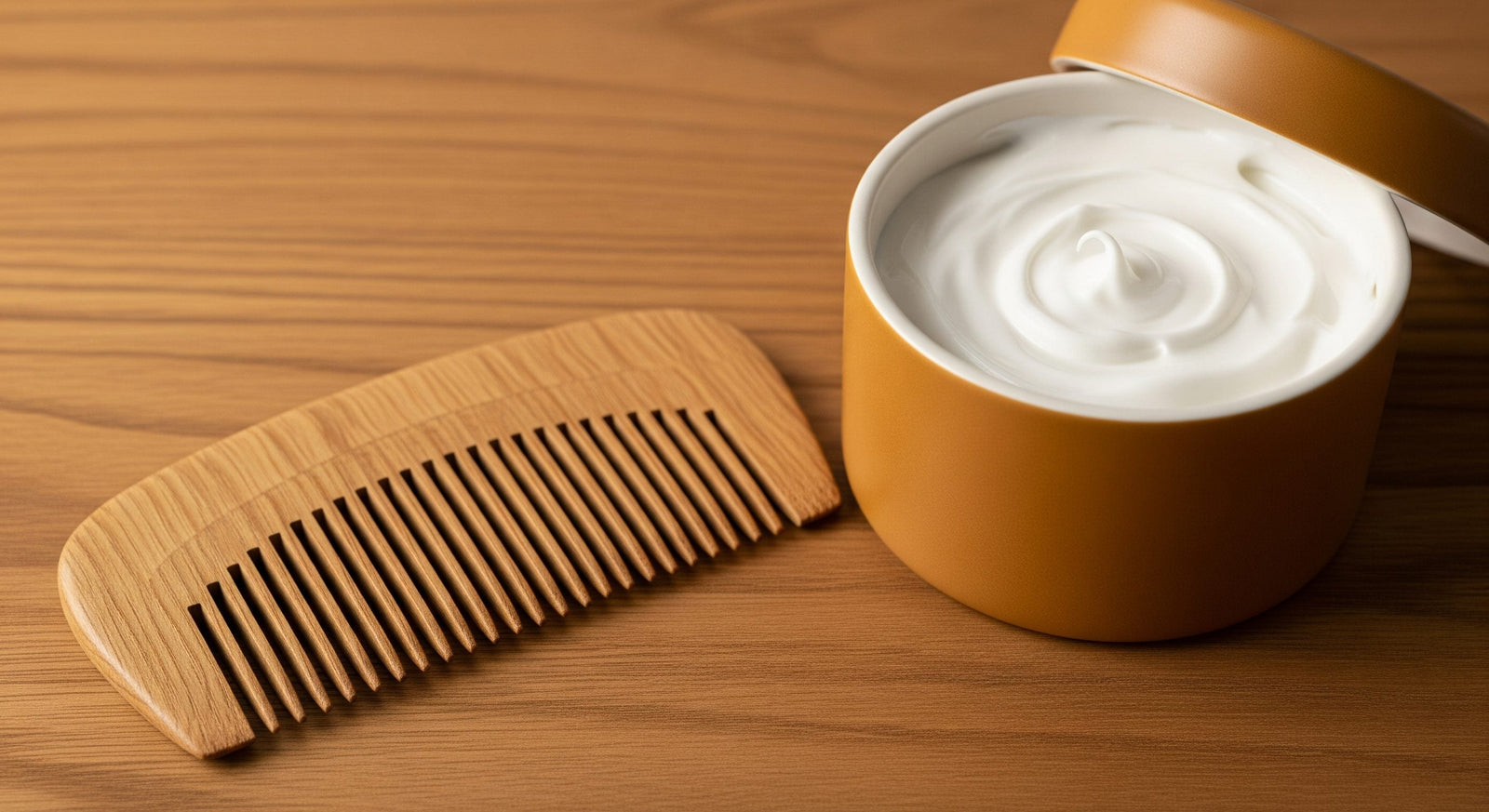
Stay with us on this one. Our Beard Balm is formulated with coconut oil, peach kernel oil, and cocoa butter. All three happen to be particularly well-suited to textured hair. Coconut oil penetrates the hair shaft rather than just sitting on top of it, and reduces protein loss, which keeps hair stronger and more elastic. Cocoa butter softens the cuticle and adds a natural sheen. Peach kernel oil is lightweight and high in oleic acid, which means it absorbs quickly without leaving hair greasy or weighed down.
A pea-sized amount of Beard Balm worked through the mid-lengths and ends of thick, curly-wavy hair adds definition, controls frizz, and gives a soft, natural hold that doesn't look styled. That's the look most men with this hair type are after — put-together without being obvious about it. Use it as a finishing product after your main styler, or alone on non-wash days when you just need to tame the edges and pull the shape back together.
Seven Potions Beard Oil for pre-styling moisture
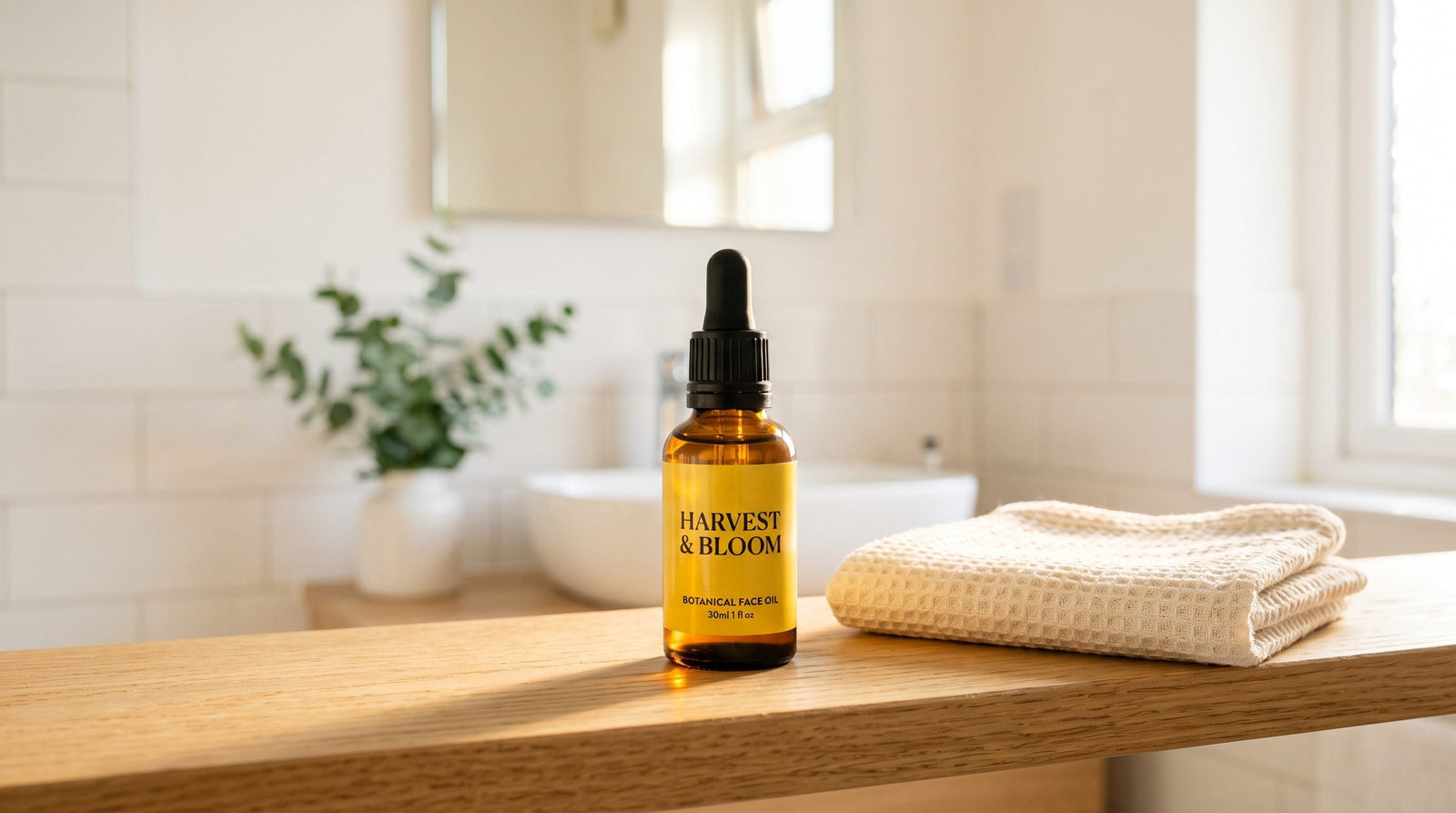
Similarly, our Beard Oil — available in Woodland Harmony (cedarwood and sandalwood), Citrus Tonic (fresh and summery), or Pure Equilibrium (unscented, for sensitive skin types) — is built around jojoba oil, which is chemically very similar to your scalp's own sebum. That means your hair recognises it. It absorbs it rather than rejecting it.
A few drops of beard oil worked through damp hair before applying any other product creates a moisture base layer that fights frizz from the inside out. Argan oil, another key component, is packed with vitamin E and fatty acids that smooth the hair cuticle and add a natural sheen without greasiness. Think of it as priming your hair the way you'd prime a wall before painting — the product you put on top performs better, lasts longer, and the overall result looks considerably more intentional.
Three to four drops through mid-lengths and ends on damp hair. That's it. Don't overdo it — a little goes a long way with oil, and thick hair can be surprisingly quick to look over-saturated.
The rest of the toolkit
Beyond these two, here's what's worth having in your bathroom:
- Salt Spray: Our Salt Texturizing Hair Styling Spray is brilliant for enhancing natural waves and adding grip without weight. Spritz onto damp hair, scrunch, and let air dry for a textured, beachy finish that suits medium-length wavy hair particularly well.
- Hair Clay: For medium-to-strong hold with a matte finish, our Hair Styling Clay gives you control without the stiffness of a gel. Ideal for styling defined curls or creating structure at the roots for lifted, voluminous looks.
- Hair Styling Paste: The Hair Styling Paste sits between a cream and a clay — flexible hold, slight texture, and easier to rework throughout the day. Good for the combo hair type because it moves with your texture rather than fighting it.
- Wide-Tooth Comb: Already mentioned, but worth repeating. Non-negotiable for wet detangling.
- Diffuser: If you don't have one, get one. The difference it makes to curl definition is remarkable.
Techniques for specific looks
Right. This is where most guides let you down — they tell you to use product and scrunch, then wave vaguely at the general concept of "style." We're going further. Here are four specific looks for thick, curly-wavy hair, each with a proper step-by-step breakdown.
Look 1: The defined natural (your every day)
Enhanced, defined texture that looks like you woke up this way — which, after a few weeks of doing this properly, you more or less will.
- Wash and condition. Rinse conditioner thoroughly.
- While hair is still soaking wet, apply three to four drops of beard oil from mid-length to ends.
- Apply a generous pea-to-marble-sized amount of styling paste or cream into your palms, emulsify, then work through hair in sections — don't just scrunch at the surface.
- Scrunch upward section by section to encourage your natural pattern to form.
- Diffuse on medium heat, scrunching sections upward into the diffuser cup. Work from underneath. Don't touch the top until it's about 80% dry.
- Once fully dry, scrunch a pea-sized amount of beard balm between your palms and smooth lightly over any frizzy areas. Don't rework the whole style — just tame the edges.
Look 2: The voluminous wave
Best for men with more wave than curl, medium to longer length hair. Think effortless, full, like you've just come off a yacht — except without the questionable tan lines.
- Towel dry hair with a microfibre towel — scrunch, don't rub — until damp but not dripping.
- Spritz salt texturizing spray evenly through the hair. Don't saturate — two to three passes is enough.
- Apply a small amount of styling paste for hold, working from the underneath layers outward.
- Flip your head upside down and scrunch for thirty seconds to build volume at the roots.
- Allow to air dry or diffuse briefly at the roots for lift. Do not brush.
- Finish with the lightest smear of beard balm on your palms, pressed gently over the surface to tame any flyaways.
Look 3: The structured slick back
For occasions when you need to look polished — a job interview, a date, a situation where your hair doing what it wants is genuinely not an option.
- Start with clean, slightly damp hair.
- Apply a generous amount of hair clay — work it through thoroughly from root to tip, using a comb to distribute evenly.
- Using a round brush and a hair dryer on medium heat, blow dry sections backward, directing the hair away from the face and downward.
- Work from the front hairline backward, keeping tension with the brush to smooth and elongate the natural curl or wave.
- Once fully dry, apply a very small amount of Hair Styling Pomade to the surface for sheen and to lock the shape in place.
- Use a fine-tooth comb to refine the parting or direction of the style.
Look 4: The low-effort textured crop
For shorter, thicker hair — particularly if you've got a fade or taper underneath. You want volume sitting up top with enough definition that it looks deliberate rather than simply large.
- Dampen hair with a water spray bottle if not freshly washed.
- Rub a pea-sized amount of hair clay between your palms and apply from the roots upward, then forward.
- Use your fingertips — not a comb — to define sections and encourage your natural texture to clump and form.
- Dry briefly with a hair dryer on low, using your fingers to lift and direct at the roots.
- Leave the ends alone. The natural curl-wave mix at the tips is the character of this look. Don't smooth it out.
Common problems and how to actually fix them
Frizz: the eternal battle
Frizz happens when the cuticle layer of your hair is rough and raised, which lets moisture from the air enter the shaft and cause it to swell unevenly. Thick, curly-wavy hair is particularly prone to this because the cuticle is naturally more irregular than on straight hair. Humidity makes it worse. Sleeping on a cotton pillowcase makes it worse. Touching your hair while it dries makes it significantly worse.
The solutions: a silk or satin pillowcase (the improvement is immediate — try it once and you'll never go back to cotton), applying oil before your styling product to seal the cuticle, and — we can't say this enough — leaving your hair alone while it dries. Also, if you're heading into summer heat and humidity, have a look at our seasonal grooming guide — there's specific advice in there for managing hair and skin in warmer, more humid conditions.
Day two and three hair: refreshing without washing
This is the part nobody covers properly. Here's the actual technique.
- Fill a small spray bottle with water — a teaspoon of conditioner mixed in helps enormously.
- Lightly mist your hair until it's just damp, not wet.
- Scrunch your existing product back into shape with your hands.
- Apply a tiny amount of beard balm or beard oil to any areas that have gone dry or frizzy overnight.
- Scrunch once more. Leave it alone.
That's a perfectly acceptable — sometimes better — version of your day-one style, in about two minutes.
Managing volume: when there's simply too much of it
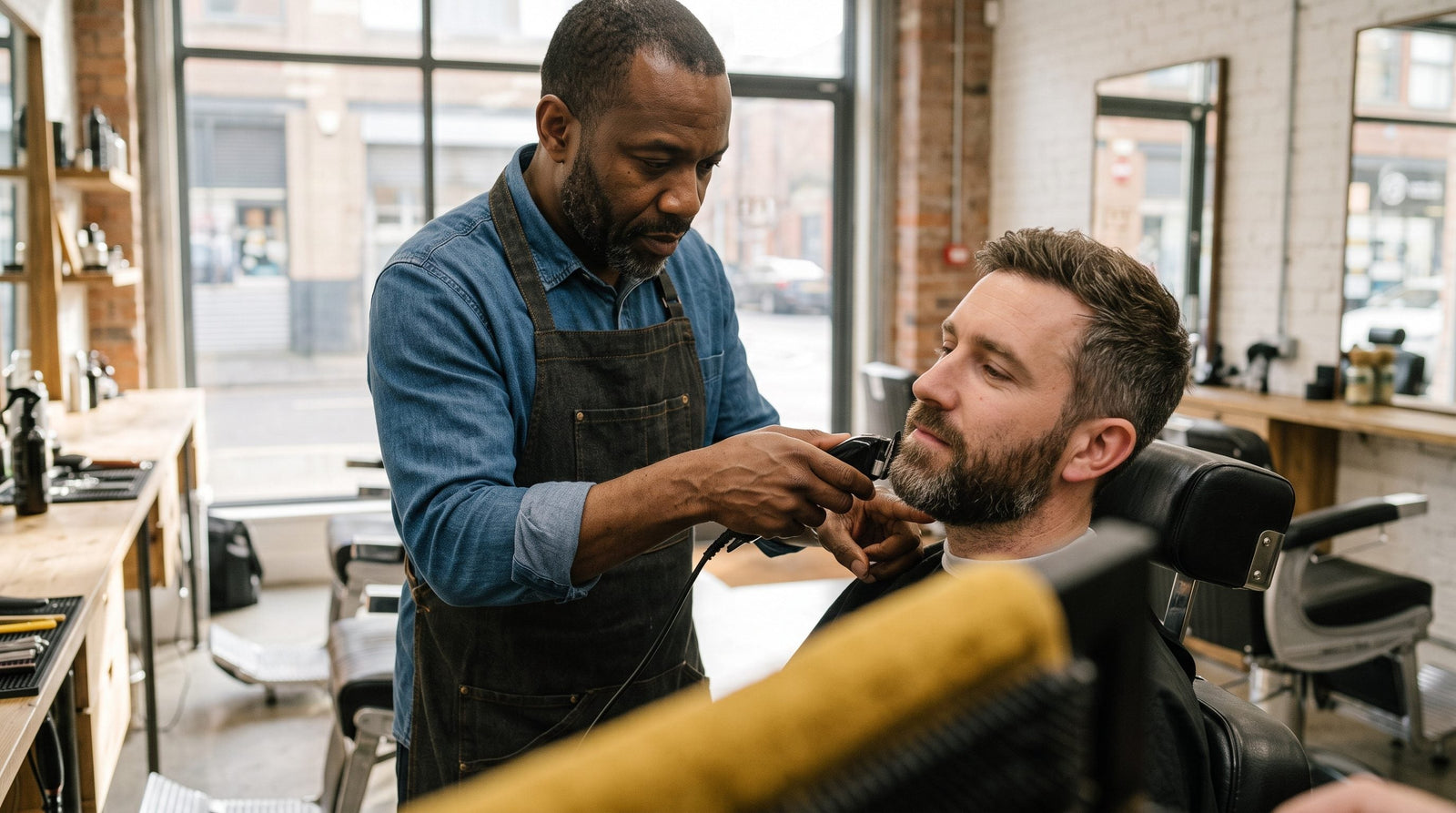
Thick, curly-wavy hair has magnificent volume but it can tip over into looking shapeless if it's not managed at the sides. Talk to your barber about layers and point cuts — these remove bulk without removing length and allow your texture to fall more naturally. A good haircut does as much work as any product. For more on getting the cut right for your hair and face, our guide to classic men's haircuts is a useful companion to this one.
The mushroom effect
You know what we're talking about. The head becomes a sphere. It's particularly common when thick hair is cut bluntly at the sides without any layering or tapering. The fix is architectural: you want your hair fuller at the top and tapered or faded at the sides. Tell your barber to remove weight through the sides using texturising scissors or point cutting, and to build layers through the top so the shape falls rather than expands outward. That one conversation at the barber eliminates years of styling frustration.
Quick-reference routine
Pull this out whenever you need it. The condensed version — a practical checklist for men with thick, curly-wavy hair who want to style smarter, not harder.
- Wash two to three times a week maximum. Daily washing strips natural oils and worsens frizz and dryness.
- Always condition. Leave it in for at least two minutes. Deep condition once a week if you can manage it.
- Apply products to wet hair, not dry hair. This is the single most common mistake. Product applied to dry, curly hair doesn't distribute — it just sits on top and goes crusty. Wet hair means open cuticle means product actually penetrates.
- Layer your products thin-to-thick. Oil first (seals moisture in), then your styling product. Never the other way around.
- Scrunch, don't smooth. Smoothing kills curl pattern. Scrunching encourages it.
- Use a diffuser for faster drying without frizz. Medium heat, low speed. Hold sections up into the diffuser cup rather than moving the dryer around.
- Sleep on silk or satin if frizz is a major problem. Cotton pillowcases create friction and roughen the cuticle overnight.
- Refresh with water and conditioner mist on non-wash days. A spray bottle in the bathroom saves you washing when you don't need to.
- Keep a pea-sized amount of beard balm on hand for touchups. Tame flyaways and frizzy edges without disturbing your whole style.
- Get a layered cut every six to eight weeks. The right haircut does half the work your products are currently doing.
- Don't brush curly hair dry. Wide-tooth comb on wet, conditioned hair only. Brushing dry, curly-wavy hair gives you a very large, very impressive halo of frizz.
- Consider first impressions. Good grooming extends beyond hair — if you want the full picture, our guide to first impression grooming covers skin, scent, and the details that pull everything together.
Frequently asked questions
How do men style thick wavy hair?
Apply a lightweight styling product — a paste, cream, or texturizing spray — to damp hair, then scrunch upward to encourage your natural wave pattern before air drying or diffusing. Avoid brushing once dry, and build your style while the hair is still wet. That's when textured hair is most responsive to shaping.
What products are best for men's curly hair?
Curly hair responds best to products that balance moisture with flexible hold — styling creams, natural balms with nourishing oils, or pastes rather than stiff gels. A quality balm formulated with coconut oil, cocoa butter, or shea butter works particularly well as a finishing product to define curls and control frizz without a crunchy texture. Avoid anything with high alcohol content, as this dries out curly hair and worsens frizz.
How do men keep their curly hair from getting frizzy?
Frizz prevention starts in the shower — condition every wash, use cool water for your final rinse (which closes the cuticle), and dry by scrunching with a microfibre towel rather than rubbing. Applying a nourishing hair oil to damp hair before your styling product seals the cuticle and creates a moisture barrier that resists frizz throughout the day.
Should men with thick hair use conditioner?
Absolutely — thick hair, especially if it's curly or wavy, is naturally prone to dryness because the scalp's oils struggle to travel down the uneven shaft. Conditioner restores moisture, smooths the cuticle layer, and makes the hair far more manageable and easier to style. Skipping conditioner is one of the most common reasons thick, textured hair looks rough, frizzy, and difficult to work with.
What is the best way for a man to dry his curly hair?
A diffuser attachment on a hair dryer set to medium heat and low speed is your best option — it distributes heat evenly and preserves curl pattern rather than disrupting it as direct airflow would. If you prefer air drying, apply your product to soaking wet hair, scrunch to shape, then leave it completely alone until dry. Touching it midway through the drying process is what creates frizz.
Where to go from here
Thick, curly-wavy hair is genuinely one of the more interesting things a man can work with. Characterful, adaptable, and — once you stop wrestling it into submission — capable of looking properly good. The men who struggle with it are almost always the ones who've been handed straight-hair advice in a curly-hair world.
Start with the foundations: the right washing frequency, proper conditioning, and drying with a microfibre towel or diffuser. Build from there — a few drops of oil on damp hair, then your styling product worked through in sections. Let it dry. Leave it alone. Tame the edges with a tiny amount of balm. Most days, that's genuinely it.
And on the days when your hair decides to be difficult — because it will, occasionally, because that's just the nature of textured hair and also weather — you now know exactly what's happening and exactly how to fix it.