
Introduction: why your haircut and beard pairing matters
You've spent twenty minutes in front of the mirror. The beard is coming along nicely — maybe even impressively. The haircut is fresh from the barber. And yet something feels... off. Like wearing a beautifully tailored suit jacket with tracksuit bottoms. Individually, both elements are solid. Together, they're fighting each other.
Sound familiar? You're not alone, mate.
A very common question I get all the time is some variation of: "Why doesn't my look come together?" And more often than not, the answer isn't the beard itself, or the haircut itself — it's the pairing. The relationship between the two. A cohesive haircut and beard combination doesn't come together by accident. It takes some thought, a working knowledge of your own face, and the right products to keep it looking sharp. Three things. That's all.
That's exactly what this guide is for. We're going to walk you through the whole picture: how face shape governs your best options, which classic and modern haircut and beard combinations are worth knowing, and how to maintain everything so it looks considered rather than coincidental. There's a world of difference between "I have a beard and hair" and "I have a look."
And if you want a broader foundation before we get into the pairings themselves, our guide to classic men's haircuts is a great starting point.
The foundation: matching styles to your face shape
Before you start scrolling through Instagram for inspo, your face shape is what actually determines which haircut and beard combination will work — not trends, not what looks good on someone else, not what your barber happens to prefer cutting. Everything else comes second. Work with your shape, and almost any style can look considered. Work against it, and even the most fashionable pairing will feel wrong.
Once you know your shape, the decisions get significantly easier.
Oval face
Oval faces are, frankly, the jammy ones. The proportions are naturally balanced — slightly wider at the cheekbones, gently narrowing at the forehead and jaw — which means nearly every combination works. High fade with a full beard, a textured crop with stubble, a side part with a groomed short box beard. All of it lands. (Don't rub it in to your square-faced mates.)
Square face
Strong jawline. Roughly equal width at the forehead and jaw. This is an imposing, masculine face shape — think Henry Cavill — and it responds well to softening at the corners. A beard that's fuller on the chin and shorter on the sides draws attention downward and elongates the face slightly. Pair that with a haircut that adds a little height on top — a quiff, a textured crop, or a pompadour-style — and the two work together rather than competing.
Round face
Roughly equal width and length, soft at the jaw. The goal here is creating the illusion of length. A beard that's longer on the bottom and trimmed closer on the sides does exactly that — it gives the face vertical direction. Pair it with a haircut that has height (a high fade, a low taper with volume on top), and you're adding structure where nature was generous with curves. Avoid full, wide beards — they'll make a round face look rounder.
Heart face
Wider at the forehead, narrowing significantly toward the chin. The chin is the weak point here, visually speaking. A beard with more volume at the jaw — even a light full beard or a chin strap with some depth — balances out the width at the top. Medium-length haircuts with soft texture work better than very voluminous styles that add more width up top.
Diamond face
Narrow at the forehead and jaw, widest at the cheekbones. Fairly rare, and quite striking. The goal is to add width at the forehead and jaw while letting those cheekbones do their thing. A side part or a slicked-back style adds apparent width at the top. A short, neat beard or well-shaped stubble grounds the chin without over-narrowing it.
Oblong / rectangle face
Long and narrow. Here, you want to avoid adding further length — so skip the chin-lengthening pointed beard and opt for a fuller, rounder beard shape that adds width. Haircuts with volume on the sides (mid-length, natural styles) work better than tall styles that push the face even longer.
It's also worth considering your hair texture and beard density here. If you've got thick, curly hair, a beard that mirrors that natural texture — deliberately or organically — creates a unified look. If your hair is fine and straight, a heavy full beard can look disconnected from the top. And if your beard grows patchily, that's a whole separate conversation — one that affects which styles are even viable for you right now. We'll come back to that.
5 classic haircut and beard combinations making a comeback
Trends come and go — we all remember whatever was happening with frosted tips in the early 2000s, and we don't talk about it — but certain pairings have genuine staying power. These five have been around long enough to prove themselves, and they're all making a strong return in 2026.
1. The classic side part + short trimmed beard
Clean. Confident. Utterly timeless. The side part has been a gentleman's staple for decades — the sort of thing Clark Gable or Cary Grant wore without thinking about it, and it still reads exactly the same way now: composed, unhurried, like you've got somewhere to be. Paired with a short, neatly trimmed beard (3–5mm, clean edges at the cheek and neck lines), it creates a polished look that works equally well in a boardroom or at a nice restaurant. Good for: oval, square, and diamond face shapes. Lifestyle note: This is your corporate-environment go-to. Structured, respected, zero ambiguity.
2. The undercut + medium full beard
The undercut — long on top, short on the sides with a hard line — creates dramatic contrast that a medium full beard balances beautifully. The length on top and the length in the beard form visual anchors at either end, with the clean sides keeping everything from looking overwhelming. Good for: oval, oblong, and heart face shapes. Maintenance note: The disconnection line between the undercut and the beard needs regular cleaning — this isn't a set-and-forget style.
3. The crew cut + heavy stubble
Sometimes less really is more. A short, neat crew cut with 3–5 days of heavy stubble (sometimes called "10-day stubble") is one of the most effortlessly masculine looks you can pull off. It requires almost no styling on the hair side, and the stubble does the heavy lifting. Famously flattering on square faces. George Clooney did this better than anyone, and honestly, he still does. Good for: square, oval, and round face shapes.
4. The Ivy League + neat boxed beard
A longer crew cut with a defined parting — the Ivy League, also called the Princeton — carries a quietly distinguished energy that suits a neat, well-defined box beard perfectly. The boxed beard has clean, angular lines at the cheek and jaw that mirror the tidiness of the haircut. Good for: oval, square, and oblong face shapes. Lifestyle note: Creative professionals who still need to look put-together — this is your pairing.
5. The pompadour + short stubble
The pompadour is volume and height at the front, swept back, classic rock-and-roll architecture. Pairing it with a heavy, full beard can tip into costume territory. Short stubble or a very neatly trimmed short beard keeps things grounded. The dramatic top set against a clean, understated beard is exactly what makes this work. Good for: oblong and heart face shapes specifically — the height helps elongate round and soften wide. For styling the pompadour itself, our Hair Styling Pomade gives you the hold and shine you need without going crunchy.
Modern pairings: 2026's top hair and beard trends
Now we're in current territory. 2026 has been a good year for men's grooming — the pendulum has swung back from the hyper-polished, overly-finished looks of the late 2010s toward something more textured, more lived-in, and frankly more wearable. Here's what's working.
The textured crop fade + full beard
This combination has dominated barbershop request lists this year and it's not hard to see why. A textured, choppy crop on top — often with a slight fringe — faded tightly on the sides, paired with a full beard that's been shaped and moisturised rather than left to its own devices. The clean fade strips back the sides, which makes the full beard feel structured rather than overgrown. Particularly effective on oval and round faces. For the texture work on top, the Hair Styling Clay is built for exactly this — matte finish, natural movement, serious hold without the stiffness.
The buzz cut + sculptured beard
Here's the thing about a buzz cut that most people overlook: it's not lazy. Done with a sculptured beard — sharp lines, considered shape, immaculate edges — it's one of the sharper combinations available right now. The hair is stripped right back. All attention goes to the beard. Which means the beard cannot have an off day; any patchiness or irregular growth is immediately visible without the distraction of a complex haircut above it. Good for: square and oval faces.
The curtain fringe + stubble or short beard
The curtain fringe — hair parted in the centre, falling naturally to either side — has had a serious cultural resurgence. It's a 1990s reference, yes, but it reads as modern rather than nostalgic when worn correctly. On men who can carry the length (generally oval and oblong faces), it creates a soft, effortlessly cool aesthetic. Stubble or a short beard keeps it from tipping into purely retro territory. Heavy, formal beards feel mismatched here — you want something that shares the casual, un-fussed energy of the fringe.
The low taper + medium beard
Where the high fade is dramatic, the low taper is subtle and sophisticated. The graduation happens close to the ears and nape, leaving more hair overall. Paired with a medium-length beard (2–4 cm, well-maintained), this combination has a very clean, finished quality without being stark. It reads well in almost every context — office, casual, social. Good for: diamond, oval, and heart face shapes. As we covered in our first impression grooming guide, this kind of polished-but-approachable look genuinely does shift how people read you in those first few seconds.
The salt spray texture + light stubble
Not all hair styling is about structure. The Salt Texturizing Hair Styling Spray look — tousled, natural, like you've just come back from somewhere with a coastline — paired with light stubble (3–7 days) is one of the easiest high-reward combinations going. No precise cuts required. The hair has movement and body; the stubble suggests someone who doesn't fuss, which is its own kind of appeal. Works particularly well in warmer months — seasonally, it's practically a different look from autumn to summer, which we explored in our seasonal grooming guide.
Quick reference: pairings by maintenance commitment
| Combination | Maintenance level | Best face shapes | Best for (lifestyle) |
|---|---|---|---|
| Textured Crop Fade + Full Beard | High — fade grows out fast, beard needs regular oiling and shaping | Oval, Round | Creative, casual, social |
| Classic Side Part + Trimmed Beard | Medium — haircut holds well, beard needs consistent trimming | Oval, Square, Diamond | Corporate, formal, professional |
| Buzz Cut + Sculptured Beard | Low (hair) / High (beard) — the beard does all the work | Square, Oval | Low-effort hair, statement beard |
| Crew Cut + Heavy Stubble | Low — minimal styling, light maintenance | Square, Oval, Round | All-round, every occasion |
| Curtain Fringe + Short Beard | Medium — fringe needs regular trimming, beard kept casual | Oval, Oblong | Casual, creative, younger demographic |
| Low Taper + Medium Beard | Medium — subtle but needs upkeep to stay polished | Diamond, Oval, Heart | Versatile, office-to-evening |
| Pompadour + Short Stubble | Medium-High — pompadour needs daily styling product | Oblong, Heart | Statement style, social settings |
The art of maintenance: essential grooming and styling tips
What products should I use?
Having the right combination is one thing. Keeping it looking that way every single day requires a short list of products used consistently — which is less glamorous advice than most grooming articles will give you, but it's the accurate one.
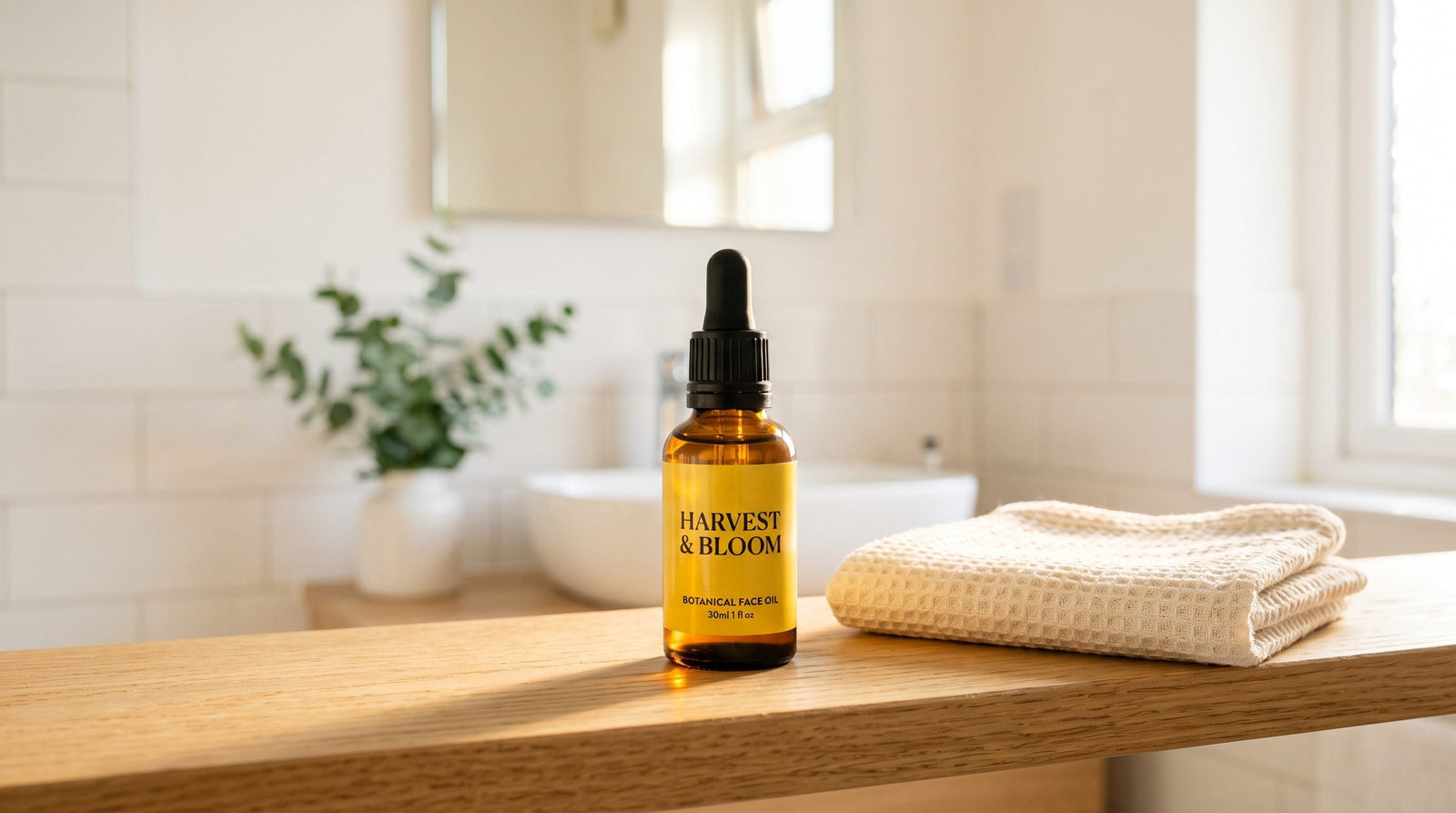
Beard oil — the daily non-negotiable
If you do one thing for your beard, make it this. Beard oil is the foundational product for any beard, regardless of length. The skin beneath your beard produces its own natural oil (sebum) to keep the hair moisturised, but as the beard grows longer, that sebum gets spread increasingly thin. The result? Itchiness, flakiness, rough texture, and beard hair that looks dull and feels wiry.
A rough beard is an ugly beard.
And an ugly beard, since it's on your face, is not a great look regardless of how good your haircut is.
Our beard oils — whether the musky, woody Woodland Harmony, the fresh and summery Citrus Tonic, or the unscented Pure Equilibrium for those who prefer no fragrance — use jojoba oil as a base carrier. Jojoba is remarkable because it's structurally similar to human sebum, which means the skin absorbs it readily rather than sitting on the surface. Add in argan oil (high in oleic and linoleic acids, deeply conditioning), sweet almond oil, and vitamin E — and you've got a formula that reaches the skin underneath and works through the beard hair itself, cutting brittleness and adding a natural sheen.
How much? A few drops — literally three to five — warmed between the palms and worked through from root to tip. Morning application, ideally after washing. That's it.
Beard balm — hold, shape, and extra conditioning
For medium to longer beards, or for anyone who needs a bit more control and shape, beard balm is the next step up. Our Woodland Harmony Beard Balm works as an oil-and-wax hybrid — it delivers all the moisturising benefits of the oil, but adds structure and hold thanks to natural waxes. The formula includes coconut oil (antimicrobial, deeply moisturising), peach kernel oil (lightweight, softening), and cocoa butter (emollient, adds a subtle protective layer to each strand).
Practically: a penny-sized amount warmed in the palms, then worked through the beard with fingers. Use it to tame flyaways, define the shape of the beard, and give the hair a finished, considered look rather than a wild, untamed one. It won't leave your beard feeling stiff or sticky — natural waxes flex and move with the hair rather than locking it in place rigidly.
The beard brush — the tool that ties it together
Products alone aren't enough. The Beard Brush with natural boar bristles is how you distribute those products evenly through every layer of the beard, train the hairs to grow in a consistent direction, and exfoliate the skin beneath. Boar bristles are uniquely good at this because the bristle structure picks up the natural oils (and any applied products) and moves them from root to tip — the same principle as brushing the hair on your head, except beard hair is coarser and needs the stiffer bristle to get through properly.
A 60-second brush through the beard each morning, after applying your oil or balm, makes a visible difference within days. The beard looks fuller, more uniform, and significantly more coherent as part of the overall look.
The full kit — for those who want everything in one
If you'd rather not piece it together yourself, the Beard Grooming Set includes beard oil, beard shampoo, and the beard brush — everything you need to build a proper daily routine. It also makes an excellent gift if anyone's asking. (They're always asking. Just tell them.)
A note on hair styling products
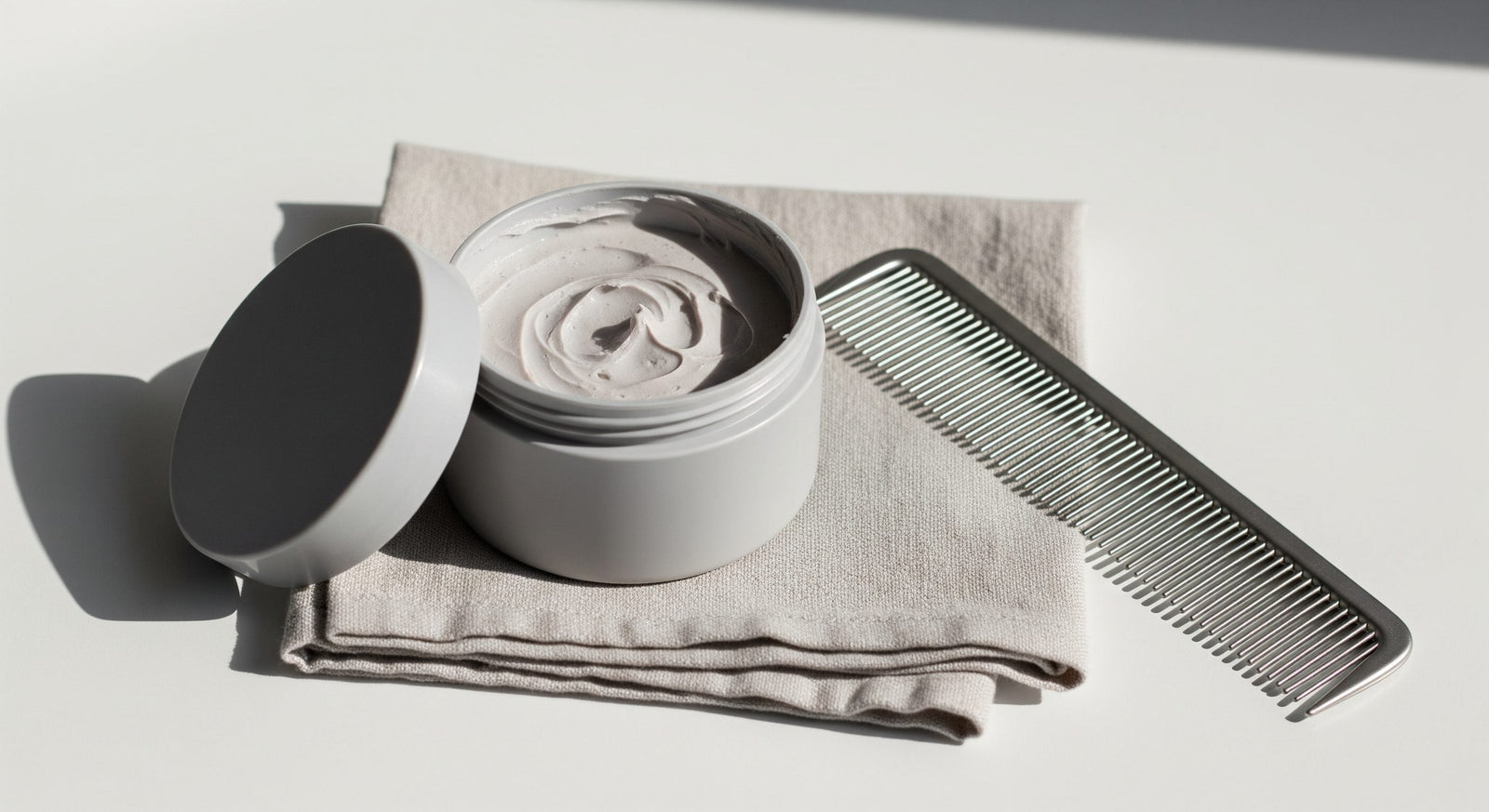
Don't neglect the hair side of the equation. For textured, matte looks — the crop fade, the buzz cut with texture — the Hair Styling Clay is your best friend. For sleeker, more structured styles like the pompadour or side part, try the Hair Styling Pomade. And for that effortless, salt-sprayed beach texture, you already know where to go.
Tips and tricks: keeping your combination looking sharp
Get your haircut first, then shape your beard to match. The haircut sets the proportions. Once you know how the hair is sitting, you can decide how much beard works with it — not the other way around. Trying to reverse-engineer a haircut around an existing beard is harder and less reliable.
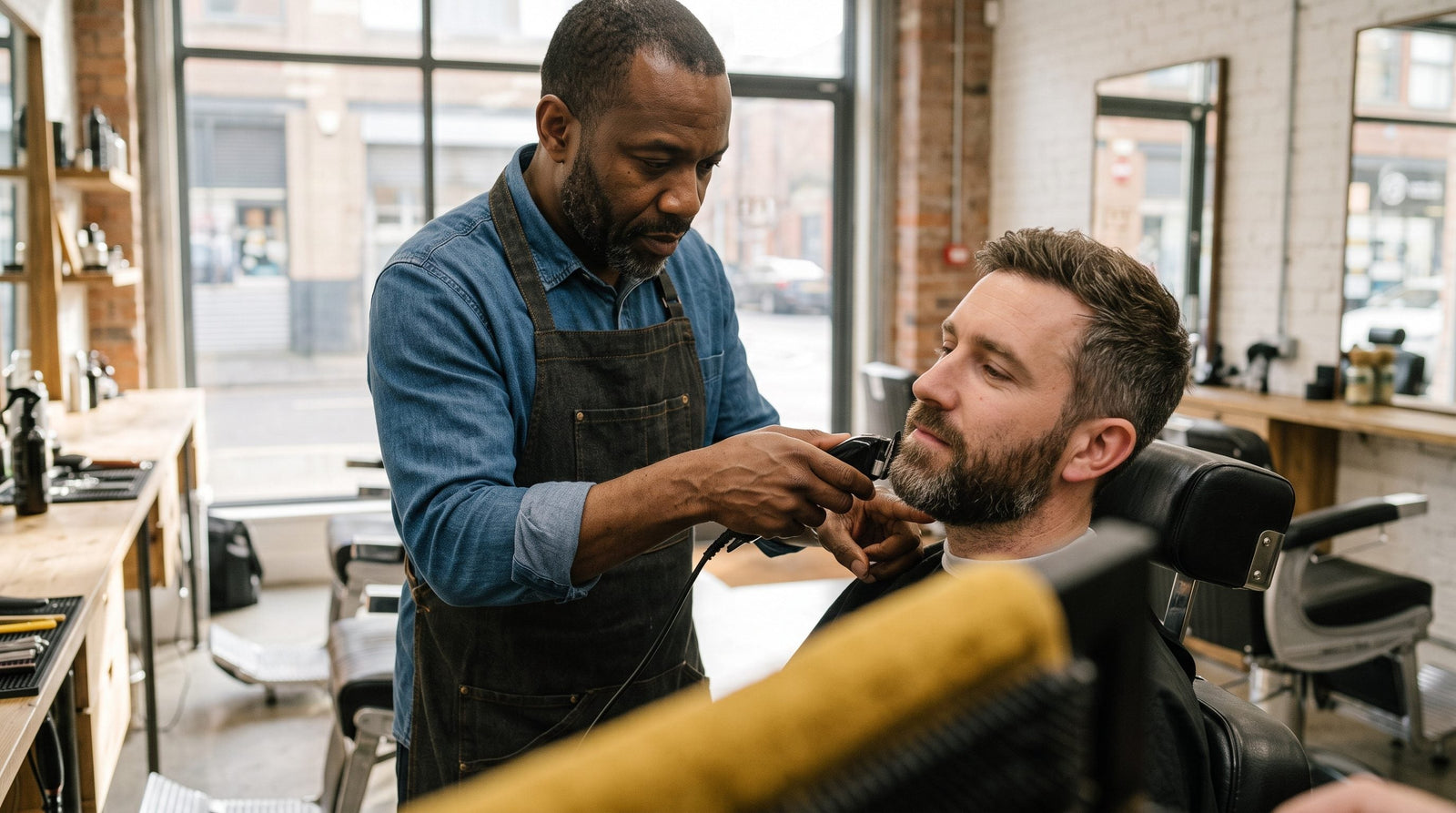
Your barber is a resource — use them. When you go in for a haircut, tell them what you're trying to achieve with your beard too. A good barber will factor your beard into the shape and length of the haircut itself. If you're not sure whether to go DIY or professional, we've broken down the cost and skill considerations in detail.
Apply beard oil every single day, without exception. It's not a "treat" product. It's maintenance. Think of it the same way you think about brushing your teeth — skipping it has consequences you'll notice within a few days.
Clean lines make or break the look. No matter how good the combination is on paper, an undefined neckline or unkempt cheek line will undermine it immediately. Keep those edges clean — either with a trimmer at home or ask your barber to sort them at each visit.
Wash your beard, but not every day. Two to three times a week with a dedicated beard shampoo is the sweet spot. Your beard needs the natural oils to stay healthy — daily washing strips them. Over-washing is one of the most common causes of a rough, itchy beard.
Match the finish of your hair and beard. If your hair is styled matte (clay, for example), a beard that's glossy from too much oil looks incongruous. Use beard balm, which has a more natural, lower-sheen finish than oil alone, to keep things consistent.
Consider the season. In summer, lighter beard oils with citrus notes feel more appropriate; in winter, your skin needs heavier moisturisation and your beard may grow slightly differently. Adjust accordingly.
Patchy beards need a different approach. If your beard grows patchily, the answer isn't always a thinner style — sometimes growing it slightly longer allows the denser hairs to cover gaps. But if the patchiness is significant, a short stubble style is often sharper and more considered-looking than a longer beard with visible bald patches. Play to your strengths.
Don't neglect the skin underneath. Dry, flaky skin beneath the beard will itch, cause visible flaking through the beard, and can even affect beard growth patterns over time. Beard oil addresses this. If you want extra skin support beyond the beard, our Face Wash is a good foundation for the full grooming routine.
Frequently asked questions
What is the best haircut for a man with a beard?
The best haircut for a bearded man is one that creates balance with the beard — and that depends on your face shape and how full your beard is. As a general rule, fuller beards pair best with cleaner, shorter haircuts (like a fade or crop) that prevent the overall look from becoming too heavy. For most men, a textured crop fade, an undercut, or a classic crew cut will complement a beard well — they give the beard room to be prominent without competing with a complex top.
Should my beard be shorter than my hair?
There's no hard rule that your beard needs to be shorter than your hair. What matters is the overall balance and proportion of the two together. Some of the most distinctive men's looks pair a longer, fuller beard with a very short haircut (like a buzz cut), which actually makes both elements look more considered. Focus on proportion and shape rather than strict length comparisons.
How do you match your beard and haircut?
Start with your face shape — it tells you which beard styles will flatter your features and, from there, which haircuts will complement that beard. Then apply the principle of working with proportion rather than against it: fuller beards work best with cleaner haircuts, while shorter beards allow your haircut to carry more texture and volume. Make sure the overall finish is consistent — both the beard and the hair should look maintained and considered, not like two separate styling decisions that happened to end up on the same head.
Conclusion: defining your signature look
The "perfect" haircut and beard combination isn't some objective standard that exists in a magazine. It's the one that works for your face shape, suits your lifestyle, and — crucially — that you can actually maintain with consistency. A brilliant look that requires a two-hour morning routine is really only brilliant on paper.
Start with your face shape. Pick a direction based on what you want to project. Apply the principle of working with proportion. Then invest in keeping it looking sharp every single day, because the difference between a well-maintained combination and a neglected one is enormous. A groomed man who knows what he's going for will always look better than a man with theoretically superior raw material who doesn't think about it.
For everything you need to maintain that well-paired look — from beard oil and beard balm to hair styling products built for natural, everyday use — the Beard Grooming Set is a solid starting point if you want to get everything sorted in one go. And if you've got questions about the wider grooming picture, our head-to-toe hygiene guide covers it all.