
Why your hairstyle and beard need to work together
You've grown a decent beard. Maybe it took longer than you'd like to admit, maybe it grew in faster than expected — either way, you've got one. And yet something feels slightly off when you look in the mirror. The beard's there. The haircut's there. But together? They're not quite singing the same tune.
This is one of the most common grooming problems men face, and honestly, it's not about the beard or the hair individually. It's about the conversation between the two.
Here's the thing: your haircut frames your face, and your beard defines it. When both are designed to complement each other, they balance your proportions and bring out your best features. When they're chosen separately, you can end up looking like two different men stapled together at the neck. That's the last thing a gentleman wants.
Your jacket might be brilliant on its own. Your trousers might be excellent. But if they don't work together, you look like you got dressed in a rush at a charity shop. A great men's hair style with beard is always a deliberate pairing, never an accident.
We've put together this complete guide to walk you through everything — face shapes, the best hair and beard combinations, grooming routines, and the products that'll keep the whole look sharp. Whether you're just starting out or you've had a beard since before it was fashionable, there's something here for you.
The first step: matching styles to your face shape
Before you commit to any particular hair and beard combination, you need a moment of honest self-reflection. Not the existential kind — just a good look at the shape of your face.
Matching your beard and hairstyle to your face shape is the single most effective way to create a flattering, balanced look with minimal effort. Small adjustments in volume, angles, and lines can dramatically change how you look. The goal, in most cases, is to nudge your face shape closer to an oval — the proportions most barbers and stylists treat as the benchmark — or at least to create the illusion of it.
Here are the main face shapes and what they mean for your choices:
- Oval face: Lucky you. Oval faces are the most versatile — almost any combination works. You can go fuller on top, shorter on the sides, grow a big beard or keep it trim. Few decisions are wrong.
- Square face: You've got a strong jaw and angular features. A beard that adds length to the chin (think a longer goatee area) helps elongate the face, while a hairstyle with volume on top reinforces that vertical balance. Avoid very short, round beards — they'll make your face look like a perfect square, which sounds fine until you realise it doesn't.
- Round face: The goal here is to add length and reduce width. A beard with a longer chin point, kept shorter on the sides, works beautifully. Pair it with a hairstyle that has height on top — a quiff, pompadour, or textured crop. Avoid beards that are thick and wide at the cheeks.
- Oblong/Rectangle face: Your face is already long, so you want to add width without adding more length. Fuller beards that are kept shorter at the chin and wider at the cheeks help. Hairstyles with volume at the sides rather than on top are your friend here.
- Diamond face: Narrow forehead and chin with wider cheekbones. A full beard that adds width to the chin balances things out. Textured hairstyles with a bit of width at the temples also work well.
- Heart face: Wider forehead, narrow chin. A fuller beard — particularly one with volume at the jaw and chin — balances the upper width. On top, avoid styles that add more width to the forehead.
Not sure which shape you are? Pull your hair back, take a photo straight-on, and draw a rough outline. Most men land somewhere in the oval-to-square spectrum and can wear most combinations with a few tweaks.
If you're working with curly hair, we've gone deeper on this in our complete guide to the best men's hairstyles for curly hair — worth reading before your next barber visit.
10 winning men's hair style and beard combinations
Here are ten combinations that work — not because they're trendy (though several absolutely are in 2026), but because they follow the principles of contrast, balance, and intention.
Fuller beards almost always pair best with cleaner, shorter haircuts like fades. The heaviness of the beard at the bottom needs visual counterbalance from something clean and close on the sides. Shorter beards and stubble, on the other hand, give you more freedom to go bolder on top. Contrast is doing the heavy lifting in every combination below.
1. High fade with a full beard
The classic of classics. The high fade starts tight on the sides — very close to the skin — and the full beard grows out below, creating a dramatic contrast that's equal parts clean and rugged. It suits most face shapes. If you've seen David Beckham or Anthony Joshua looking immaculate in recent years, there's a version of this in there somewhere.
2. Textured crop with stubble
Modern and versatile. The textured crop keeps the top relatively short with choppy, defined texture, while faded sides keep things tidy. Stubble — around three to five days' growth — balances the look without overwhelming it. This works particularly well for oval and square faces and is one of the most popular choices heading into the latter half of 2026.
3. Classic pompadour with a tapered beard
A tapered pompadour — where the hair gradually reduces in height from top to sides — paired with a neatly tapered beard creates a refined, structured look. Less rockabilly, more refined gentleman. The tapered beard echoes the gradual lines of the pompadour, making the whole thing look deliberately designed (because it is).
4. Undercut with a medium beard
The undercut — closely shaved or clipped sides with longer hair on top — gives a bold, disconnected look. Pair it with a medium-length beard (think two to four inches) that's well-groomed, and you've got real edge without looking untamed. Works brilliantly for oblong and oval faces.
5. Buzz cut with a full beard
This one requires confidence. The buzz cut is uncompromising — there's nowhere to hide — but a full, well-maintained beard adds warmth and balances the starkness of the shaved head. This combination flatters square and oval faces especially well. Keep the beard impeccably conditioned; it's doing all the heavy lifting.
6. Slick back with a short boxed beard
A slicked-back hairstyle has a certain studied nonchalance about it — think less Wall Street villain, more Italian architect who's been wearing the same watch for twenty years. Pair it with a short, neatly defined boxed beard and you've got a look that handles boardrooms and dinner dates equally well.
7. Quiff with light stubble
The quiff adds volume and height at the front, making it bold on top. Light stubble keeps the lower half clean and controlled without committing to a full beard. Good for heart and round faces — the quiff adds length while the minimal stubble doesn't add width. Unfussy and wearable for most occasions.
8. Caesar cut with thick stubble
The Caesar cut — short, horizontally layered fringe — is having a quiet resurgence. Simple, clean, and very wearable. Thick stubble (around seven to ten days) adds depth and maturity without demanding much maintenance. A combination that often gets overlooked, which is a shame, because it suits a wide range of face shapes and requires almost no effort to maintain.
9. Long hair with a full beard
Honestly? This is the one I'd talk most men out of attempting before they're ready for it. Long hair with a full beard requires serious commitment to grooming — both elements need regular conditioning, brushing, and maintenance. But when it works, it works. If you're already growing it out, our guide to styling thick long hair is essential reading before your next wash day.
10. Taper fade with a goatee
Clean, sharp, and a little unexpected. The taper fade gives structure, while a well-defined goatee adds personality. Good for men who want a beard element without committing to full coverage — particularly useful if your cheek growth is patchy.
| Combination | Best face shape | Beard length | Maintenance level |
|---|---|---|---|
| High Fade + Full Beard | Most face shapes | Long | Medium-High |
| Textured Crop + Stubble | Oval, Square | Very Short (3–5 days) | Low-Medium |
| Pompadour + Tapered Beard | Oval, Round | Short-Medium | Medium |
| Undercut + Medium Beard | Oblong, Oval | Medium | Medium |
| Buzz Cut + Full Beard | Square, Oval | Long | Low (hair) / High (beard) |
| Slick Back + Boxed Beard | Oval, Square | Short | Medium |
| Quiff + Light Stubble | Heart, Round | Very Short | Low-Medium |
| Caesar Cut + Thick Stubble | Most face shapes | Short (7–10 days) | Low |
| Long Hair + Full Beard | Oval, Square | Long | High |
| Taper Fade + Goatee | Oblong, Diamond | Short-Medium | Low-Medium |
How to maintain your look: essential grooming routines
You've chosen your combination. Now comes the part that actually matters for the long term: keeping it looking deliberate rather than just happening.

Even the best combination looks shabby without maintenance. A rough beard reads as neglect. Patchy, unkempt hair undermines even the most flattering face shape.
Your daily beard routine
- Wash it properly — but not too often. Wash your beard two to three times a week with a dedicated beard shampoo. Every day strips the natural oils from both the hair and the skin underneath. If you're struggling with itchiness or flaking — common complaints in the early weeks of growing — we've got a thorough breakdown in our guide to stopping beard itch and dandruff.
- Apply beard oil daily. A few drops every morning — or after washing — massaged into the skin beneath the beard. This is non-negotiable. Beard oil moisturises the skin, softens the hair, and prevents the dreaded beardruff. More on which one to use in a moment.
- Brush it. Use a quality beard brush — boar bristle is best — to train the hairs, distribute oil evenly, and keep the shape looking intentional. Do this after applying your oil, before it's fully absorbed. Two minutes, every morning. The difference after a few weeks is noticeable enough that you won't skip it.
- Shape the neckline and cheek lines. Every week or so, clean up the borders. A sharp neckline — typically two finger-widths above the Adam's apple — makes an enormous difference to how groomed the whole look appears. Use a good razor or trimmer. Sloppy lines undo everything.
- Apply balm for hold and shape. For beards of medium length and above, a pea-sized amount of beard balm worked through the beard in the morning gives shape, some light hold, and additional conditioning throughout the day.
Your weekly hair and beard coordination check
- Book regular barber visits. For fades and crops, every two to four weeks. For longer styles, every four to six. Don't let it drift — the moment the fade grows out, the whole contrast effect softens and the intentionality fades with it (pun intended).
- Trim between visits. Keep a decent trimmer at home to maintain the neckline and touch up the cheek lines. Frequent tidying beats an infrequent dramatic rescue session.
- Condition both. Hair conditioner for the scalp hair, dedicated beard conditioner for the beard. They're different products because the hair is different — beard hair is coarser and the skin underneath is more sensitive. Don't mix them up.
- Check the mirror properly. Both front and side. The profile view is where the beard and hair balance becomes most visible. If the side looks disconnected, something needs adjusting — either the hair length, the beard line, or both.
The perfect toolkit: must-have hair and beard products
What actually goes on your face and head matters — a great combination falls apart without the right products behind it.
For your beard
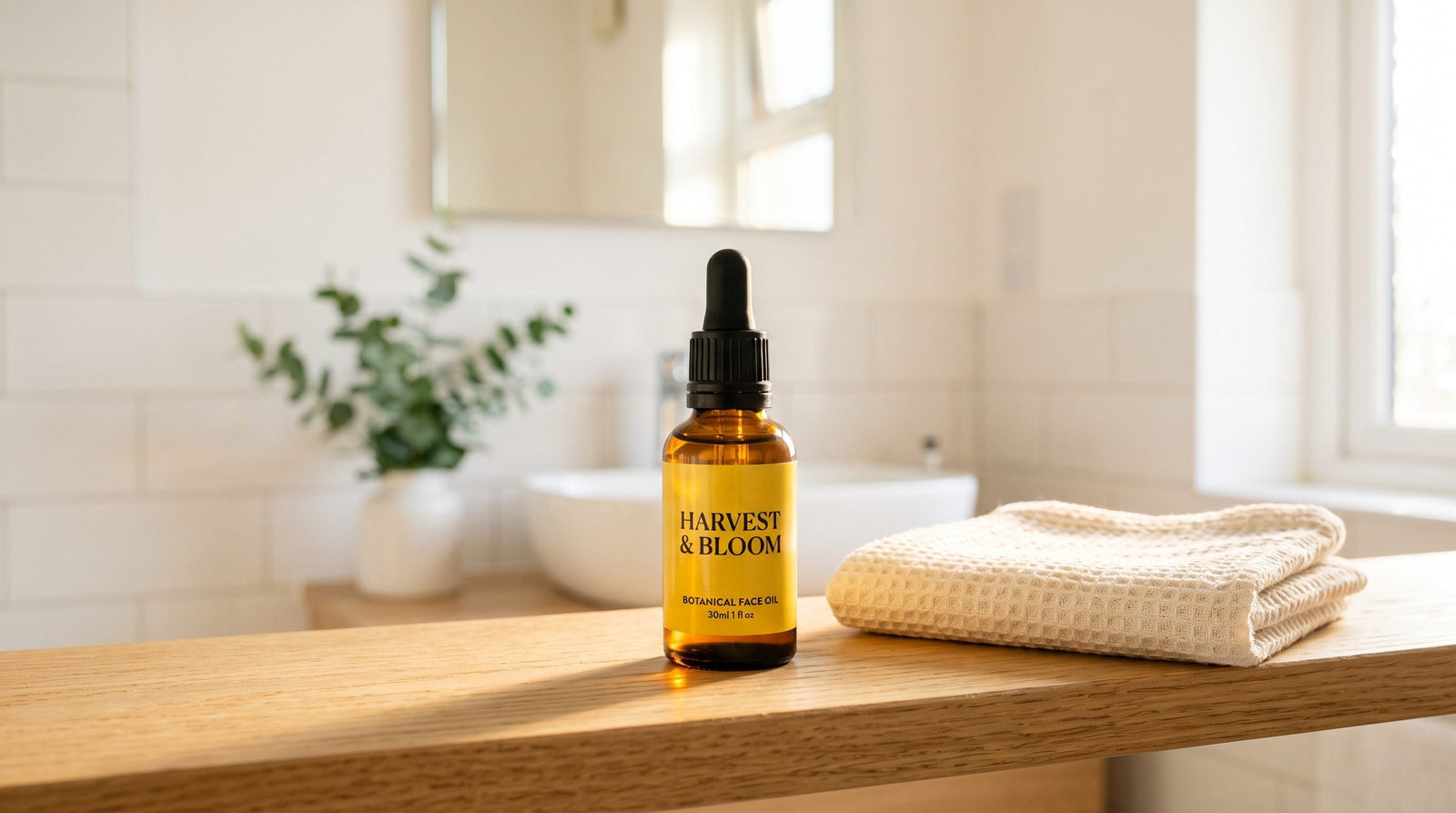
Beard Oil is the foundation of any beard care routine. Ours is built on a base of jojoba and argan oil — and those aren't just nice-sounding ingredients. Jojoba oil is chemically very similar to sebum, your skin's own natural oil, which means it absorbs without leaving a greasy residue. It moisturises the skin beneath the beard (where itchiness and flaking begin) and softens the beard hair itself. Argan oil is high in oleic and linoleic acids and vitamin E — it conditions the hair shaft, adds shine, and over time makes the beard noticeably easier to manage. A few drops in the morning, every morning. If you want to understand the full picture of how beard oil supports growth and condition, that guide goes into serious detail.
We offer three scent options: Woodland Harmony (cedarwood and sandalwood — warm, musky, the one that makes people ask what you're wearing), Citrus Tonic (fresh and summery, brilliant for warmer months), and Pure Equilibrium (completely unscented, ideal if you wear cologne or prefer to keep things simple). All three, same exceptional base. Just a question of preference.
Beard Shampoo is something a lot of men skip in favour of their regular hair shampoo. Don't do this. Regular shampoo is formulated for scalp hair and is far too stripping for the coarser beard hair and more sensitive facial skin. Our Woodland Harmony Beard Shampoo is gentle enough to clean without stripping, and it's infused with cedarwood and sandalwood so your beard smells exactly as good as it looks. Use it two to three times a week, and follow with conditioner.
Beard Conditioner works while you shower, softening the beard hair and hydrating the skin. Leave it in for a minute or two before rinsing. If your beard feels wiry, scratchy, or difficult to tame after washing, a conditioner will make an immediate and noticeable difference. For convenience, the Beard Shampoo and Conditioner duo gets you both in one go.
Beard Balm bridges the gap between oil and wax. Our Woodland Harmony Beard Balm combines coconut oil, peach kernel oil, and cocoa butter — all outstanding moisturisers — with natural waxes for light shaping hold. It's what you reach for when you need the beard to actually sit where you put it, not just be conditioned. Particularly useful for medium to longer beards that need a bit of taming. Take a pea-sized amount, warm it between your palms, and work it through from root to tip.
And then there's the Beard Brush. Boar bristles, pear wood handle. It distributes product evenly, trains the hairs to grow in the right direction, exfoliates the skin underneath, and adds natural shine. If you're only going to add one physical tool to your routine, make it this. If you want everything in one go, the Beard Grooming Set bundles the oil, shampoo, and brush together.
For your hair
For fades and crops with defined texture, our Hair Styling Clay delivers a matte, natural finish with excellent hold and volume. A pea-sized amount worked through dry or slightly damp hair — it's water-based, natural, and won't leave your hair feeling like you've shellacked it. For slicker looks and pompadours, the Hair Styling Pomade gives the shine and control that a matte clay can't. And for textured, lived-in looks that actually require a respectable amount of effort, our Salt Texturizing Hair Spray is what you want. Spritz it through damp hair, scrunch, and let it do its thing.
Tips and tricks for a lasting look
- Tell your barber about both elements. When you sit in the chair, mention the beard as part of the brief — not just the hair. A good barber will adjust the fade or taper to complement the beard length and density you're working with. Ask directly; don't assume they'll factor it in.
- Less is more with beard oil. Three to five drops for a short to medium beard. More for longer beards. If your beard looks greasy, dial it back — but don't let that put you off entirely.
- Grow before you groom. If you're starting a new beard, resist the urge to shape too early. Let it grow for four to six weeks before you start defining lines. You need to see what you're working with before you commit to a shape.
- Match the formality of beard to hair. A slick, formal hairstyle next to a wild, ungroomed beard creates confusion. Match the grooming level of both — both neat, or both intentionally textured. The contrast should be in structure and length, not in effort level.
- Use a comb for precision in the beard. For longer beards especially, a comb through the beard before applying products helps detangle and evenly distribute everything from root to tip.
- Don't neglect the skin under the beard. Moisturised skin means healthier, faster-growing beard hair and none of the itching and flaking that makes early beard growth miserable. Your beard oil does most of this work if you're massaging it in properly.
- Seasonal adjustments make sense. In summer, lighter oils and fresher scents (hello, Citrus Tonic). In winter, lean into the richer balm for extra moisture and protection. Your beard lives in weather too.
- If your hair is thick and straight, you've got particular style options available to you — we covered these in detail in our guide to the best hairstyles for men with thick straight hair, and the advice pairs well with most of the beard combinations above.
- Protect your brush. If you're travelling, a brush protector keeps the bristles in shape and your washbag clean. It's a minor thing, but a brush worth using is a brush worth looking after.
Frequently asked questions
How to get a haircut with a beard?
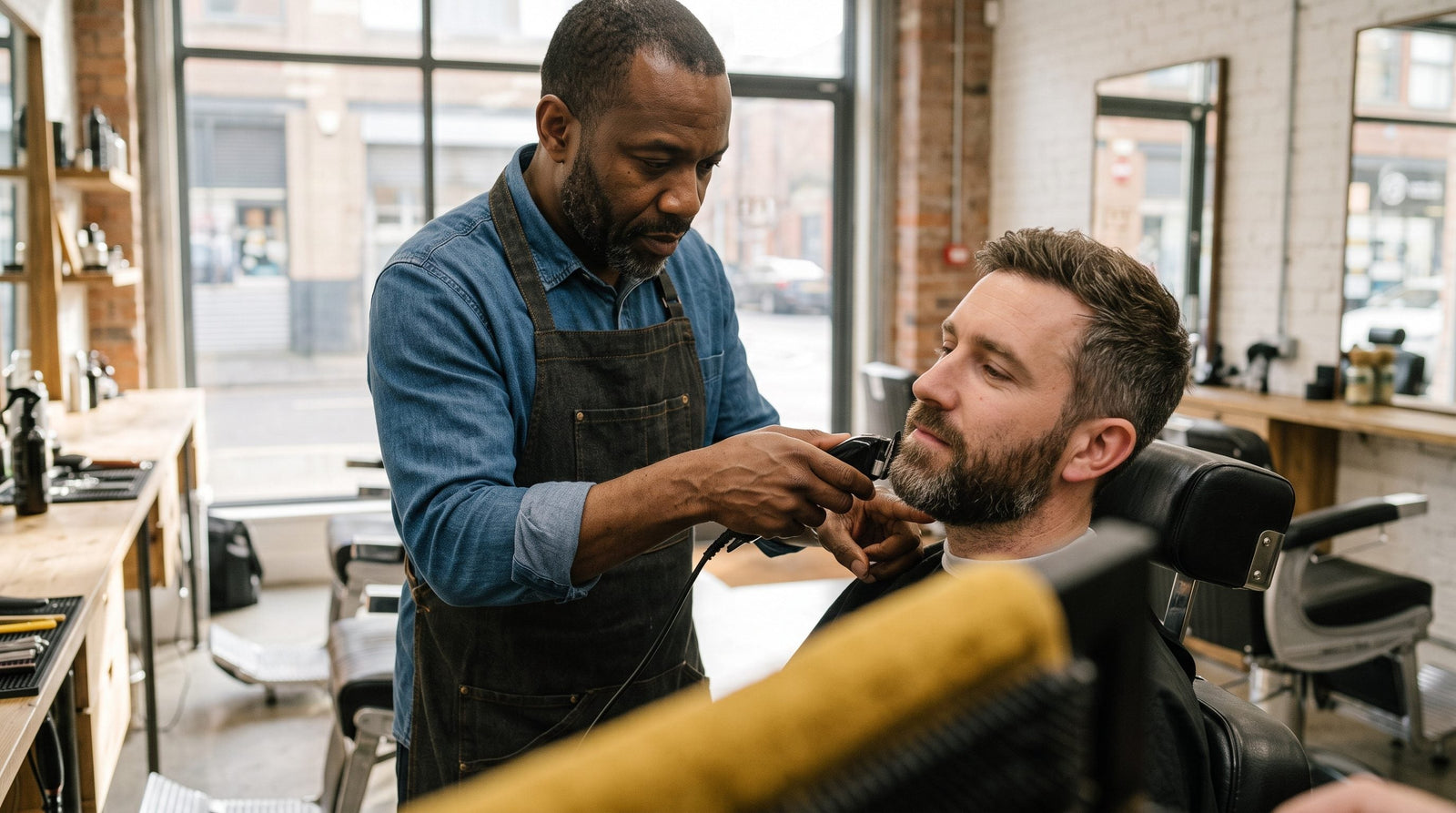
Go to your barber with both elements in mind — tell them your current beard length and style before they pick up the scissors. A good barber will use this to adjust where the fade starts, how tight the sides go, and how the overall shape relates to your beard. Think of it as one brief, not two separate conversations.
How to style men's beard?
Start with a clean, freshly washed beard, then apply a few drops of beard oil, massaging it into the skin and through the hair. Follow with a small amount of beard balm if you need shape and hold, then brush through with a boar bristle brush to distribute product and train the hairs. The whole process takes under five minutes once it's part of your routine.
Which beard and hairstyle suits me?
Start with your face shape. Oval faces are the most versatile. Round faces benefit from styles that add length and reduce width. Square faces suit combinations that soften or elongate. As a general rule, fuller beards pair best with shorter, cleaner haircuts like fades, while stubble gives you more freedom to go bolder on top. When in doubt, ask your barber — they'll give you a straight answer.
What causes hair loss in men's beards?
Beard hair loss most commonly comes down to a few specific causes. The autoimmune condition alopecia areata — specifically alopecia barbae when it affects the beard — causes the immune system to attack hair follicles, creating patchy bald spots. Fungal infections like ringworm and certain medical treatments such as chemotherapy can also cause beard hair loss. In most cases it's not permanent, but if you're noticing patchy loss, it's worth speaking to a GP or dermatologist to identify the cause. For general hair loss concerns, our guide to hair loss prevention for men covers the topic more broadly.