
What Is Beard Acne and Why Am I Getting It?
You've grown the beard. It looks great. People are noticing. And then — right on cue — your skin decides to throw an absolute tantrum underneath all that glorious facial hair. Pimples. Redness. That horrible underground lump you can feel but can't quite see. Sound familiar?
Beard acne is one of the most common complaints we hear from our community, and honestly, it's one of the most frustrating. You can't see it easily. You can't treat it the way you'd treat a spot on your forehead. And the very thing causing it — your beard — is the thing you've spent months growing and refuse to shave off. (Good. Don't shave it off. That's not the answer.)
Here's the thing: beard acne isn't really a mystery. Once you understand what's actually happening under that hair, the solution becomes pretty logical. We've been through it ourselves, we've spoken to a lot of bearded men about it, and we've put together this guide to walk you through everything — from the biology of a blocked pore to the daily routine that keeps your skin clear and your beard looking its best.
So what actually is beard acne? At its core, it's the same process as regular acne — hair follicles getting clogged with oil (sebum), dead skin cells, and bacteria. But your beard creates a unique environment that makes this more likely to happen. The hair traps debris close to the skin. Products build up. Bacteria thrive in warm, slightly damp conditions. The skin underneath your beard also tends to get less airflow than the rest of your face, which compounds everything.
And it's worth knowing that not all "beard acne" looks the same. You might be dealing with:
- Whiteheads — closed, clogged pores near the surface. Annoying but relatively mild.
- Pustules — the classic red-rimmed, pus-filled spot. Bacteria have got involved. Don't squeeze.
- Cystic acne — deep, painful lumps under the skin. These require a bit more patience and sometimes professional attention.
- Folliculitis — infected hair follicles that look like spots but are specifically caused by bacterial or fungal infection of the follicle itself. More common in men with coarser, curlier beard hair.
- Pseudofolliculitis — sometimes called "razor bumps" when they appear in the neck area, caused by ingrown hairs, not bacteria. Confusingly similar in appearance to regular acne.
Understanding which type you're dealing with actually matters — because cystic acne responds differently to treatment than a surface whitehead. We'll cover all of this. Stick with us. If you're also dealing with itchy, flaky skin beneath your beard, our guide to beard itch and dandruff runs alongside this one beautifully.
The 5 Main Culprits: What Causes Pimples Under Your Beard
Right. Let's talk root causes. Because jumping to solutions without understanding the problem is how you end up buying expensive products that do absolutely nothing. Here are the five most common reasons your beard is harbouring a breakout:
-
Trapped sebum, dead skin cells, and bacteria.
Your skin produces sebum — a natural oil — to keep itself moisturised. Completely normal. The problem is that under a beard, that sebum has nowhere to go. It sits at the base of the follicle, mixing with dead skin cells that haven't been properly exfoliated away, and bacteria (particularly Cutibacterium acnes, formerly known as P. acnes) have a field day. That's the fundamental mechanism of acne. Your beard just accelerates it.
-
Poor cleansing habits.
A lot of men — we say this with love — treat their beard like it's a separate entity that doesn't need washing. Or they just rinse it with water in the shower and call that "clean." It isn't. Water alone won't remove the oil, product residue, and environmental grime that accumulate throughout the day. But here's the other extreme: washing with a harsh regular face wash or — Lord help us — body wash. These strip the skin's natural oils completely, your sebaceous glands panic and overproduce to compensate, and suddenly you have more oil than before. A dedicated beard shampoo is not a luxury. It's a necessity.
-
Comedogenic products building up on the skin.
"Comedogenic" simply means pore-clogging. A lot of cheap beard oils — and some surprisingly expensive ones — use heavy, comedogenic carrier oils or synthetic fragrances that sit on the skin and block follicles. If you're applying beard oil every day and not cleansing properly, you're essentially plastering a layer of pore-blocking material over your skin. Repeatedly. It catches up with you eventually, usually in the form of tiny bumps or persistent breakouts along the jaw and neck.
-
Dirty grooming tools.
Your beard brush, your comb, even your flannel — these things accumulate bacteria, dead skin, and oil every single time you use them. And every time you run a dirty brush through your beard, you're redistributing all of that back onto your skin. It's the grooming equivalent of wiping your face with a used gym towel. (We've all been there at 6am. We're not judging. But we are suggesting you clean your tools more often.)
-
Hormones, stress, and lifestyle.
This is the bit that other beard acne guides tend to skip over entirely, which is a shame because it's genuinely important. Elevated cortisol (the stress hormone) signals your sebaceous glands to produce more oil. Hormonal fluctuations — whether from age, diet, sleep deprivation, or just a terrible week at work — can trigger or worsen acne anywhere on the body, including under your beard. Diet plays a role too: a diet high in refined sugars and dairy has been linked to increased acne activity in some people, though individual responses vary considerably. We'll come back to this in the lifestyle section.
Your Step-by-Step Routine to Treat and Prevent Beard Breakouts
Here it is. The practical bit. But before we go through the steps, let's agree on something: consistency beats intensity every single time. A simple routine you do every day will always outperform an elaborate one you do twice a week when you remember. Right. Let's get into it.
Step 1: Cleanse Properly (Every Day, Without Exception)
Wash your beard every day with a gentle, beard-specific shampoo. In the shower is fine. Use lukewarm water — hot water is tempting but it strips skin oils aggressively and leaves your skin tight and reactive. Work the shampoo down to the skin, not just through the hair. That's where the action is.
Full shampoo with a dedicated beard wash every other day if you prefer — but a water rinse and gentle massage of the skin every day regardless. Your skin needs that daily reset.
Step 2: Exfoliate Twice a Week
Dead skin cells are a primary ingredient in every blocked pore. If you're not exfoliating, they accumulate. A gentle facial exfoliant — chemical exfoliants with salicylic acid are particularly good for acne-prone skin as they penetrate into the follicle — used two or three times a week on the skin beneath your beard makes a meaningful difference. Physical scrubs work too, but go gentle; aggressive scrubbing on inflamed skin causes more problems than it solves.
Step 3: Use a Non-Comedogenic Beard Oil (Correctly)
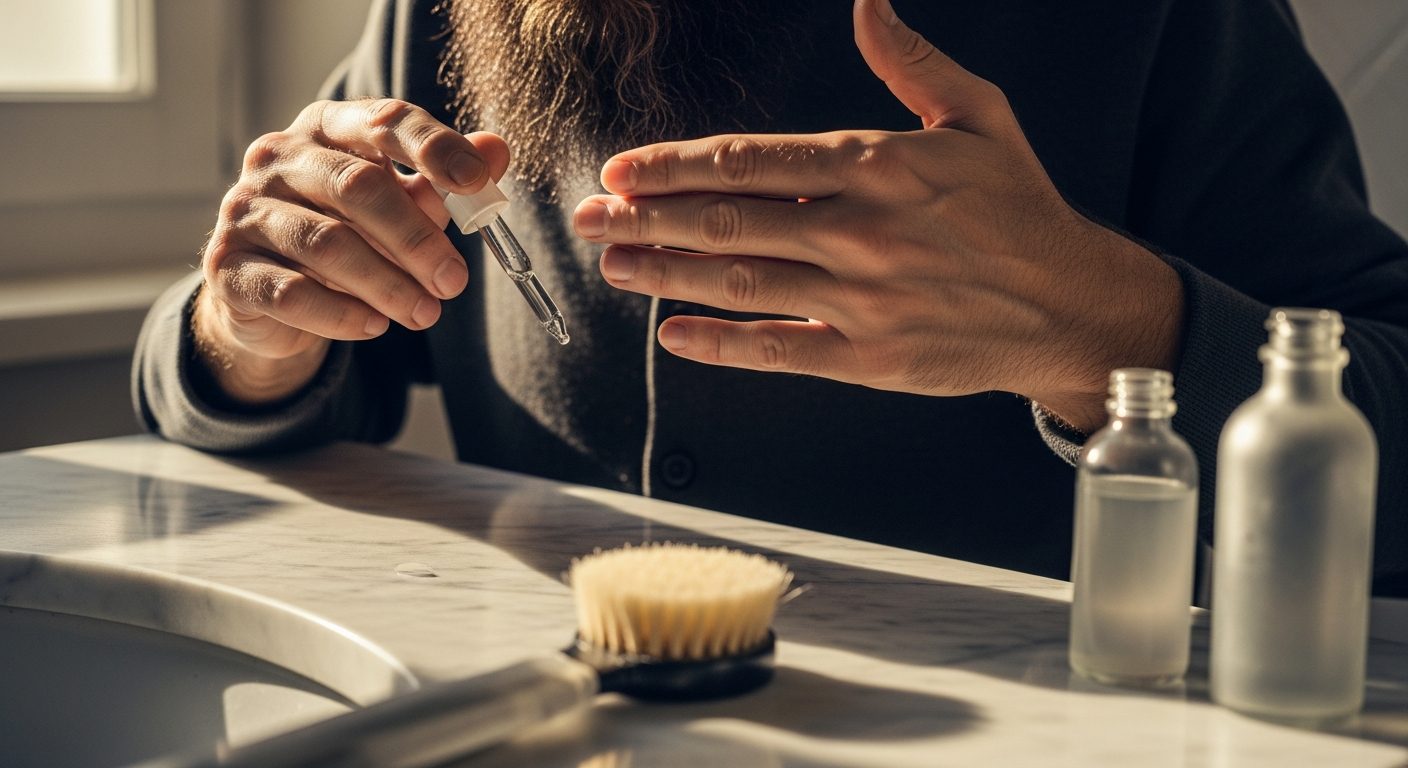
A good beard oil applied properly should be feeding your skin, not blocking it. Key phrase: applied properly. A few drops — and we mean a few, not a palmful — worked down to the skin after washing. Pat your beard dry first, then apply. Don't over-apply. Excess product just sits on the skin.
Read our beard oil guide for every length if you want to nail the exact amounts for your beard length.
Step 4: Brush Daily
A good boar bristle brush does two things relevant to acne: it distributes oil evenly so it doesn't pool at the follicle, and it gently exfoliates the skin beneath. Brush from root to tip, gently. And clean your brush weekly — more on that below.
Step 5: Spot Treat When Needed
For active breakouts, over-the-counter spot treatments containing benzoyl peroxide or salicylic acid can help with surface-level spots and pustules. Apply carefully to the skin, not the hair — benzoyl peroxide in particular can bleach beard hair if you're not careful. (Yes, really. That's a lesson you only need to learn once.) For cystic acne, spot treatments won't reach deep enough — see the dermatologist section below.
Step 6: Moisturise
Acne-prone skin still needs hydration. Stripping the skin dry in an attempt to control oil actually backfires — dehydrated skin produces more sebum to compensate. Use a lightweight, non-comedogenic moisturiser. Our Face Wash pairs well with a daily moisturising step to keep skin balanced without adding anything heavy.
Choosing the Right Products: What to Look for in Beard Care
Not all beard products are created equal. And when you're dealing with breakout-prone skin, this really matters. Here's what to look for — and what to avoid.
What to Look For
- Non-comedogenic carrier oils. Jojoba oil is the gold standard here — it closely mimics the skin's natural sebum, which means it regulates oil production rather than adding to it. Argan oil is high in oleic and linoleic acids, lightweight and readily absorbed. Sweet almond oil, grapeseed oil — all good choices for acne-prone skin.
- Gentle surfactants in shampoos. Look for formulas that clean without stripping. Harsh sulphates (sodium lauryl sulphate especially) are aggressive and leave skin reactive.
- Natural ingredients over synthetic fillers. Synthetic fragrances and artificial preservatives can irritate skin and trigger breakouts in sensitive types.
What to Avoid
- Coconut oil as a primary carrier — despite its wonderful reputation, it's actually one of the more comedogenic oils and can cause breakouts in acne-prone men when used on facial skin regularly.
- Heavy waxes applied to the skin. Beard balms and waxes are for the hair, not the skin — don't rub them into the roots if you're breaking out.
- Over-application of anything. More is never more when it comes to beard oil. A penny-sized amount is usually plenty for a short-to-medium beard.
The Seven Potions Products We'd Recommend
Right, here's where we talk about what we actually make — and why the ingredients matter for acne-prone skin specifically.
Woodland Harmony Beard Shampoo — our beard shampoo is formulated specifically for the skin beneath the beard, not just the hair. It uses gentle cleansing agents that remove buildup without stripping your skin's natural moisture barrier. Cedarwood and sandalwood scents, naturally. And because it's pH-balanced for facial skin, you won't get that tight, over-dried feeling that triggers the sebum-overproduction cycle we mentioned. Use it every other day, or daily if your skin handles it well.
Beard Conditioner — worth adding to your routine, particularly if you're washing frequently. It softens the beard hair itself, which means less tugging and friction on the skin when you brush. Softer hair = less mechanical irritation on already-sensitive skin. Use it after shampooing, focus it on the mid-lengths and ends of the beard, and rinse thoroughly. The "rinse thoroughly" part is not optional — conditioner residue sitting on skin is a direct route to clogged pores.
Seven Potions Beard Oil — our beard oils use jojoba oil as a primary carrier, which as we've covered, is about as skin-friendly as a carrier oil gets. The Citrus Tonic variant is a summer favourite; Woodland Harmony is our musky, deeper scent; Pure Equilibrium is completely unscented, ideal if you suspect fragrance is aggravating your skin. A few drops — three to four for a shorter beard, up to six for longer — massaged into the skin after washing and drying your beard. Not more than that. We mean it. Check out our thoughts on common beard oil mistakes if you've been using oil without seeing results.
Beard Brush — Oval Shaped Pear Wood with Natural Boar Bristles — boar bristle brushes are particularly good for acne-prone beards because the natural bristles distribute oil evenly across the whole beard (preventing pooling at the follicle) and provide gentle exfoliation of the skin. The key is keeping the brush clean. A quick rinse with warm water weekly, and a deeper clean with a drop of beard shampoo monthly.
If you want to simplify the whole thing, our Beard Grooming Set bundles the oil, shampoo, and brush together — which is honestly where we'd tell most men to start.
Quick Comparison: Carrier Oils for Acne-Prone Skin
| Carrier Oil | Comedogenic Rating (0–5) | Good for Acne-Prone Skin? | Key Benefit |
|---|---|---|---|
| Jojoba Oil | 2 | ✅ Yes | Mimics sebum, regulates oil production |
| Argan Oil | 0 | ✅ Yes | Lightweight, high in linoleic acid, anti-inflammatory |
| Sweet Almond Oil | 2 | ✅ Yes (most skin types) | Softening, vitamin E-rich, absorbs well |
| Grapeseed Oil | 1 | ✅ Yes | Very lightweight, astringent properties |
| Coconut Oil | 4 | ⚠️ Caution | Conditioning, but pore-clogging for many men |
| Castor Oil | 1 | ⚠️ Use sparingly | Thick; great for hair but heavy on skin |
| Mineral Oil | 0–2 | ❌ Avoid | Creates barrier but blocks skin function |
Note: Comedogenic ratings are general guidelines, not absolute rules — individual skin responses vary.
Beyond the Bathroom: Lifestyle Habits for Healthier Beard Skin
This is the section other beard acne guides quietly skip over. Which is a shame, because for a lot of men — particularly those dealing with persistent or cystic breakouts — lifestyle is the missing piece of the puzzle.

Diet
The diet-acne link is real, even if it's not uniform across every person. Foods with a high glycaemic index — white bread, sugary drinks, processed snacks — cause rapid spikes in blood sugar, which in turn spike insulin levels. Elevated insulin stimulates sebaceous glands to produce more oil. More oil, potentially more acne. This doesn't mean you need to live on kale and sparkling water (life is too short), but reducing refined sugars and ultra-processed foods is worth trying if breakouts are persistent.
Dairy is another one worth watching. Some men find that reducing dairy — particularly milk — has a noticeable impact on breakouts. Again, individual responses vary considerably. Trial and error is the honest approach here.
What genuinely helps: omega-3 fatty acids (found in oily fish, walnuts, flaxseed) have anti-inflammatory properties that can support skin health. Zinc, found in seeds, nuts, and meat, plays a role in skin cell regeneration and oil regulation. These aren't magic bullets, but they're worth having in your corner.
Stress
Cortisol. The stress hormone. When it's elevated — and for most people in 2026, it's elevated more than it should be — it signals the skin to produce more sebum. This is why a lot of men notice that their skin breaks out during particularly stressful periods, not just on their face but under their beard too. Sleep deprivation compounds this: chronic poor sleep raises cortisol and impairs the skin's overnight repair processes. You already knew you should sleep more. Now you have one more reason.
Touch Your Face Less
We all do it. Stroking the beard while thinking. Resting a chin on a hand during meetings. Each time you do, you're transferring bacteria from your hands to your beard and skin. It's a small thing but it adds up over a day. Especially if you've been touching your phone, a keyboard, or a door handle recently. (Yes, we're aware this makes us sound like a health and safety leaflet. We stand by it.)
Change Your Pillowcase More Often
Your pillowcase accumulates oil, dead skin cells, and bacteria — then you press your face into it for eight hours. Swap to a fresh one twice a week if you're dealing with active breakouts. Silk or satin pillowcases are easier on both skin and beard hair compared to cotton, as a bonus.
Stay Hydrated
Dehydrated skin produces more sebum to compensate. A simple, proven relationship. Drink enough water. Your skin is, slightly boringly, still your largest organ and it responds to hydration like everything else does.
If you want to go deeper on how seasonal changes affect your skin and beard routine, we put together a guide to summer vs. winter grooming that covers it properly.
When to See a Dermatologist About Your Beard Acne
Most beard acne responds to a consistent grooming routine and a few lifestyle tweaks. But not all of it.
There are situations where home treatment isn't enough — and ignoring them just means more scarring, more discomfort, and a longer road to clear skin. Here's when you should book an appointment with a dermatologist rather than hoping it sorts itself out:
- Cystic or nodular acne. If you have deep, painful lumps under the skin that don't come to a head, over-the-counter products won't reach them. A dermatologist can prescribe oral antibiotics, topical retinoids, or in some cases isotretinoin — treatments that work systemically where surface products can't.
- Severe folliculitis. If your follicles are repeatedly infected and you're seeing widespread redness, swelling, and pustules, a dermatologist can identify whether the cause is bacterial or fungal (they require completely different treatments) and prescribe accordingly.
- Acne that's been persistent for more than 2–3 months despite a proper routine. If you've genuinely been consistent with cleansing, using appropriate products, and adjusting lifestyle habits for a few months with no improvement, that's a signal that something else is going on. Don't spend another year just hoping.
- Scarring or post-inflammatory hyperpigmentation. If spots are leaving marks or scars, a dermatologist can advise on treatments to address this before it becomes more pronounced.
- You suspect it might not be acne. Rosacea, contact dermatitis, seborrhoeic dermatitis, and fungal infections can all mimic acne under a beard. A dermatologist can tell the difference. Treating the wrong condition with the wrong products can make things significantly worse.
There's no prize for suffering in silence. Dermatology has come a long way, and a single appointment can save you months of trial and error. If your GP won't refer you or has a long wait, many dermatologists are available privately for an initial consultation — often more quickly than you'd expect.
The key thing to know is that if you're dealing with a proper beard skincare routine consistently and still struggling, the problem likely isn't your routine. It's something systemic that needs professional input.
Your Daily and Weekly Beard Acne Prevention Routine
Let's make this actionable. Stick this somewhere you can refer to it.
Daily
- Rinse beard with lukewarm water in the shower, massaging the skin beneath
- Every other day (or daily if needed): use a dedicated beard shampoo, working it to the skin
- Pat — don't rub — dry with a clean towel
- Apply 3–6 drops of a non-comedogenic beard oil, massaged into the skin
- Brush through with a clean boar bristle brush to distribute oil and gently exfoliate
- Avoid touching your face unnecessarily throughout the day
Weekly
- Exfoliate the skin under your beard twice a week (salicylic acid products work well here)
- Clean your beard brush with warm water and a drop of beard shampoo
- Change your pillowcase at least twice
- Check your products — if anything smells off or has changed texture, replace it
Monthly
- Deep clean all grooming tools including combs and scissors
- Reassess your product stack — are you using anything with a heavy, comedogenic oil base?
- Take stock of lifestyle factors — sleep, stress, diet. Honestly.
- If using spot treatments, make sure they haven't expired
Frequently Asked Questions
How do you get rid of pimples under your beard?
Start with a consistent cleansing routine using a gentle beard-specific shampoo to remove oil, dead skin cells, and bacteria from the skin beneath your beard. Add in exfoliation twice a week, switch to a non-comedogenic beard oil applied sparingly, and keep your grooming tools clean. For persistent or cystic spots that don't respond to this, see a dermatologist — some types of acne genuinely require prescription treatment to resolve properly.
Is beard oil causing my acne?
It can be — but usually it's not the oil itself, it's the type of oil or how you're using it. Heavy, comedogenic carrier oils (like coconut oil) or synthetic fragrances can clog pores and trigger breakouts in some men. Over-applying beard oil and not cleansing it out properly is the other common culprit. Switch to a non-comedogenic formula using jojoba or argan oil as a base, use only a few drops, and make sure you're washing your beard regularly — the oil shouldn't be building up on your skin.
Why am I suddenly getting acne in my beard?
Sudden beard acne usually points to one of a few things: a new product you've introduced that contains a pore-clogging ingredient, a change in routine (washing less frequently, for example), a period of elevated stress or poor sleep driving sebum overproduction, or simply the beard reaching a length where it traps more debris against the skin. Check what's changed recently in your grooming routine or lifestyle — in most cases, one of those factors is the answer.
The Bottom Line
Beard acne is common, it's treatable, and it absolutely does not mean you need to shave. What it does mean is that the skin under your beard needs proper attention — not just the beard itself.
The foundation is simple: cleanse properly, exfoliate regularly, use the right products in the right amounts, and keep your tools clean. Stack those habits consistently and most men see a significant improvement within a few weeks. Add the lifestyle piece — sleep, stress, diet — and you're giving your skin every advantage.
And if you've done all of that diligently for a couple of months and still can't get on top of it, see a dermatologist. No shame in it. Some breakouts need more than a grooming routine, and there are genuinely effective treatments available if you ask for them.
For those just building out their full grooming kit, our Beard Shampoo and Conditioner duo is a solid place to begin — clean skin is the foundation that everything else builds on. And if you want to explore the full range of what we make, these bundles are built for exactly this kind of proper, skin-first beard care.
Go look after that beard. Your skin will thank you for it.