
You've seen it everywhere lately. On the streets of Mayfair. In the style sections of every major magazine. Across social media feeds from Milan to Manhattan. There's a certain type of man who appears entirely unhurried — dressed without obvious effort yet impeccably put together. Hair swept back with quiet confidence. Shoes polished. Jaw set. He looks like he inherited his sense of style along with a country estate and a wine cellar.
That, gentlemen, is the Old Money aesthetic. And right now, in 2026, it is absolutely everywhere.
But here's where most men go wrong. They see the look, they want the look, and then they walk into a barber's chair with absolutely no idea what to ask for. Or worse — they get the haircut but have no idea how to maintain it, style it, or make it work for their face and their life. They end up looking like they're wearing a costume rather than owning a presence.
We're going to fix that today. This is your complete guide to Old Money haircuts — the history, the cuts themselves, how to talk to your barber, and how to groom yourself in a way that makes the whole thing feel effortless. Because that, after all, is the entire point.
What is the Old Money aesthetic?
Before we get into scissors and pomade, the term deserves a moment. Because "Old Money" isn't just a haircut. It's a philosophy of presentation.
The Old Money aesthetic draws from the visual language of generational wealth — not the flashy, logo-heavy look of new money (no offence to anyone rocking a head-to-toe Balenciaga fit), but the understated, classic, almost deliberately unshowy style of someone who simply doesn't need to try that hard. The prep school traditions of New England in the 1960s. European aristocracy. Paul Newman in a plain white shirt, somehow outclassing every man in the room — men who looked immaculate without appearing to have spent a moment thinking about it.
In 2026, the look has been updated for the era: driven partly by social media and partly by a broader appetite for permanence over fast fashion, men are gravitating toward classic silhouettes, quality fabrics, and — crucially — refined haircuts that don't scream for attention. They simply command it.
The key word throughout all of this is understated. Nothing overdone. Nothing loud.
If you're curious about how these classic cuts are being reimagined more broadly right now, we covered the wider picture in our piece on reimagined classic cuts for modern men — well worth a read alongside this one.
The cuts that define the look
Old Money haircuts didn't emerge from nowhere. They have genuine historical DNA — rooted in the barbershops of mid-century Britain and America, where the emphasis was on structure, clean lines, and longevity of style. These were cuts designed to look as good at 6pm as they did at 8am. Cuts that aged well, just like the men who wore them.
The defining characteristics are consistent across the decades. Enough length on top to style, never enough to look unkempt. Neat, tapered sides — not shaved to the skin, but structured. The hair goes somewhere intentionally, whether swept back, parted, or quiffed. It moves rather than sitting stiff and crunchy. And it reveals, with brutal honesty, every week you skip your barber appointment.
That last point is worth sitting with. Old Money hair is not forgiving of neglect. These aren't styles you can grow out casually. They require commitment. But the pay-off — looking like a man who has genuinely got his life together — is absolutely worth it.
Key Old Money haircuts and how to achieve them (2026 style guide)
Here are the defining cuts of the Old Money aesthetic, what makes each one work, and exactly how to brief your barber.
1. The slicked-back undercut
This is probably the most recognisable Old Money silhouette right now. Longer on top — think 3 to 5 inches — with significantly shorter, tapered sides that create a strong contrast. The top is swept cleanly back from the forehead, held in place with pomade or a light-hold styling product that delivers shine without stiffness.
The modern 2026 version softens the contrast slightly compared to the aggressively disconnected undercuts of the early 2010s. The fade is more gradual, the top less rigidly sculpted. It moves. It breathes. It looks like you were born this way rather than spending forty-five minutes in front of the mirror.
Brief your barber: "I'd like a longer top — around 3 to 4 inches — with a medium skin fade on the sides. Keep the neckline clean and tapered. I want to be able to slick the top back with a natural, low-shine finish."
2. The side part (the gentleman's classic)
Few haircuts in history have exuded quiet authority like a well-executed side part. It is, in many ways, the definitive Old Money haircut — the one you'd have seen on every respectable man in a 1950s boardroom, and the one that's returned in full force in 2026.
The modern side part features a defined but not razor-sharp parting (usually on the left, though personal preference applies), longer top sections that sweep across cleanly, and tapered or scissor-cut sides that maintain structure without going aggressively short. Think less Wall Street 1987, more understated Savile Row 2026.
Brief your barber: "I'd like a classic side part — slightly longer on top, maybe 2 to 3 inches. Scissor cut on the sides, no skin fade, just a clean taper. I want a defined part that isn't too sharp — more natural-looking than precision-cut."
3. The textured quiff
For men who want a little more personality in their Old Money look — perhaps you're not quite ready to commit to full Downton Abbey — the textured quiff is the perfect middle ground. Volume at the front, swept back and slightly upward, with natural texture rather than a sculpted wave. The sides stay conservative. The top does the talking.
In 2026, this cut leans into natural texture rather than fighting it, making it an excellent option for men with naturally wavy or slightly thick hair.
Brief your barber: "I'd like a quiff with some natural texture — volume at the front that sweeps back, not too sculpted. Keep the sides short and tapered. I want it to look relaxed, not like I've tried too hard."
4. The Ivy League (the Princeton)
A crew cut's sophisticated older brother. The Ivy League keeps length at the front — enough to part and style — while the rest is cut short and uniform. It's clean, military-adjacent without being aggressive, and carries a natural authority that suits almost every face shape. It's also the lowest-maintenance option on this list, which is a genuine gift for men who travel frequently or work in environments where elaborate morning routines simply aren't practical.
Brief your barber: "I'd like an Ivy League — short all over but with enough length at the front to style with a slight part. Classic and clean, nothing too trendy."
Quick comparison: Old Money cuts at a glance
| Cut | Top length | Side style | Maintenance | Best for | Product needed |
|---|---|---|---|---|---|
| Slicked-back undercut | 3–5 inches | Medium skin fade | High (every 3–4 weeks) | Strong jaw, oval face | Pomade (medium hold) |
| Side part | 2–3 inches | Scissor taper | Medium (every 4–5 weeks) | Most face shapes | Light pomade or cream |
| Textured quiff | 3–4 inches | Short taper | Medium (every 4 weeks) | Wavy/thick hair | Clay or paste |
| Ivy League | 1–2 inches | Short and uniform | Low (every 5–6 weeks) | Any face shape | Light cream or pomade |
Grooming essentials for the Old Money gentleman
Here's something the style guides often forget to mention: the haircut is only part of the equation. A genuinely polished Old Money appearance extends to everything from your beard to your skin. You can have the most immaculate side part in the room, but if your skin looks tired and your beard is a bit of a rogue situation, the whole effect collapses.
The Old Money gentleman is consistently well-groomed. Not just on special occasions. Always. That's the part most men underestimate — it's not a look you put on, it's infrastructure you maintain.
We covered first impressions grooming in depth in our gentleman's guide to first impression grooming, and the principles there apply directly here.
The beard question
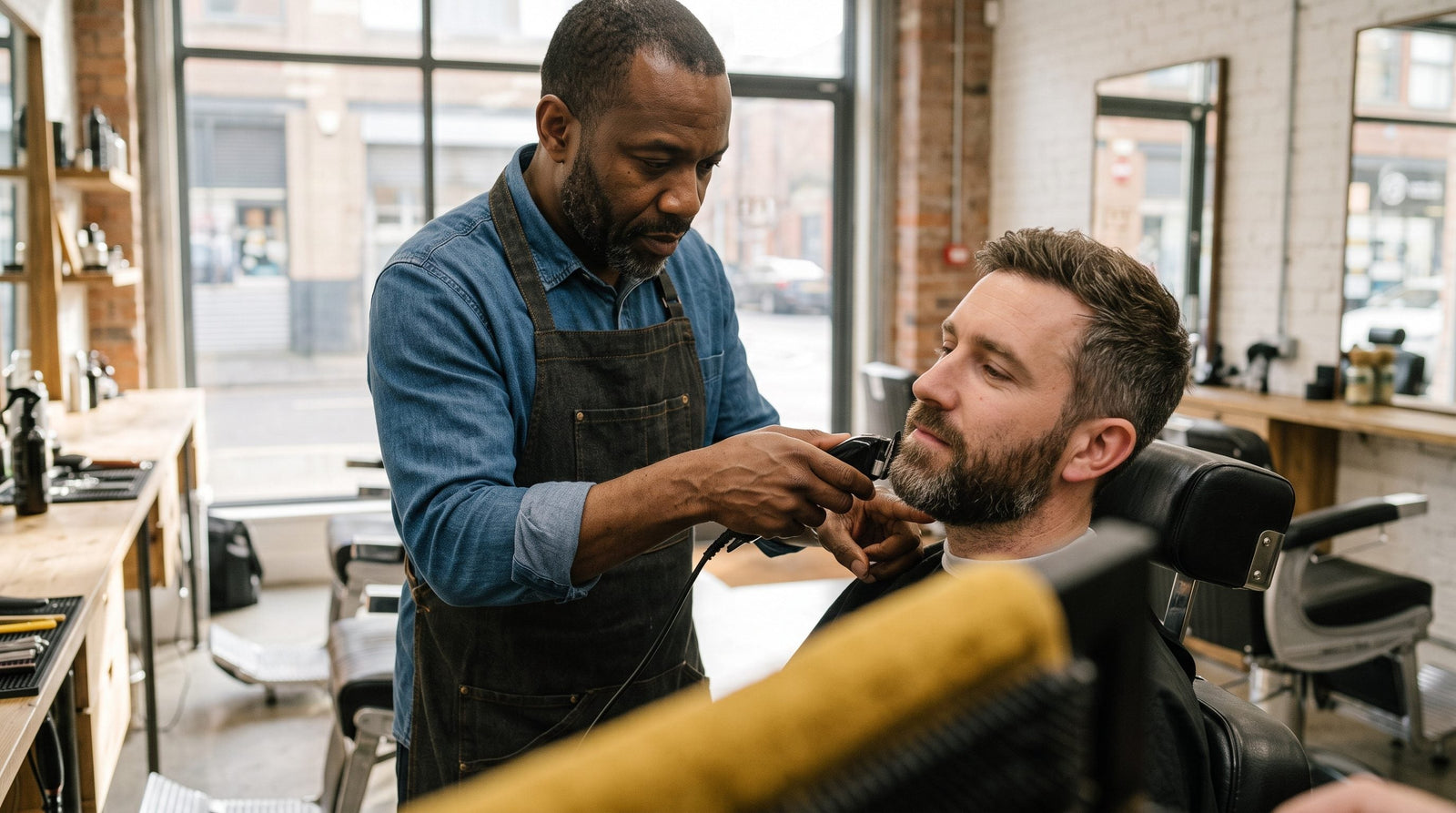
Old Money and beards. Can they coexist? Absolutely — but with important caveats. The Old Money aesthetic does not accommodate a beard that looks like it's been left to its own devices. We're not talking about the rugged, adventurer beard here. We're talking about something deliberately shaped: a well-maintained short beard, a precise stubble, or even a clean shave with razor-sharp edges.
The rule is simple. If it has a clear shape and is clearly maintained, it works. If it looks like you've been on a three-week wilderness expedition, it does not. And if you're wondering which beard shape pairs best with which haircut, our guide on matching haircuts and beard styles is the place to start.
The skin question
Old Money gentlemen look after their skin. This isn't vanity — it's maintenance. And in 2026, there is absolutely no excuse for not having a simple, effective skincare routine. We've written a thorough piece on anti-ageing skincare ingredients for men if you want to get into the science of it.
The baseline? Cleanse morning and evening. Moisturise daily. Use SPF. Three steps. That's all.
What products should I use? The Seven Potions answer
The right products make an enormous difference — not because grooming is complicated, but because the wrong ones actively undermine the look. Here's what we'd reach for.

For your hair: Hair Styling Pomade
The slicked-back and side-part styles that define Old Money hair live or die by the product you use to style them. You need something that delivers control and a degree of shine — but not a plastic, helmet-head finish. Our Hair Styling Pomade is water-based and made with natural ingredients, giving you a medium-to-strong hold that stays flexible throughout the day. Apply a penny-sized amount to slightly damp hair, work it through evenly from roots to tips, then comb or brush into your chosen style.
If you're working with thicker hair or want a slightly more textured, matte finish for a quiff, our Hair Styling Clay is an excellent alternative — it adds grip and volume without any shine, keeping things looking natural and unfussy.
For your beard: Beard Oil
Whether you're maintaining a short, sculpted beard or something a little fuller, beard oil belongs in your routine. Our Beard Oil is built around a base of jojoba oil — which is worth explaining, because jojoba is genuinely fascinating. It's technically a liquid wax that mimics the structure of your skin's natural sebum, meaning it absorbs deeply without leaving a greasy residue. Pair that with argan oil (high in oleic and linoleic acids, known for softening coarse beard hair significantly) and you have something that conditions deeply, reduces itch, and makes your beard look genuinely healthy rather than just tamed.
Three to four drops in the palm, worked through from root to tip after washing, is all you need. The Woodland Harmony variant adds cedarwood and sandalwood for a scent that is, frankly, better than anything you'd pay three times the price for at an airport duty-free.
For beard shape and hold: Beard Balm
Beard oil conditions. Beard balm controls. If your beard has any significant length to it — even an inch — you want a balm in your routine to keep it shaped and sitting where you want it throughout the day. Our Beard Balm blends coconut oil, peach kernel oil, and cocoa butter with natural waxes to give you conditioning benefits and light-to-medium hold in a single product.
Cocoa butter, incidentally, is an exceptional emollient — it forms a protective layer over the hair shaft that reduces moisture loss, keeping each strand softer and more manageable over time. A pea-sized amount warmed between the palms and worked through your beard, followed by a quick brush through, is the Old Money beard routine done.
The complete setup: Beard Grooming Set
If you're starting from scratch or want to gift yourself a proper grooming foundation, our Beard Grooming Set — which includes Beard Oil, Beard Shampoo, and a Beard Brush — gives you everything you need in one go. The boar bristle brush is particularly relevant here: it distributes natural oils evenly through the beard, trains the hair to sit in a consistent direction, and adds a natural sheen that no product alone can replicate.
For your skin: Anti Ageing Moisturiser
Remember what we said about Old Money gentlemen looking after their skin? Our Anti Ageing Moisturiser does the heavy lifting: peptides that support collagen synthesis, hyaluronic acid for deep hydration, and vitamin E as an antioxidant barrier against environmental stress. Apply a small amount morning and evening to clean, dry skin. It won't undo years of neglect overnight, but it will make a consistent, visible difference — and consistency, as we keep saying, is rather the whole point.
Keeping the look: what actually needs to happen week to week
The Old Money aesthetic rewards consistency. Not effort — consistency. There's a difference. The man who quietly gets his hair cut every four weeks and moisturises every morning will always look better than the man who occasionally makes a big effort and then neglects everything for six weeks.
Seasonal grooming adjustments are part of this — your skin and hair behave differently in summer heat versus winter cold, and your product choices should reflect that. We went deep on this in our seasonal grooming guide if you want the full breakdown.
But in terms of the daily and weekly fundamentals, here's what the well-presented gentleman actually does:
Daily routine
- Morning: Wash your face, moisturise, apply beard oil to your beard (or clean-shave with care), style your hair with the appropriate product.
- Throughout the day: Carry a pocket comb. A KENT Professional Pocket Comb fits in any jacket pocket and takes two seconds to run through your hair before any meeting, date, or encounter that matters.
- Evening: Wash your face again. Let your beard breathe — no product overnight. Your skin regenerates while you sleep; let it get on with the job.
Weekly routine
- Wash your beard with dedicated beard shampoo two to three times per week — not every day, as over-washing strips the natural oils that keep the beard healthy and manageable.
- Follow washing with beard balm or a dedicated conditioner to restore moisture.
- Brush your beard daily with a quality boar bristle brush to maintain shape and direction.
- Trim stray hairs between barber appointments — a pair of small grooming scissors handles this in under two minutes.
A few things worth knowing before your next barber appointment
- Dry hair before styling. Apply pomade to hair that is 80% dry rather than soaking wet. You'll get better distribution, better hold, and a more natural finish. Blow-dry briefly on a low heat setting first — it also adds volume at the roots, which helps with the slicked-back silhouette.
- Less product, more passes. Start with less than you think you need and build up. A penny-sized amount of pomade is your starting point. You can always add; you cannot subtract without washing the whole thing out, which defeats the purpose.
- Bring photographs to your barber. Two reference images, ideally — one showing the length, one showing the finish. Verbal descriptions of haircuts are famously unreliable. Photographs are not.
- Book your barber consistently. Old Money cuts need regular maintenance — every three to five weeks depending on the cut. Put it in your calendar. Treat it like a standing appointment you don't cancel.
- Match your beard to your cut. A slicked-back undercut with a full, unkempt beard is a contradiction. Keep the two elements speaking the same language — both polished, both deliberate.
- Protect your hair. These cuts expose the sides and neckline, making them visible targets for sun damage in summer. UV protection for hair (yes, that's a thing) and a good moisturiser for the scalp and skin around your ears will thank you in the long run.
- Own the posture too. This is not a grooming tip per se, but it is an Old Money tip. Stand straight. Move without rushing. The haircut works harder when the man wearing it carries himself with quiet confidence. The two are inseparable.
Frequently asked questions
What is the 'Old Money' haircut style?
The Old Money haircut style covers a collection of classic, refined cuts — slicked-back styles, side parts, textured quiffs, Ivy League cuts — all sharing controlled length on top, clean tapered sides, and a polished but never overdone finish. The aesthetic draws from mid-century European and American prep traditions and puts understatement over trend-chasing. In 2026 these styles have been updated with softer fades and more natural movement, but the core principle remains: the hair should look intentional without looking laboured over.
How do I ask my barber for an Old Money haircut?
Bring a reference photograph — ideally two, showing both the length and the finish you're after. Then specify the key technical elements clearly: length on top, taper style on the sides, and the direction you want the hair to sit. Phrases like "medium skin fade," "scissor taper," "defined side part," and "natural movement on top" will communicate far more precisely than "Old Money" alone, which a barber may interpret differently. For specific briefings tailored to each cut, refer back to the style guide section above.
What grooming products complement the Old Money aesthetic?
A water-based pomade is the go-to for slicked-back and side-part styles — it provides control and natural shine without a stiff, artificial finish. A styling clay works better for textured quiffs, delivering hold and volume with a matte finish. Beyond hair, beard oil and beard balm are essential for maintaining a sculpted, healthy-looking beard. Add a quality daily moisturiser and you've covered the full picture. Worth being selective about ingredients here — products built around natural oils and established actives tend to perform more consistently than ones padded out with cheaper synthetics.
Can the Old Money haircut work with curly or wavy hair?
Absolutely — and in many cases, natural texture actively improves the Old Money aesthetic, particularly for quiff and slicked-back styles where movement and volume are assets rather than obstacles. The textured quiff is ideally suited to men with wavy or slightly curly hair, as the natural movement does a lot of the styling work for you. For guidance on working with thicker or curlier textures specifically, our guide on styling men's thick, curly and wavy hair covers the practical details thoroughly.
What's the difference between an Old Money haircut and a regular classic cut?
The distinction is largely one of intention and finish. A "classic cut" covers many traditional styles — some compatible with the Old Money aesthetic, some not. Old Money cuts specifically need longer top sections (giving the hair direction and movement), softer taper transitions rather than harsh fades, and a finish that prioritises natural flow over sculptural precision. The Old Money haircut is a classic cut — but one chosen and maintained with particular care for its role within a broader, considered aesthetic.
Closing thoughts
Here's the honest truth about the Old Money aesthetic: it was never really about money. It was always about care. The care taken in choosing a cut that suits you. The care taken in maintaining it properly. The care taken in building a grooming routine that actually works, day after day, regardless of whether anyone's watching.
That's what separates the men who genuinely carry this look from the ones who merely imitate it. Imitation is reactive — you see something, you copy it, you hope for the best. The genuine article is consistent, patient, and grounded in a real understanding of what works for your face, your hair, and your life.
You now know which cuts define the look, how to brief your barber with confidence, and what products to use and why they work. The rest is just showing up — to the barber every four weeks, to your bathroom mirror every morning, to the small unglamorous habits that make the whole thing look effortless from the outside.
So book the appointment. Sort out your grooming shelf. Pick up a proper grooming set if you haven't already. The haircut alone won't do it. Neither will the products alone. But together, maintained with the kind of quiet consistency that nobody notices until you walk into a room — that's the whole game.