
You've got a full, thick head of hair flowing past your collar. Good. But right now you're probably staring into the mirror wondering why it looks like a lion's mane on a bad day, why it takes half the morning to dry, and why every attempt to style it ends in that triangular shape nobody asked for.
We've been there. Thick, long hair is a blessing and a curse. The same density that gives you that enviable, rock-star fullness is the very thing making it expand sideways, tangle viciously, and resist every product you throw at it. The difference between long hair that looks intentional and long hair that looks like you've lost a bet? Understanding how to work with your specific texture. Not around it, not against it — with it.
This guide is built for men with long, thick hair. Not a vague lookbook of hairspiration. Not a three-sentence overview before a product pitch. We're talking detailed techniques, step-by-step styling walkthroughs, everyday maintenance routines, and practical advice for the stuff nobody else covers — like how to sleep without looking like you've been dragged through a hedge by morning. If you've been wondering about how to style thick straight hair, we've covered that separately — but here we're going across the full spectrum of thick and long.
The perks and problems of long, thick hair
First, the good news. Thick hair has genuine structural advantages over finer types. It holds styles through rain. It carries volume and presence without needing much product. Styles like the man bun, the bro flow, the slicked-back look — all of them thrive on a dense, full head of hair. When it's working, it really works.
But thick hair — especially at length — comes with a very specific set of challenges that most generic "long hair for men" guides completely ignore.
- The pyramid shape. Without strategic layering, the weight of long, thick hair flattens at the crown and expands outward toward the ends. It's not a look. It's a geometry problem.
- Drying time. Dense hair holds onto water stubbornly. Air-drying takes hours, during which your hair sets into whatever shape it happened to be in when you left the house. Spoiler: that's rarely a good one.
- Frizz and humidity. Thick hair — particularly wavy or curly thick hair — absorbs atmospheric moisture, which lifts the outer cuticle layer and causes the whole situation to expand like a party trick nobody asked for.
- Product distribution. Getting product evenly through thick, long hair is genuinely difficult. Too little and it does nothing. Too much and it weighs everything down into a greasy, flat mess.
- Tangles and breakage. Thick hair tangles differently to fine hair. The strands interlock more heavily, and rough handling — or the wrong brush — causes breakage at the point of tension.
- Daily management. What do you do with it at the gym? How do you sleep without wrecking it? How do you get it looking polished for work without spending an hour in the bathroom? These are real questions and they deserve real answers.
Your specific hair type within the "thick and long" category also matters. Thick straight hair behaves differently to thick wavy hair, which behaves differently again to thick curly hair. We'll address each throughout this guide.
Foundational care: the right way to wash, condition, and dry
Get the wash and dry routine wrong, and no amount of product or technique will fix what follows.
How often should you actually wash it?
Here's where a lot of men go wrong — they wash every day out of habit, because that's what they've always done with shorter hair. But long, thick hair is a different animal entirely. Daily shampooing strips the scalp of its natural oils (sebum), which then triggers the scalp to produce more oil to compensate, and you end up in a greasy cycle that never resolves itself. Men with thick hair, particularly those with coarser or drier textures, should avoid daily shampooing. Two to three times per week is a far better rhythm for most.
The exception is if you're training heavily and sweating through your scalp daily. In that case, rinse with water more frequently, but keep shampoo to two or three times per week. Your hair and scalp will adjust within a couple of weeks, and you'll notice the difference.
Conditioning: do not skip this
If shampooing is where men cut corners, conditioning is where they go completely off the rails. A good conditioner smooths the cuticle to reduce frizz, adds slip so detangling doesn't cause breakage, and keeps the hair shaft flexible rather than brittle. All three of those things matter when your hair is long and dense.
Apply conditioner from mid-lengths to ends — not the roots, which don't need it. Let it sit for two to three minutes minimum. If your hair is particularly dry or you're dealing with persistent frizz, a leave-in conditioner or deep conditioning mask once a week will transform things. Our beard conditioner — packed with moisturising ingredients — follows the same principle of softening and smoothing coarse, dense hair. The logic is identical.
Drying without destroying it
Rough towel-drying is one of the biggest causes of frizz in long hair. When you scrub your hair with a towel, you're roughing up the cuticle while it's at its most vulnerable — wet and swollen. Instead, gently squeeze out excess water, or use a microfibre towel to blot rather than rub.
If you're blow-drying — and for thick hair, sometimes you genuinely have to — use a diffuser attachment on medium heat and keep the dryer moving. Blasting at maximum heat in one spot causes heat damage and uneven drying. Keep the dryer at least fifteen centimetres from the hair. For the best results, direct airflow downward along the hair shaft. That smooths the cuticle rather than ruffling it.
For wavy and curly thick hair, diffusing on low heat while scrunching upward preserves your natural texture. For straight thick hair, a round brush while blow-drying gives you control over the direction and adds movement.
The best haircuts to manage and shape long, thick hair
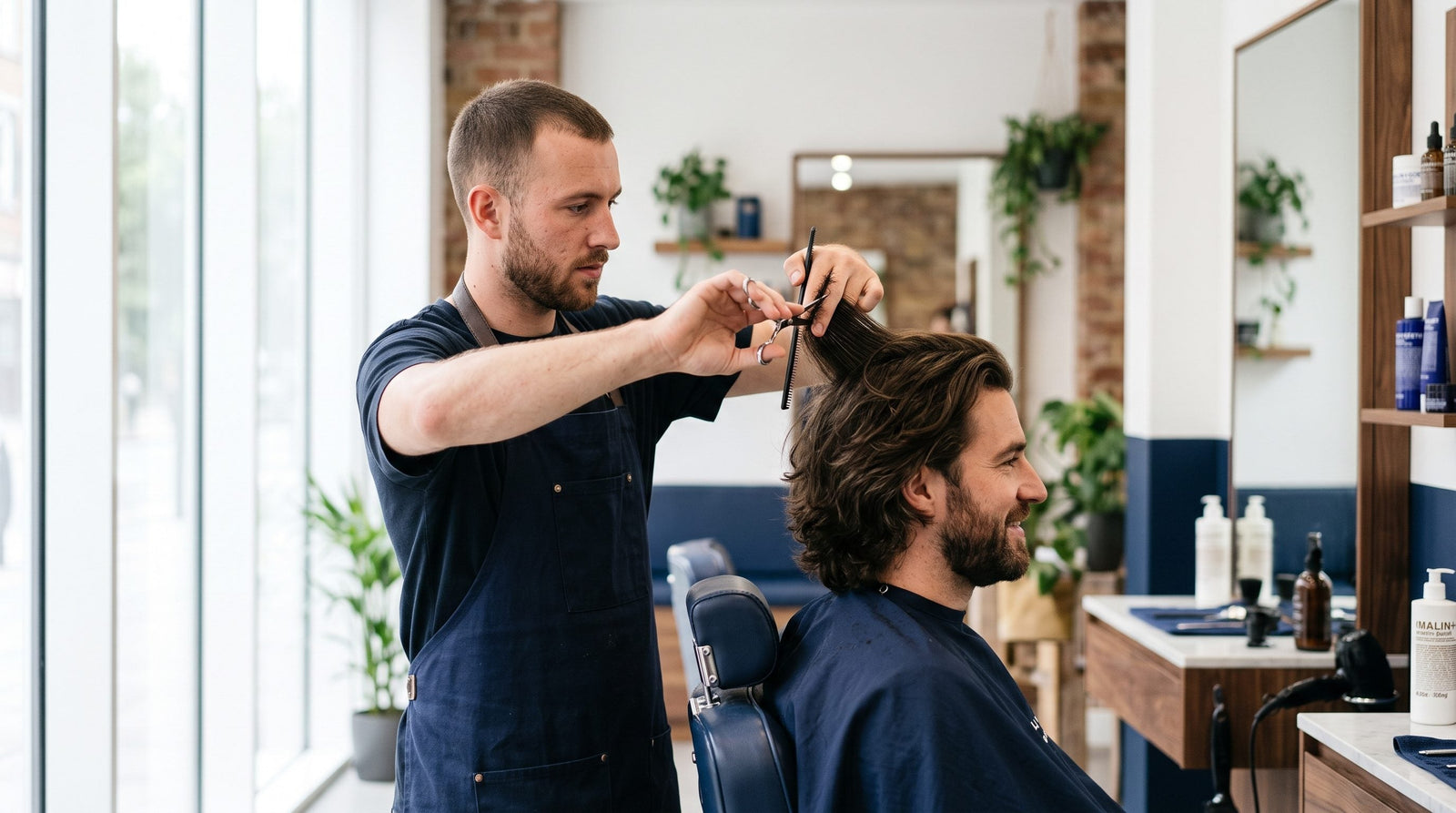
If you have thick, long hair and your barber doesn't know how to cut thick hair, you are going to keep fighting it. Accept that early. A good haircut doesn't just shape the style — it removes excess weight and makes every day's styling exponentially easier. The right cut redistributes bulk and gives you shape, and that alone makes a real difference to how manageable the whole thing is.
Layers
Layering is the primary weapon against the pyramid shape. Without strategic layers, the weight of your hair creates flatness at the crown and width at the ends. Layers redistribute that weight, giving the hair movement and sending volume upward and outward rather than just outward. Ask your barber specifically for long layers — these are different to short choppy layers that can look wrong on men's hair. Long layers start from around the collarbone and create a cascading shape that frames the face without looking like you've borrowed your sister's haircut from 2003.
The undercut with length on top
If you want the length but need to manage bulk, an undercut — where the sides and back are cut short or faded while length is kept on top — handles the horizontal expansion problem without sacrificing any of the drama. You keep the presence of long hair; the sides just stop contributing to the width. This works particularly well for thick wavy and curly hair.
Textured ends
Ask your barber to point-cut or razor the ends of your hair. This means cutting vertically into the ends rather than bluntly across them, which removes bulk at the tips and creates texture and movement. Blunt ends on thick hair emphasise the weight and tend to look heavy. Textured ends look intentional and modern.
The wolf cut
The wolf cut — a combination of a shag haircut and heavy layers — works particularly well for thick hair. It uses layering and curtain fringe-style face-framing to redistribute weight while embracing volume. It suits straight, wavy, and curly thick hair equally well and requires relatively minimal effort to style daily. It was everywhere in 2023 and it hasn't gone anywhere, because it actually solves real problems for thick hair rather than just looking good on a mood board.
Step-by-step guides to iconic long hairstyles
The man bun
Possibly the most practical style for thick, long hair — and genuinely one of the styles it was made for. Thick hair creates a fuller, more impressive bun than fine hair could ever manage.
- Work a pea-sized amount of hair grooming cream through slightly damp hair from roots to ends to smooth the surface and reduce flyaways.
- Gather all hair back with your hands, pulling it smooth at the sides. For a sleek look, use a fine tooth comb to smooth the surface. For a more relaxed look, use your fingers.
- Secure at the crown (high bun) or at the nape (low bun) with a fabric hair tie — avoid thin elastic bands, which cause breakage.
- Wrap the gathered ponytail around itself to form the bun and secure with a second tie or bobby pins.
- For the half-bun, gather only the top section of hair and repeat steps three and four.
The biggest mistake men make with the man bun is pulling too tight at the temples, which causes traction and — over time — hairline recession. Keep it comfortably snug, not painful.
The bro flow
The bro flow is the natural, effortlessly swept-back look — hair that falls past the collar and moves with you. Think of every professional athlete who's ever had hair that made you slightly envious. The secret is that it looks effortless precisely because it is effortless, but only if the hair is in good condition and has the right cut underneath it.
- Apply two or three drops of a lightweight hair oil to dry or damp hair, working it through the mid-lengths and ends.
- Use a wide tooth comb or your fingers to push hair back from the face.
- Allow to air-dry naturally, or use a diffuser if you're in a hurry.
- Once dry, add a very small amount — genuinely the size of a grain of rice — of hair styling paste through the ends for definition and separation.
For wavy thick hair, this look is almost automatic once the hair is healthy and layered properly. For straight thick hair, pushing it back while damp and letting it dry in that direction trains the hair over time.
The slicked-back look
More polished, more intentional — and genuinely sharp when executed correctly on thick hair.
- Start with towel-dried, still-damp hair.
- Apply a penny-sized amount of water based pomade to your palms, rub them together, and work through the hair from roots to ends.
- Use a fine tooth comb to sweep hair directly backward from the forehead. Work in sections — top first, then sides.
- For a high-shine, formal look, use slightly more product. For a more matte, understated result, go lighter.
- Finish with a light mist of hairspray if you need hold throughout the day.
The key with thick hair is to apply pomade to damp — not dry — hair. Dry application on thick hair leads to uneven distribution and visible product build-up.
The textured loose look
For days when you want the hair down but not flat, a salt texturising spray is your closest friend. Sea salt spray enhances natural texture, absorbs excess oil, and gives hair that lived-in, beach-ready look without a great deal of effort. Apply to damp hair, scrunch upward, and either air-dry or diffuse. The result is effortless movement and definition — particularly effective on wavy and curly thick hair.
Essential products for taming the mane
Product selection for long, thick hair is where a lot of men waste money and effort. The table below breaks down the main product types by what they actually do, so you can choose based on your style rather than what looks most impressive on a shelf.

| Product Type | Hold Level | Finish | Best For | Best Applied To |
|---|---|---|---|---|
| Pomade (water based) | Medium–Strong | Shine to High Shine | Slicked-back, structured styles | Damp hair |
| Hair Clay | Medium–Strong | Matte | Textured looks, volume, definition | Dry or slightly damp hair |
| Hair Paste | Medium | Low shine / Natural | Relaxed textured styles, bro flow | Damp or dry hair |
| Grooming Cream | Light–Medium | Natural | Frizz control, smoothing, conditioning | Damp hair |
| Salt Spray | Light | Matte / Textured | Wavy / curly texture, beach look | Damp hair |
| Hair Oil | None | Low shine / Healthy | Frizz sealing, shine, end care | Damp or dry hair |
| Styling Powder | Light–Medium | Matte | Adding volume at the root, day-two texture | Dry hair |
What products should I use? The Seven Potions recommendations
For long, thick hair in particular, what's actually in the bottle matters enormously. Products heavy in alcohol dry the hair out; those built around silicones build up over time and make thick hair even harder to manage. Here's what we reach for.
Seven Potions Hair Styling Pomade is water based and made with natural ingredients, which means strong hold without the brittle, crunchy finish you get from spirit-based alternatives. It washes out cleanly with water — important when you've got a full head of thick hair that takes effort to rinse. Use a penny-sized amount worked between warm palms, then distributed from root to tip on damp hair for slicked-back styles or structured looks.
Seven Potions Hair Styling Clay is the pick for when you want texture, volume, and definition without shine. The matte finish suits the natural, loose looks that thick hair pulls off so well — and the clay adds separation to what can otherwise be a single uniform mass of hair. A pea-sized amount on dry hair, worked through the ends and mid-lengths, gives definition without weight.
Seven Potions Salt Texturising Spray works with your natural texture rather than trying to override it. Sea salt absorbs excess surface oils, adds volume, and encourages natural wave and curl patterns. Spray into damp hair, scrunch, leave it alone, and you're done. I realise that sounds too simple. It isn't. If your hair has any wave or curl to it, this is the product that makes it look deliberate rather than accidental.
Seven Potions Hair Grooming Cream is your everyday frizz management solution. Applied to damp hair before drying, it smooths the cuticle, reduces flyaways, and gives hair a healthy, natural finish. Think of it as your styling primer — particularly useful on days when you want hair to look good without looking like you've tried too hard.
And don't overlook the hair shampoo and conditioner combination as part of the routine. Healthy, well-moisturised hair styles easier, holds product better, and looks better throughout the day. Good care underpins good styling, always.
Troubleshooting: solving common long, thick hair issues
The pyramid / triangle shape
The most common issue with long, thick hair, and the fix is primarily at the cutting stage. Ask your barber for long internal layers that remove weight from the mid-lengths, and request that the ends are point-cut rather than blunt. If you're between haircuts, a small amount of grooming cream or oil applied to damp mid-lengths and ends — while directing the hair downward rather than letting it expand — will help. Avoid volume-adding products at the crown; save those for fine hair.
Frizz in humidity
Frizz happens when the hair cuticle absorbs atmospheric moisture and lifts. Two things help: seal the cuticle before you go outside, and block moisture from getting in. A light hair oil applied to dry or nearly-dry hair seals the cuticle surface. Anti-frizz or anti-humectant serums work well on long, thick hair specifically in humid conditions — they create a barrier that prevents moisture uptake. In genuinely humid summer weather, the salt spray approach also works well because it sets your texture intentionally, meaning there's less for humidity to "ruin."
Long drying times
Thick hair holds water. That's simply how dense hair works. The shortcuts: squeeze excess water out with a microfibre towel before touching a dryer, apply product to damp (not dripping) hair, and use a diffuser rather than direct heat if you're preserving natural texture. For slicked styles, rough-dry with your hands first until about 80% dry, then apply product and use a brush and dryer for the final pass. This massively reduces overall drying time compared to applying product to soaking wet hair and trying to style from scratch.
Sleeping and waking up a disaster
Nobody warns you about this part. A loose braid or a low bun protects the hair from tangling as you move during the night — and you move more than you think. Avoid tight elastics; they create a crease that takes hours to fall out, and if your hair is in any way vulnerable to breakage, tight overnight ties cause real damage. The other upgrade worth every penny: a silk or satin pillowcase. Cotton is rough on the cuticle; silk creates almost no friction, which means you wake up with dramatically smoother hair. Try it once and you'll understand why people go on about it.
Managing it during exercise
For intense training, a high ponytail or securely tied bun keeps the hair controlled and out of your face. The mistake is using decorative ties that slip — get actual sports hair ties that hold thick hair properly. For lower-intensity sessions, a loose braid down the back is both effective and looks considerably more composed than a chaotic half-up situation unravelling mid-squat. Wash or rinse the hair after training if you've sweated heavily, but as noted earlier, keep shampoo to two or three times per week maximum.
Product build-up
Thick hair accumulates product over time, particularly if you're using heavy waxes or oil based products regularly. Signs of build-up: hair feels heavy and dull even after washing, styling products don't distribute properly, and the scalp feels slightly tacky. A clarifying shampoo once a fortnight resets everything. The rest of the time, a gentle, natural shampoo like the one in our shampoo and conditioner duo is mild enough to cleanse without stripping. (Our notes on where to save and splurge on grooming are also worth a read for working out which products deserve the investment for the long haul.)
Daily routine and tips & tricks
Good habits beat occasional heroics. A ten-minute daily routine done properly is worth more than an hour-long session every few days when the hair has become unmanageable. Here's the practical structure that keeps long, thick hair looking intentional rather than abandoned.
Morning routine for long, thick hair:
- On wash days: shampoo (work into scalp only, rinse through), condition (mid-lengths to ends, leave two to three minutes), rinse thoroughly with cool water to close the cuticle.
- Gently squeeze out excess water — no rubbing.
- Apply grooming cream or your styling product of choice to damp hair before drying.
- Rough-dry with fingers or diffuse to about 80%, then style as desired.
- Finish with one or two drops of hair oil through the ends to seal and add sheen.
On non-wash days:
- Wet the hair lightly with a spray bottle or in the shower (no shampoo), work in conditioner if needed, rinse.
- Apply salt spray or a tiny amount of styling paste to refresh texture.
- Comb or finger-comb through and style.
Tips and tricks worth keeping:
- Detangle from the bottom up. Start with the ends and work your way to the roots, never the reverse. This prevents the tangle from being pushed down and compacted into a knot.
- Wide tooth comb for wet hair, boar bristle brush for dry. The wrong tool causes unnecessary breakage. Wide tooth on wet, always.
- Cold water final rinse. Finishing your shower rinse with cooler water closes the cuticle, reduces frizz, and adds shine. Yes, it's uncomfortable. Yes, it works.
- Sleep in a loose braid or low bun. Silk pillowcase if you want to upgrade. The difference in morning hair is significant.
- Less product than you think. Thick hair fools you into using more product than necessary because you feel like it needs to cover more ground. Always start with less — a pea-sized amount of clay, a penny of pomade — and add only if needed.
- Get a trim every eight to twelve weeks. Even when growing out, regular trims remove split ends that travel up the hair shaft and cause breakage and frizz. It's counterintuitive, but it's correct.
- Protect from chlorine. Before swimming in a chlorinated pool, wet hair thoroughly with clean water and apply a small amount of conditioner. This limits how much chlorine the hair absorbs, which can cause severe dryness and colour change in thick hair.
- In hot, humid weather, swap heavy waxes for lighter products — salt spray, grooming cream, or paste. Heavy products in heat and humidity lead to breakdown, greasiness, and the particular misery of sweating through a style before 10am.
For a broader look at how seasons affect your grooming habits, our seasonal grooming guide is worth a read — the principles around humidity, dryness, and product adjustment apply just as well to hair as they do to beard care.
Frequently asked questions
How to style thick long hair for men?
Start with the right foundation: wash two to three times per week, condition consistently, and make sure your haircut includes long layers to remove excess bulk. Apply your chosen product — pomade for slicked styles, salt spray or paste for textured natural looks — to damp hair, and work from roots to ends for even distribution. The key is using less product than you instinctively reach for, because thick hair amplifies everything.
How to style long thick curly hair for men?
Curly thick hair thrives on moisture and minimal manipulation — deep condition regularly and avoid brushing when dry, which creates frizz and breaks up the curl pattern. Apply a leave-in conditioner or curl cream to soaking-wet hair, scrunch upward toward the scalp, and either diffuse on low heat or air-dry completely before touching. Salt spray is also excellent for encouraging and defining natural curl texture in a relaxed, lived-in way.
How to style thick wavy long hair men?
Wavy thick hair sits in the sweet spot between straight and curly — it responds well to salt spray applied to damp hair and scrunched upward, which enhances the wave pattern without requiring much effort. Avoid brushing dry wavy hair, as it separates the waves into frizz; use your fingers or a wide tooth comb instead. For a more polished result, a small amount of grooming cream on damp hair before blow-drying with a diffuser gives you defined, controlled waves with substance.
How to style thick hair for men?
The principle for thick hair at any length is to control bulk rather than add volume — layers in the cut, lightweight products in the styling routine, and tools that work with the hair's natural movement. Matte products like clay and paste tend to suit thick hair better than heavy waxes, which can cause the hair to clump and look heavy. Less product, more technique: getting the cut right and the drying method right will do more for thick hair than any product alone.
How to style long thick straight hair men?
Straight thick hair has the most styling versatility of the thick hair types — it takes pomade and combing beautifully for slicked styles, and responds well to grooming cream for a natural, flowing finish. The main challenge is avoiding the flat, blunt look; ask your barber for point cut or razored ends and long layers to add movement. For everyday wear, a penny-sized amount of pomade or paste worked through damp hair and combed back or to the side gives a clean, intentional result without much fuss. We also have a dedicated guide on styling thick straight hair if you want to go deeper.
Final thoughts
Long, thick hair is genuinely something to work with rather than fight. The men who pull it off haven't been handed better hair — they've just sorted out the basics: a cut that removes weight properly, products used in the right quantities, and a daily routine that doesn't require an hour in the bathroom. That's actually achievable. Most of it comes down to washing less, conditioning properly, and getting layers put in by someone who understands dense hair.
Start there. Add one product at a time rather than overhauling everything at once. The hair clay style kit is a solid starting point if you're building a styling kit from scratch, and the pomade style kit is there if you lean more toward that polished look. Either way — the hair's already grown. The rest is just maintenance.