
The unlikely comeback of a classic: why the mullet is back
You've seen it on someone recently — maybe a bloke at a gig, maybe a footballer warming up on the pitch, maybe a mate who suddenly looks inexplicably cooler than he did six months ago. And you thought to yourself: is that... a mullet? And then, quietly, perhaps with a furtive glance to make sure nobody was watching: actually, that looks really good.
Don't worry. You're not alone. And no, you haven't lost your mind.
The modern mullet is properly back. What's strange — and I think genuinely interesting — is that it doesn't feel like a nostalgia play. The 1987 version your uncle was rocking had hard disconnected lines, a helmet of hair on top, and a waterfall at the back that owed nothing to intention. The 2026 version has been entirely reimagined: softer transitions, cleaner fades, choppy textured layers that move. It sits somewhere between the artistic looseness of a shag cut and the precision of a taper fade, and when it's done right it looks absolutely brilliant.
This guide will walk you through everything. Why it's back, what separates the modern version from the original crime against hairdressing, whether it'll actually suit you, how to talk to your barber without sounding like you've lost the plot, how to style it for your specific hair type, and — because we're a grooming brand and this is what we do — how to pair it with the right beard. We've also covered the pairing of haircut and beard styles in depth if you want to go further after this.
What defines the modern mullet vs. the classic?
The old mullet had a reputation, and it earned every bit of it. Hard, disconnected lines. A helmet of hair on top. A waterfall flowing freely down the back, completely untethered from the sides. "Business in the front, party in the back" — except the business was filing for bankruptcy and the party had run out of crisps.
The modern mullet keeps the fundamental idea — shorter on top and at the sides, longer at the back — but rewrites everything else. Where the old school version relied on harsh contrasts and disconnection, today's cut is defined by graduated, intentional transitions. It's the difference between a hack job and a hairstyle.
Here's what actually separates the two:
- Blended transitions instead of harsh lines. Rather than an abrupt step between the short sides and the longer back, the modern mullet uses layering, tapering, and deliberate graduation to create a natural, flowing silhouette. The result feels deliberate but effortless — which is exactly the aesthetic we're going for.
- Fades and undercuts on the sides. The modern mullet often incorporates a low taper fade, skin fade, or undercut on the sides, giving it that clean, contemporary edge. This is what separates it from its bulky, disconnected retro predecessor. The sides are tidy. The back has personality.
- Texture above everything else. This is arguably the biggest shift. Choppy layers, piece-y ends, that slightly undone quality that looks like you've woken up with incredible hair — the modern mullet needs all of it. It's not flat. It's not blow-dried to within an inch of its life. It moves.
- Proportional length at the back. The classic mullet let the back grow long — sometimes very long. The modern version is more restrained. The back might sit at the collar or just below it, creating a defined shape rather than a freefall of hair.
- Cultural context. The original mullet was a product of its time — glam rock, stadium sports, action films. The 2026 version has been reclaimed by fashion-forward culture. You'll spot it on the runways, on Premier League pitches, on musicians who know exactly what they're doing with their hair.
Interestingly, the mullet's history goes back considerably further than the 1980s. Ancient Greeks, including figures described by Homer, reportedly wore a similar silhouette — shorter at the front and sides for practical reasons, longer at the back. Millennia of credibility. Can't argue with that, really.
Is the modern mullet right for you? (face shape and hair type)
Good news: the modern mullet is one of the more adaptable haircuts out there. Bad news: it's not universally flattering in its default form. The key is understanding which variation suits your face shape and hair texture — and then communicating that clearly to your barber.
Face shapes
Mullets can complement various face shapes when styled correctly. The table below gives you a starting point for each:
| Face shape | What works | What to avoid | Recommended variation |
|---|---|---|---|
| Oval | Almost any mullet variation | Going too extreme in either direction | Classic modern mullet with mid fade |
| Round | Height and volume on top to elongate | Flat tops, excessive width at sides | Textured mullet with high taper, volume at crown |
| Square | Softer layers to offset angular jaw | Hard lines at the sides that echo the jaw | Shaggy mullet, wavy texture, low fade |
| Oblong/Long | Softer layers, width at sides | Excessive length at back which adds more vertical height | Short back mullet, fuller sides, crop-style top |
| Heart | Volume at back to balance narrow chin | Too much volume on top | Flowing mullet with movement at neck |
| Diamond | Fullness at crown and jaw to balance narrow forehead and chin | Very tapered sides that narrow the face further | Textured shag mullet with some width retained |
Hair types
Modern mullets are a natural fit for wavy, curly, and coily hair types — but straight hair can absolutely work too, it just requires a different approach.
- Straight hair: You'll need more product and possibly some styling technique (heat, curl cream) to add texture and movement. Without a bit of intervention, straight hair can make a mullet look flat. A good salt texturizing spray works wonders here — it adds grit and separation that mimics the natural movement of wavier hair types.
- Wavy hair: This is the sweet spot. Wavy hair has natural movement that plays beautifully with the layered, flowing quality of the modern mullet. A bit of product on damp hair, left to air-dry. That's genuinely all there is to it.
- Curly hair: Brilliant for mullets, but requires the right approach. Defined curls at the back with a tighter crop or fade on top creates a dramatic, high-impact look. If you're navigating curly hair more broadly, we wrote a dedicated piece on how to style men's thick, curly and wavy hair that covers the fundamentals.
- Fine hair: A mullet can actually work well for fine hair if the cut has lots of layers — it creates the illusion of volume and movement. Avoid blunt cuts at the back, which will make thin hair look thinner.
How to talk to your barber and get the perfect cut
You can know exactly what you want in your head and still walk out of the barber's chair with something completely different — because you didn't communicate it properly. We've all been there. (The "just a trim" that removed four inches of sentimental growth. Never again.)
This section is arguably the most important one in the whole guide. Here's what actually works:
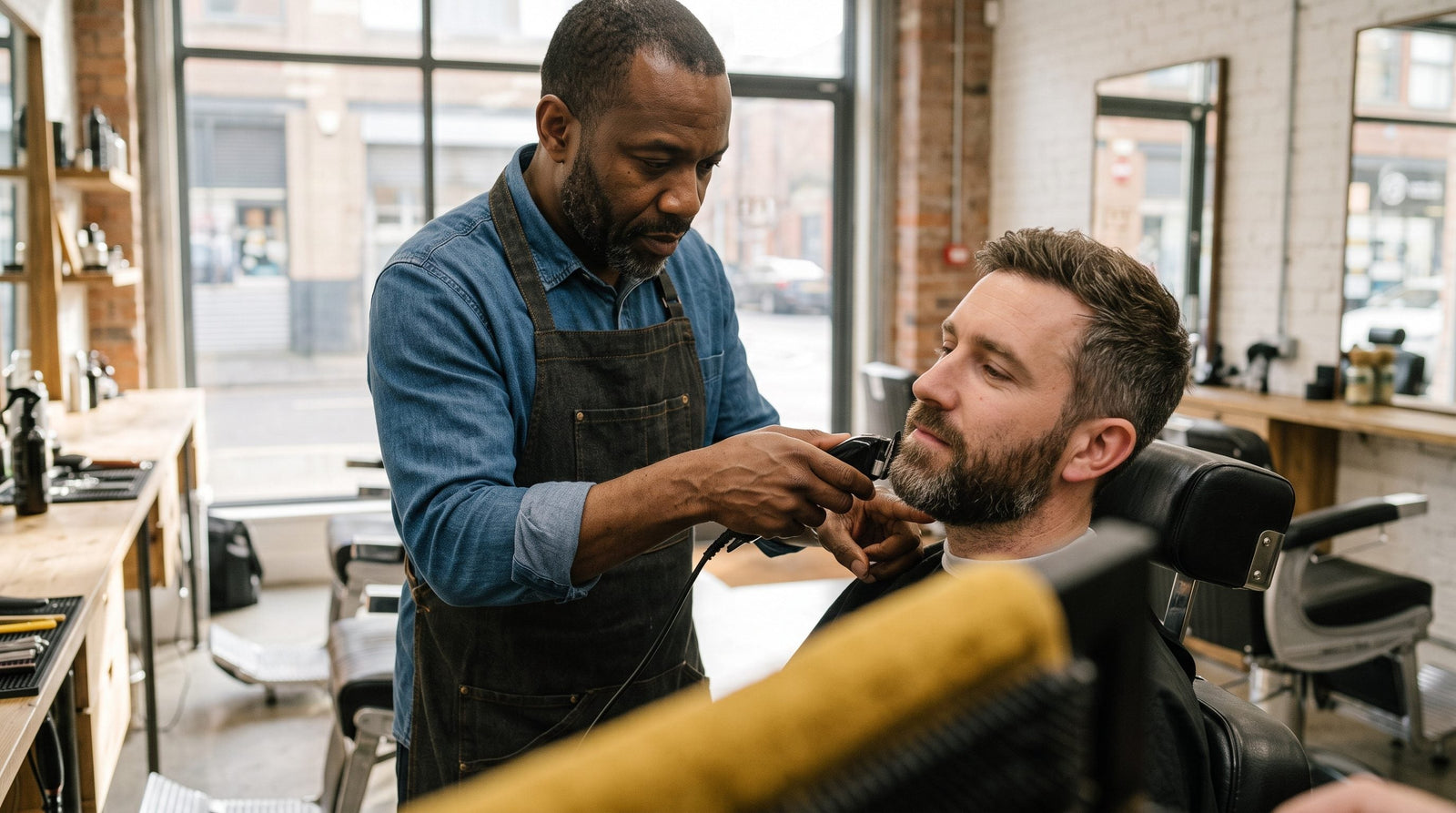
- Bring reference photos. Several of them. Multiple photos, ideally showing different angles. Your barber is a skilled professional, not a mind reader. Photos bridge the gap between what you're imagining and what ends up on your head. Save three or four images from different sources — one showing the back length, one showing the sides, one showing the overall silhouette from the front.
-
Use the right vocabulary. You don't need to become a hairdressing expert, but a few terms will go a long way:
- Taper fade — gradual reduction in length from the sides into the neck area
- Skin fade / high fade / low fade — how high up the head the fade begins
- Undercut — the sides cut shorter and disconnected from the top
- Textured layers — what creates that choppy, piece-y look
- Point cutting — a technique to soften the ends and remove weight
- Graduation — the blended transition between lengths
- Specify the back length clearly. This is the most important measurement for a mullet. Do you want it to sit at the collar? Below it? Just grazing the nape? Tell your barber exactly how long you want the top, sides, and back — these are three separate conversations, not one.
- Talk about the sides specifically. Taper fade? Skin fade? Undercut? Disconnected or blended? This single decision changes the feel of the entire cut dramatically. A skin fade reads as modern and clean. A softer taper reads as more relaxed and slightly retro-influenced (in a good way).
- Discuss your hair type and lifestyle. Tell your barber how much time you realistically spend styling your hair in the morning. A curly mullet that requires 20 minutes of diffusing is pointless if you're a three-minute-routine kind of person. Your barber can adapt the cut to suit how you actually live.
- Book a follow-up appointment. The modern mullet is a maintained cut. It grows out quickly and unevenly if left unchecked. Most men need a tidy-up every four to six weeks — the back can be allowed to grow but the sides and fade need refreshing.
One more thing: if you're weighing up whether to DIY any of this at home, we did a thorough breakdown of the cost and skill differences between a DIY haircut and going to a barber. For a mullet, go to a professional — at least the first time. The fade alone is reason enough.
A guide to styling your modern mullet (textured, curly and straight)
Getting the cut is step one. Knowing how to style it every morning is what separates a genuinely good mullet from one that looks like a bad decision. The approach differs quite a bit depending on your hair texture.

Straight hair: adding the texture that isn't there
Straight hair needs help. The goal is to create the piece-y, slightly dishevelled texture that makes a modern mullet look intentional rather than accidental.
- Wash and towel-dry until damp (not soaking).
- Apply a small, pea-sized amount of hair styling paste through the mid-lengths and ends while hair is still damp. This adds hold and definition before you dry.
- Blow-dry upwards and backwards using your fingers rather than a brush — this adds volume at the crown and encourages separation.
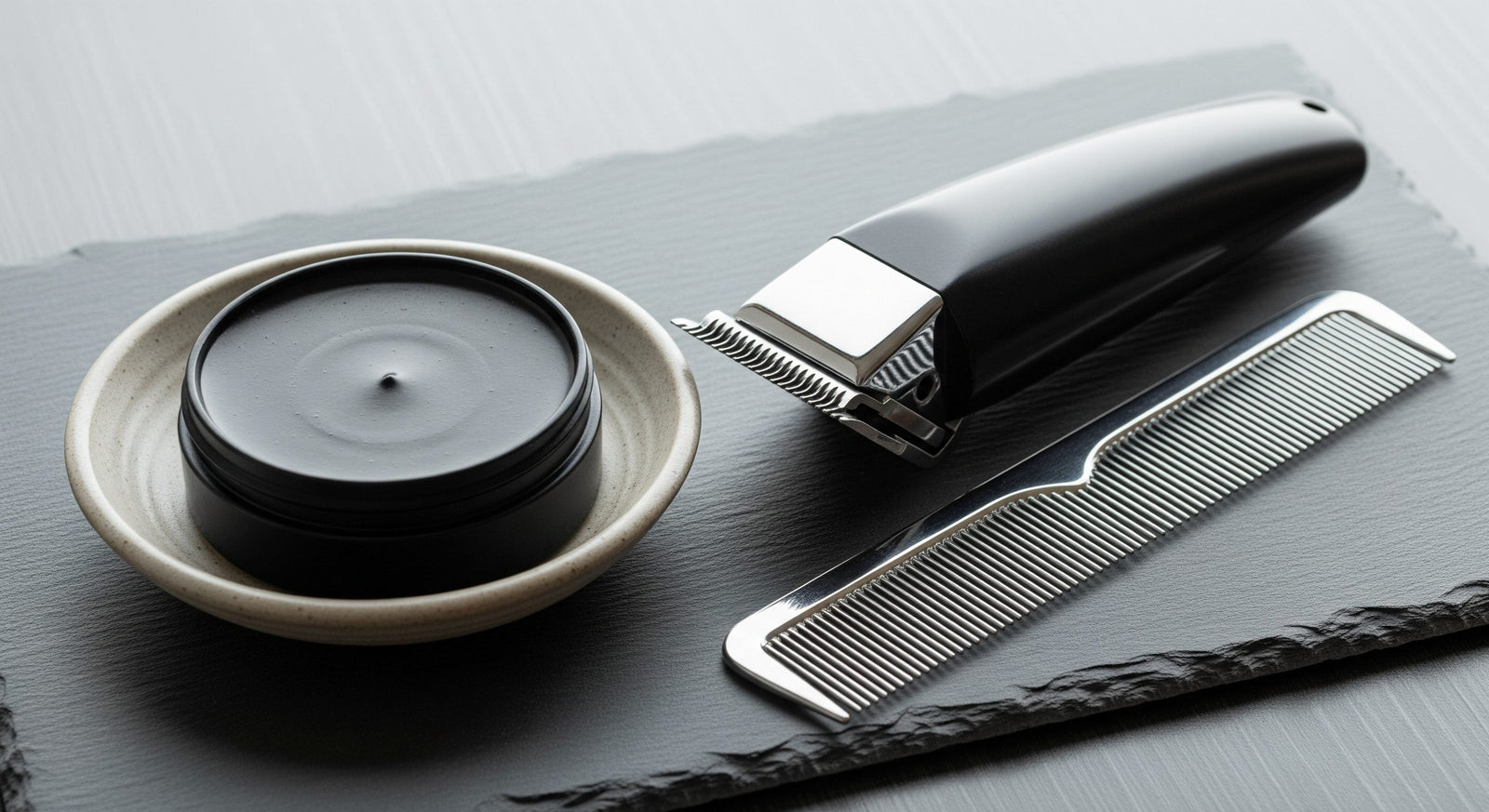
- Once dry, work a small amount of hair styling clay through the top section for grip and matte texture. Clay won't weigh the hair down or create that wet, greasy look that would kill a mullet stone dead.
- Finish with a light spritz of salt texturizing spray through the back and ends. Sea salt creates grit and natural-looking separation that straight hair simply doesn't have on its own — it's the closest thing to a cheat code in your styling kit.
Wavy hair: work with what you've got
Wavy hair is essentially made for this cut. The aim is to enhance what's already there rather than fight it.
- Wash and squeeze out excess water — don't rub aggressively with a towel, that encourages frizz.
- Apply a coin-sized amount of hair grooming cream or styling paste while hair is damp, scrunching it through the lengths.
- Either air-dry for maximum natural movement, or use a diffuser on a low heat setting if you're in a rush.
- Once dry, scrunch out any crunch and use your fingers to separate pieces at the front and crown.
- A light pass of salt spray on a non-wash day will revive the texture beautifully.
Curly hair: controlled definition at the back, some grip on top
- Co-wash or use a gentle shampoo to avoid stripping moisture.
- Apply curl cream or a leave-in conditioner generously through the back and lengths while soaking wet.
- Scrunch upwards and diffuse on low heat, or air-dry.
- Once fully dry, work a tiny, pea-sized amount of clay or pomade through the top section only — you want the curls at the back to remain defined and free, while the top has a bit more control.
- Avoid touching the back excessively while it's drying. Curls need to be left alone. Interfering is how frizz happens.
The ultimate pairing: matching your mullet with the right beard style
A mullet without a considered beard is technically fine. It's also a missed opportunity. When the hair and beard are chosen to work together, the overall impression shifts from "interesting haircut" to "this person has a point of view." That's what we're aiming for.
Heavy fade + light stubble
This is the cleanest combination. A skin fade or high taper on the sides already gives the cut a sharp, contemporary edge. Pair that with well-maintained stubble — three to five days, neatly lined — and you've got something that works everywhere from a Friday night out to a creative workplace. This combination works particularly well for square and oval face shapes.
Textured shag mullet + full short beard
More texture on top demands more substance below. A short, full beard — think Colin Farrell circa his mid-career renaissance — balances the volume and movement of a shaggy mullet without competing with it. The key word is "balances." You don't want the beard and the hair fighting for attention.
Low fade mullet + heavy moustache
This is the bolder option and it absolutely works if you've got the confidence for it. A low fade or softer undercut with a statement moustache (a classic chevron or a slightly curled handlebar) leans into the retro-influenced aesthetic of the mullet without tipping over into costume territory. It's a specific look. But it's a brilliant one.
Curly mullet + longer sculpted beard
Curly hair carries a lot of visual energy, and a longer beard provides ballast. The trick is making sure the beard is properly groomed and shaped — not just grown. A rounded, full beard with clean cheek lines looks intentional. An unkempt one just looks like you've stopped paying attention. If you're dealing with patchiness while growing out your beard for this look, our guide to fixing a patchy beard has you covered.
Whatever combination you go with, the hair and the beard should feel like they came from the same person who made the same decisions. Not coordinated in a stagey way — just coherent.
What products should I use?
Getting a great modern mullet is partly about the cut and partly about the daily routine that keeps it looking like the cut you paid for rather than a progressively sadder version of it. And if you've got a beard to go alongside it, that needs attention too.
Seven Potions Beard Oil
The foundation of any beard routine, regardless of what's happening on top of your head. Our beard oils use jojoba oil as a base — and here's why that matters. Jojoba is technically a wax ester that mimics the sebum your skin produces naturally. It absorbs efficiently without leaving a greasy residue, and it conditions both the beard hair and the skin underneath. Dry skin under a beard is the enemy of a good-looking face, and it becomes even more apparent when you're wearing a hairstyle that draws attention upward. A few drops worked into a slightly damp beard after washing is all you need. We offer Woodland Harmony (warm, musky cedarwood and sandalwood), Citrus Tonic (fresh, summery), and Pure Equilibrium if you prefer unscented. They're all built on the same quality base — the fragrance is the only real decision.
Seven Potions Beard Balm
Think of beard balm as beard oil with added structure. Our Woodland Harmony Beard Balm combines coconut oil (a medium-chain fatty acid with excellent moisture retention), peach kernel oil (rich in oleic acid, great for softening coarse beard hair), and cocoa butter (a dense emollient that seals moisture in and gives the balm that characteristic firm-but-workable texture). If your beard is on the longer side — which it well might be if you're pairing it with a mullet for maximum visual drama — the balm gives you just enough shaping ability to keep it looking intentional. A pea-sized amount warmed between the palms and worked through the beard.
Seven Potions Beard Brush (oval shaped pear wood with natural bristles)
Boar bristle brushes have been used for beard and hair grooming for centuries because they genuinely work — the bristle structure is close enough to human hair that it distributes your natural oils (and any product you've applied) evenly through the beard without stripping or damaging. Using a beard brush daily does three things: it trains the direction of beard growth over time, it exfoliates the skin underneath (reducing beardruff, which is a real and embarrassing thing), and it gives the beard a finished, groomed appearance that sits well alongside a considered hairstyle. When you're wearing a modern mullet, the overall impression you're creating is one of deliberate, personal style. A brushed beard reinforces that. An unbrushed one undermines it.
For a complete grooming picture that works alongside your new hairstyle, have a look at our guide to first impression grooming — because a brilliant haircut deserves equally brilliant grooming from the neck down.
Daily routine and tips and tricks
The modern mullet is a higher-maintenance cut than it looks — which is rather the point. It should appear effortless while quietly requiring a bit of work. Here's how to stay on top of it:
- Don't wash your hair every day. Daily washing strips the natural oils that give your hair its texture and movement. Two to three times a week is plenty for most hair types. On non-wash days, a light spritz of salt spray refreshes the texture without any of the fuss.
- Apply product to damp hair, not dry. Products — paste, clay, salt spray — distribute much more evenly through hair that still has a bit of moisture in it. Dry application leads to uneven distribution and that particular kind of product clumping that nobody wants.
- Use less product than you think you need. Start with a pea-sized amount of clay or paste, see how far it takes you, and only add more if necessary. You can always add. You cannot easily remove. This lesson is usually learned the hard way.
- Finger-styling over comb-styling at the back. The back section of a mullet looks best with natural, piece-y separation rather than neat comb lines. Use your fingers to break up sections and create movement. Combs are useful for the top and sides where precision matters more.
- Book your barber appointment before you need it. The moment your fade starts to look fuzzy and the graduation gets muddy is the moment the cut stops looking modern and starts looking grown-out. For most men, that's four to six weeks. Don't push it to eight and then regret it.
- Match your beard upkeep to your hair refresh schedule. If you're going to the barber every five weeks, get the beard lines cleaned up at the same time. A sharp haircut paired with six weeks of unchecked beard growth is its own kind of contradiction.
- Use your beard brush every morning. Thirty seconds. Work the brush through the beard in the direction of growth, then briefly against it to fluff and separate, then back with the grain. Your beard will look noticeably more groomed for it.
- Protect your hair during seasonal transitions. Summer sun and winter cold both do damage to the texture that makes a mullet look its best. We covered the full picture in our seasonal grooming guide — worth a read if you're heading into a new season.
- Embrace the grow-out phase. Between cuts, the mullet will pass through stages that feel awkward. The sides grow out before the back has reached its target length. The fade goes soft. This is normal. A bit of extra product and patience will get you through it.
- Apply beard oil after every wash. Every single time. Work two to four drops into a slightly damp beard, distribute with your fingers or a comb, then follow with a brush. It takes ninety seconds. An oiled beard is visibly softer, has more sheen, and itches considerably less than one left dry — the difference is obvious within a week of consistent use.
Frequently asked questions
What is the difference between a mullet and a modern mullet?
The classic mullet features hard, disconnected transitions between short sides and a long back — think 1980s rock and roll, all harsh lines and maximum length. The modern mullet keeps the same basic concept (shorter on top and at the sides, longer at the back) but replaces those harsh contrasts with soft, blended transitions, textured layers, and often a taper or skin fade on the sides. The result is a haircut that feels intentional and contemporary rather than dated.
What face shape suits a mullet?
The modern mullet works for most face shapes when the right variation is chosen. Oval faces suit almost any mullet style, round faces benefit from extra volume at the crown to create length, square faces look best with softer, choppier layers that offset angular jawlines, and longer face shapes do well with a shorter back and fuller sides to avoid adding visual height. Bringing a reference photo to your barber and discussing your face shape will ensure the cut is tailored to you specifically.
How do you ask a barber for a modern mullet?
Start by bringing reference photos — multiple images showing the back length, the sides, and the overall silhouette from the front. Then specify the three key variables: how long you want the back (at the collar, below it, etc.), what kind of fade or taper you want on the sides (low taper, skin fade, undercut), and how much texture you want through the top. Using terms like "blended graduation," "textured layers," and "point cutting" will help your barber understand the style you're after rather than a retro interpretation.
The modern mullet takes commitment — a good barber, the right products, and a daily routine you'll actually stick to. Get those three things right and it's one of the more genuinely expressive things you can do with your hair right now. Worth the effort.